
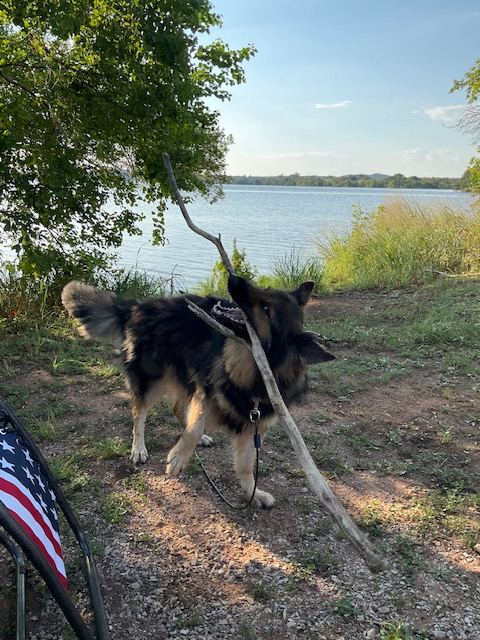
RV camping with your dog is one of the sweetest ways to make memories on the road. Sure, it takes a little extra planning, but keeping your pup safe, comfy, and happy is worth every bit of effort. With a little prep, you’ll both be ready for a tail-wagging adventure that’s full of fresh air, belly rubs, and plenty of campfire snuggles.
For most of us, camping wouldn’t be the same without our four-legged friends. Dogs love the fresh air, the new smells, the trails, and the chance to be with their favorite humans 24/7. If you’ve ever watched your pup sprawl in the sunshine at camp or bounce with excitement when the leash comes out for a hike, you know exactly what I mean.
Our dog, Rya, knows when I start loading the RV that we are going camping-she is stuck to me like glue. I think she might be afraid that she will be left behind. She enjoys camping just as much as we do, maybe more.
What to Pack When Camping with Dogs
Just like we have our checklists for RV gear, kitchen supplies, and food, dogs need their own little packing list. Before heading out, here are a few things worth putting in a dedicated “dog kit” for your RV:
- Leashes and harnesses – Always bring more than one regular leash. A sturdy everyday leash for walks, another walking leash by the RV door, and a long tie-out cable for hanging out at camp can be helpful. We attach the cable to the nearest part of the RV so our dog can be near us. I suggest keeping leashes in separate places. I now do this after a mishap at our campsite, the leash was not nearby, and I needed to move our dog away from danger quickly. She was stressed, and it did not help that I was pulling her collar to move her.
- Collar with ID tags – Ensure your phone number is up-to-date on their tags. Even the best dogs sometimes wander when distracted by squirrels. I saw a brilliant idea last week while camping. The person attached a metal key tag label with a ring to the dog’s collar, near its rabies tag, and wrote the site number on the tag. In case the dog was lost, it would be easy to reunite the dog with its pet parents.
- Food and treats – Pre-measure food into a sealed container, and don’t forget a few favorite treats to keep them happy during downtime. Remember, if your pet is not used to the heat, they may not eat much until they cool off. Our dog eats in the morning at home, but when camping, she eats in the middle of the night, after she has cooled off. Initially, I packaged each day’s food into individual zip-top bags. This was great until the bag opened and scattered dog food everywhere. Storing the little bags became a problem, so I needed a solution. Now, I use a recycled gallon bucket with a lid and scoop food into the bucket. Much easier!
- Travel bowls – Collapsible bowls are great for hikes, and a stable,heavy water bowl is handy for camp.
- Bedding or blanket – Something familiar from home helps them settle in the RV or at the campsite. They need a space that they know is theirs.
- Waste bags – Bring plenty of pet waste bags. Pick-up rules apply everywhere, and they keep campsites welcoming to fellow campers. I usually double-bag the waste, so I tend to go through a lot of bags during the camping season. I buy in bulk and store half in the RV and half at home (replenish as needed). This is not something I want to run out of.
- Vaccination records – A printed copy should be kept in a safe place in your RV, as it can be a lifesaver in the event of an emergency vet visit. I print it and put it in a sheet protector, then keep it in a cabinet in the RV, so we always have it.
Keep these items in one tote stored inside the RV, so you don’t forget anything. If you have the room.
What to Pack When Camping with Dogs in the Heat or Cooler Weather
Texas campers understand that heat management is crucial, but they also recognize that chilly mornings and unexpected cold snaps can occur. Dogs feel temperature extremes just like we do, sometimes even more so.
- In hot weather, always provide shade at your campsite—an awning, a dog canopy, or even a simple tarp will work. Never leave your dog inside the RV without the AC running, even for a quick errand. Always keep fresh water available, and watch for signs of overheating, such as heavy panting, drooling, or slowing down. Older dogs and those with longer hair tend to feel the heat quickly.
- In cool weather, a cozy blanket or a dog jacket goes a long way, especially for short-haired breeds. Don’t assume they’re fine just because they have fur—some pups chill quickly in damp or windy conditions.
And here’s a simple tip: place your hand on the pavement or ground before a walk. If it’s too hot or cold for your hand, it’s too much for your dog’s paws.
Hiking With Your Dog
Hikes are often the highlight of a camping trip, and most dogs love hitting the trail. To keep it safe and enjoyable:
- Bring water for your dog. A lightweight, collapsible bowl, plus a couple of water bottles reserved just for them. Offer water regularly, rather than waiting until they’re panting hard. Take breaks and let your dog drink water, but avoid letting them gulp down large amounts.
- Watch out for paws. Rocky trails, gravel, or hot surfaces can be rough on paws. If your dog tolerates them, booties can help on rugged terrain. Otherwise, stick to dirt paths when possible. Even dirt paths can be hot; always check the surfaces with your hand. If it is too hot for your hand, it is too hot for your dog’s paws.
- Follow the leash rules. Most parks require dogs on leashes, and honestly, it’s safer. Wildlife, cliff edges, or other dogs can turn dangerous in a heartbeat.
- Know your dog’s limits. A young Lab might bound for miles, but a senior pug may need short strolls. Let your dog set the pace and rest often.
Water Safety for Dogs
Camping near lakes, rivers, or the beach adds another layer of fun, but also a few precautions:
- Not all dogs are natural swimmers. Don’t assume your pup will be safe if they jump in. Start with shallow supervised play and consider a doggy life vest for boating or strong currents. It is best to know if your dog is a natural swimmer or not…not all dogs are swimmers.
- Watch water quality. Some lakes have algae blooms or debris that can harm dogs. If you wouldn’t swim in it, don’t let your dog. Also, check with park staff about the water quality for your dog-they will give you straight answers.
- Freshwater rinse. After a swim, rinse them off to remove sand, salt, or lake water, which can irritate skin. We do a full bath outside to remove anything that might irritate her skin and keep the RV clean (best we can at least)
- Caution at the beach. Provide plenty of water to keep your dog hydrated and prevent saltwater poisoning. Watch for signs of saltwater poisoning: vomiting, diarrhea, or disorientation. If your dog shows any of these signs, seek immediate veterinary care.
Camping in the Woods: Wildlife and Other Risks
Wooded campsites bring their own set of doggy challenges.
- Wildlife encounters. Deer, skunks, porcupines, snakes, Texas has them all. Keeping your dog on a leash is the best defense, both for your pet and for wildlife that doesn’t need extra stress.
- Ticks and fleas. After any hike, do a quick fur check for hitchhikers. A good flea and tick preventative is essential, but a once-over can catch what slips through.
- Nighttime safety. Clip-on LED collar lights are great for visibility around camp at night. That way, you don’t lose sight of your pup during those quick late-night potty breaks.
Respecting the woods and keeping your pup under control ensures you both enjoy the peace of nature without unwanted encounters.
Protecting Your Dog—and Others
Not every camper loves dogs (hard to believe, but true!). A little consideration goes a long way:
- No unattended barking. If your dog is prone to barking at every leaf, plan to keep them engaged. A Kong toy, long walk, or just being near you often calms them.
- Respect leash laws. Even if your dog is friendly, others may not be. Leashes prevent uncomfortable situations with fellow campers.
- Clean up every time. Leaving waste behind isn’t just rude—it can spread disease to wildlife and other pets.
Planning for Emergencies
Nobody wants to think about emergencies on a fun trip, but a little planning saves stress:
- Vet records. Keep a paper copy of vaccination records in your RV in case of emergencies or boarding needs.
- Emergency vet clinic. Before leaving home, look up the closest 24-hour vet near your destination. Put the number on your phone or write it down. If something happens, you won’t waste time frantically Googling.
- Know your dog’s microchip info. Double-check it’s current with your phone number before traveling.
Other Handy Tips for Dog Camping Success
- Routine helps. Stick to your dog’s regular feeding schedule to keep their tummy happy.
- Pack a towel. Dogs will find water, mud, or both. A designated dog towel saves your RV upholstery.
- Camp chairs. Some dogs love their own “spot” at camp. A portable dog cot or chair keeps them off damp ground and close to the action.
- Respect campground rules. Many campgrounds list pet policies online—check them before you go. Some limit the number of dogs or restrict breeds.
Wrapping Up: Happy Tails on the Road
Camping with dogs is one of the best parts of RV camping. They remind us to slow down, take a deep breath, and simply enjoy the moment. With a bit of thinking ahead, protecting their paws, and planning for safety, you can make every camping trip an adventure you will treasure.
The best memories often come from watching your dog nap contentedly by the fire after a long hike, or splashing at the lake, tail wagging like crazy. So next time you head out in the RV, load up the leashes and treats, and don’t forget the most important camping buddy of all—your dog.