
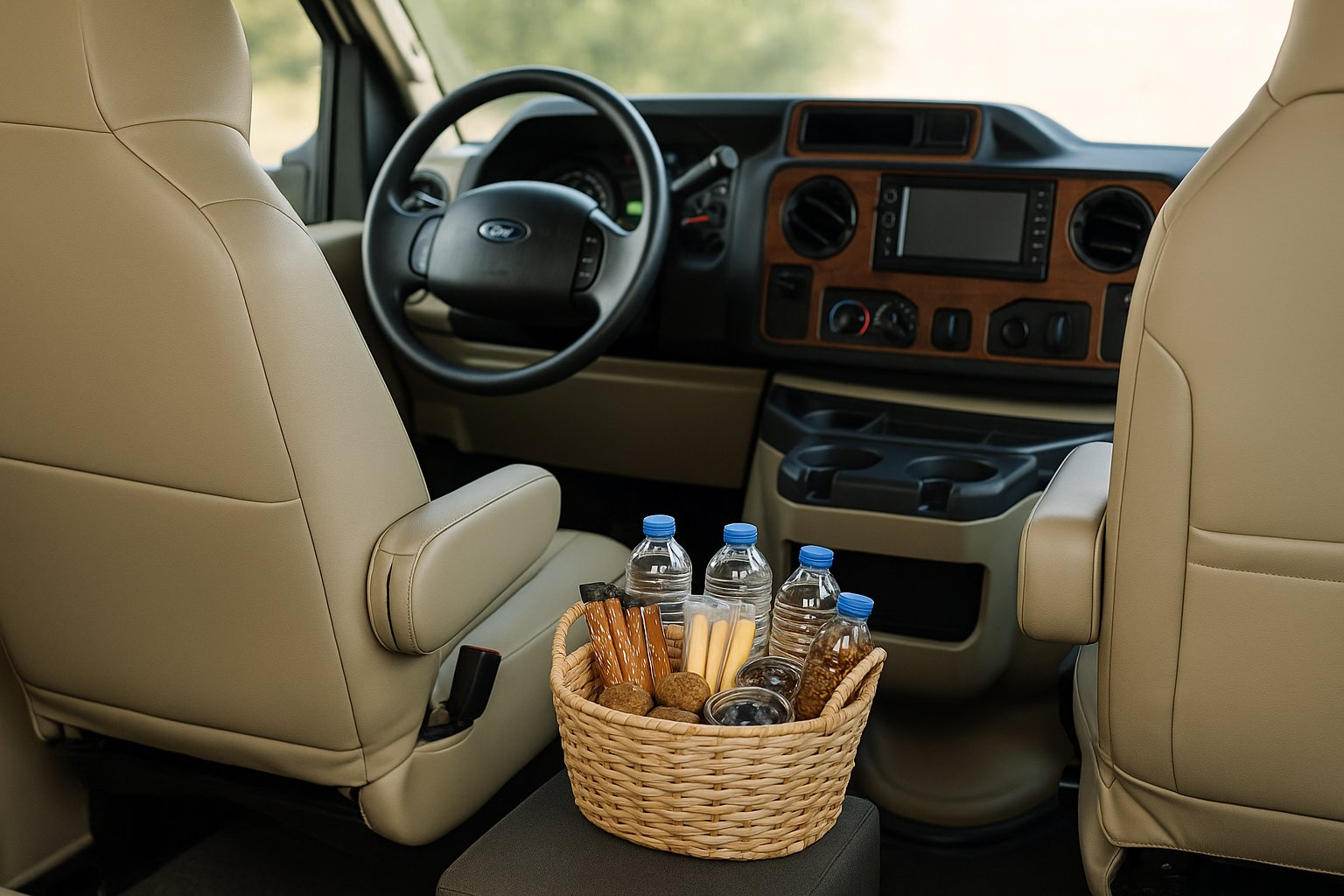
Travel days in an RV are exciting, but they can also be long, tiring, and full of distractions. Between keeping the rig on the road, ensuring everyone stays comfortable, and keeping your arrival on schedule, food often becomes an afterthought. The problem? Skipping meals or relying on fast food can leave drivers sleepy, passengers cranky, and everyone less than ready to set up camp.
The good news is that you can solve this problem with a simple plan for travel day meals and snacks. By thinking about what to pack, what the driver can safely eat, and how to keep the crew happy, you’ll have a smoother trip.
Planning: Food for the Morning Drive
The first hours of a travel day set the tone. If you leave hungry or start the trip with a heavy, greasy meal, energy levels will crash before you reach the halfway point. Stock your RV with food that:
- They are quick to grab while finishing last-minute tasks before leaving
- Keep energy steady with protein and complex carbs
- Don’t leave behind sticky hands or strong odors in the RV
Examples include breakfast burritos (Tex-Mex Burritos) wrapped tightly in foil, yogurt cups with granola (sunrise parfaitsa), or simple muffins. These aren’t fancy meals — they’re fuel to get the day started without a mess.
What Works Best for the Driver
Drivers need food that fuels their focus, not distracts them. The biggest problems are messy foods that spill on your lap, snacks that leave sticky fingers, and heavy meals that bring on drowsiness. The best foods for drivers are:
- Handheld and mess-free – Sandwiches wrapped with one end closed to keep contents in the sandwich and not on your lap, jerky sticks, or string cheese. Doo Doo prefers a simple no frills sandwich with a paper towel wrapped around the bottom half to keep the sandwich together.
- Protein-rich, low sugar – Foods that won’t spike and crash your blood sugar. Nuts, cheese, and meat-based snacks will work better than candy or chips.
- Portioned for easy access – Small bags or containers that can sit in a cup holder instead of balancing a whole package on your lap.
Will the Passengers Eat the Same Thing?
Not always. Passengers have the luxury of sitting back and enjoying their snacks, so their options are a little wider. They can manage salads in jars, fresh fruit, or trail mix without it becoming a safety concern. But if everyone eats something different, that creates another problem — messy meal prep in the RV cab.
The solution is finding a middle ground. Pack snacks that both the driver and passengers can enjoy, then add a few extras for those not driving. For example:
- Jerky, nuts, and cheese sticks work for both groups.
- Passengers can also enjoy fruit cups or chips since they aren’t distracted by the road.
- Kids may need “fun” snacks, like granola bars or small bags of popcorn, to keep them happy during long stretches.
This balance prevents the driver from feeling left out while still giving passengers variety.
What About Stops Along the Way?
Sometimes the best solution isn’t to eat while driving at all. Stopping for a meal can solve multiple problems: the driver gets a mental break, passengers stretch their legs, and the whole crew resets before the next part of the journey.
But what should you eat during these stops? The key is to keep the meal light and easy to digest. Heavy fast food may taste good in the moment, but it will likely leave the driver drowsy once back behind the wheel. Better choices include:
- Easy sandwiches
- Wraps with lean meat and veggies
- Mason jar salads that can be shaken and eaten at a picnic table
- Pre-packed pasta or grain bowls with protein
By planning these options, you make the stop quicker, cheaper, and healthier than relying on roadside restaurants. But try to keep this simple and uncomplicated – we are aiming for low-stress traveling.
Snacks That Should Always Be on Hand
No matter how well you plan, travel days often take longer than expected. Traffic, construction, or weather delays can turn a short drive into a long, all-day trip. Keeping the right snacks on hand prevents meltdowns, keeps the driver sharp, and saves you from emergency gas station runs.
The best travel day snacks are:
- Jerky sticks or meat bars for protein
- Cheese sticks or mini cheese wheels
- Nut mixes – portioned into small bags
- Crackers paired with peanut butter or cheese
- Energy bites made at home from oats and nut butter
- Non-messy baked goods like mini muffins
Think of these as your “just in case” stash. Store them where both the driver and passengers can reach them, and you’ll always have a backup plan.
The Problem of Drowsiness After Eating
One of the biggest risks on travel days is driver fatigue, especially after eating a large meal. Heavy foods loaded with simple carbs and sugar can lead to a quick energy spike, followed by the crash that makes eyelids heavy.
To prevent this, drivers should:
- Stick to smaller, more frequent snacks instead of one large meal
- Choose protein over carbs to maintain energy
- Avoid sugary drinks and opt for water, coffee, or unsweetened tea
- Save the heavier comfort food for when you’re parked and set up
Final Thoughts on Travel Day Meals and Snacks
Food may not be the first thing that comes to mind when planning a travel day, but it can make or break the experience. I have learned that by planning travel day meals and snacks, you keep the driver alert, passengers happy, and everyone in better spirits when you arrive.
By thinking ahead, you are creating a low–stress travel day, and we all love those. With food handled, there are fewer distractions, fewer cranky passengers, and more energy left for setting up camp and enjoying your destination.