
Slide-outs make an RV feel more like a home than a vehicle. They add elbow room, comfort, and flexibility — but they also need regular attention. A little care prevents big problems later, especially since your slide system involves electrical, mechanical, and sealing components that all have to work together.
If you’re unsure where to begin, start with your owner’s manual. It tells you what type of slide system you have — cable, hydraulic, rack-and-pinion, or electric motor — and each one has its own quirks. Once you know what’s under there, you can create a routine that keeps your slide-outs reliable and worry-free.
Why RV Slide Care Matters
A slide-out is heavy equipment. It moves hundreds of pounds in and out of a framed wall every time you set up camp. That motion depends on a balance of power, alignment, and good sealing.
When any part of that equation is off, you can end up with water intrusion, binding, or even motor damage. The fix isn’t complicated — it just takes consistency. RV owners who perform basic slide care save themselves a lot of stress (and service bills) by:
- Catching seal wear before water finds its way inside.
- Clearing away grit that can grind against gears or tracks.
- Checking that slides move evenly, reducing motor strain.
- Cleaning away debris that prevents a tight weather seal.
Slide systems don’t fail suddenly; they decline slowly. That’s why regular attention makes such a big difference. Clean parts move better, seals last longer, and slides stay square and quiet.
Know What Kind of Slide System You Have
Before reaching for any cleaner or lubricant, figure out what type of mechanism your rig uses.
- Rack-and-pinion: Common on heavier rooms. Run on metal rails with exposed gears that need occasional lubrication.
- Electric motors: Compact systems are often used in lightweight rigs. They need clean tracks and good battery voltage.
- Hydraulic: Found in larger Class A or fifth-wheel units. Runs off pressurized fluid; check levels and watch for leaks.
- Cable systems: Lightweight, space-saving designs that usually don’t require lubrication — just inspection and cleaning.
The manual for your RV or slide manufacturer (often Lippert, Power Gear, or Schwintek) lists the maintenance schedule and approved products. Following that guidance prevents both damage and warranty issues.
Four Key Areas for RV Slide Care
Slide maintenance can sound intimidating until you break it down into small habits. Each area takes just a few minutes and saves hours of repair time down the road.
1. Clean the Slide Roof, Walls, and Tracks
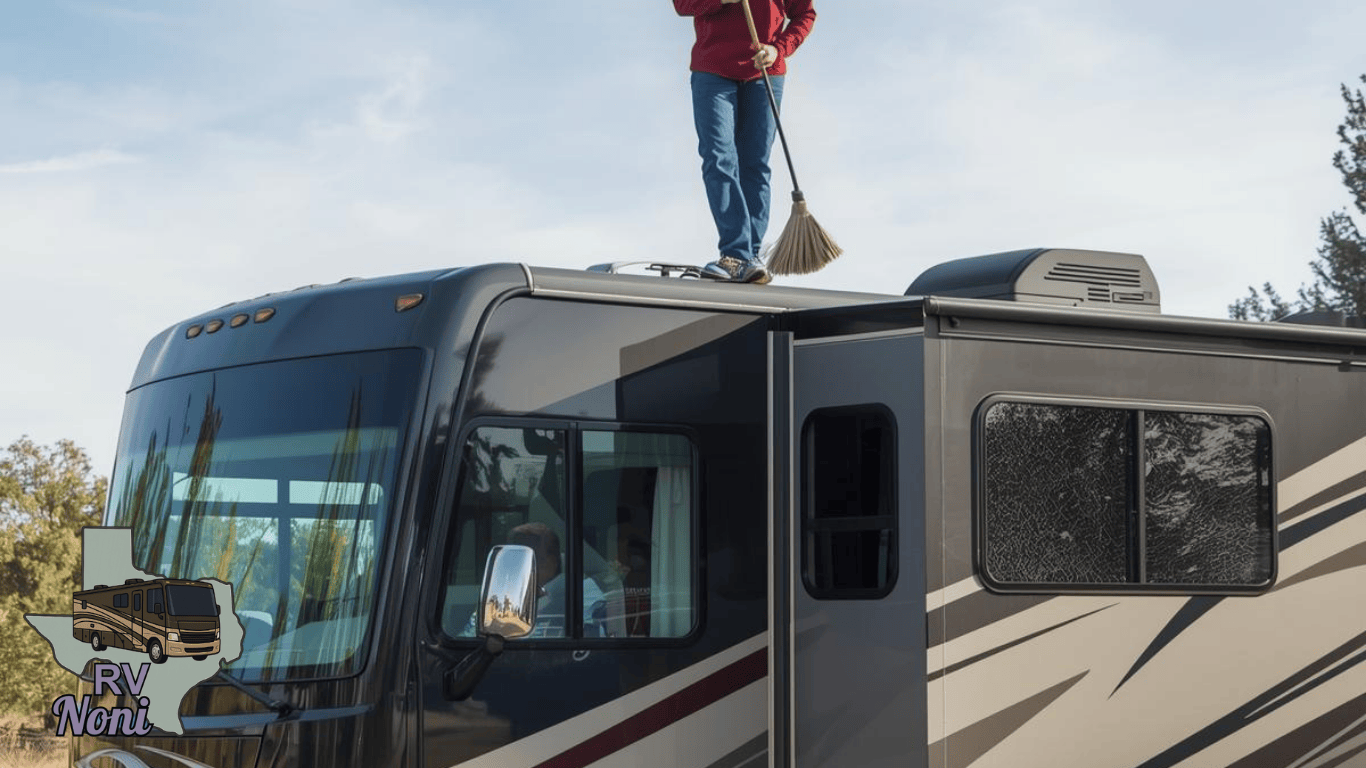
Before moving your slide, take a quick look at the top. You’d be amazed at what can collect up there — twigs, acorns, gravel from trees, even a child’s toy. Anything trapped between the roof and the seal can tear the rubber or cause a leak.
Use a soft brush or long-handled broom to clear debris. If you rinse with a hose, keep the pressure low so you don’t drive water into seams. Mild soap and water are all you need for sidewalls and trim. Avoid harsh detergents that can dry out seals or strip protective coatings.
When retracting after rain, wipe off standing water first. Water sitting on a slide roof can pull debris in or leave moisture trapped around seals. A quick towel pass solves that.
2. Seal Inspection and Protection
The rubber seals around each slide are the first defense against weather and dust. They compress and flex every time the slide moves, which means they wear faster than other gaskets on your RV.
Once a month, give them a quick look. A good seal should feel soft and springy. If it’s sticky, cracked, or starting to pull away from the wall, it’s time to clean and condition.
Wash seals with mild soap and water, rinse, and let them dry. Apply a non-petroleum rubber protectant (the kind approved for RV seals) to keep them supple and UV-resistant. It’s tempting to use whatever silicone you have on hand, but many products leave residue that attracts dirt — and dirt is what breaks seals down fastest.
If a section looks brittle or flattened, replace it before the rainy season. A $20 seal beats a $2,000 repair bill for water damage.
3. Lubrication and Moving Parts
Any slide system that uses gears, rollers, or bearings benefits from light lubrication — but only the correct type. Some owners overspray with greasy lubricants that collect dirt, defeating the purpose.
- Use a dry-film or Teflon-based spray on exposed gears and rails.
- Wipe away excess before retracting to avoid streaks on the sidewall.
- Extend and retract the slide once to distribute the coating.
- Skip cables unless the manufacturer explicitly recommends lubrication.
- Inspect bolts and brackets for looseness or rust.
Hydraulic slides need a different kind of care: check the fluid level and fittings once or twice a year. A small leak can cause a slow extension or uneven slide movement.
Battery strength also matters. A weak battery can make the motor strain or stop midway. Keep connections tight and voltage above 12.0 V when operating slides.
4. Safe Operation and Leveling
A perfectly maintained slide can still jam if it’s operated on uneven ground. Always level the RV before extending or retracting slides. If your unit has auto-leveling, run that system first.
Make sure stabilizers or jacks are down, parking brake engaged, and both interior and exterior areas are clear. A chair leg or forgotten bin can stop a slide mid-motion and bend hardware.
When retracting:
- Sweep or wipe the roof first.
- Watch and listen — uneven speed or squealing means stop and inspect.
- Let the slide complete its full cycle; don’t “bump” it multiple times.
Most systems are designed to seat firmly at full extension or retraction. Interrupting that motion confuses the sensors and shortens the motor’s life.
Seasonal and Usage-Based Tips
Your slide-out care schedule depends on how and where you camp. Here’s how to adjust your routine:
Frequent travelers
- Inspect and lubricate every 3–4 months.
- Clean debris after each trip, especially dusty or coastal campsites.
Occasional campers
- Before your first trip of the season, run slides in and out, clean seals, and test operation.
- After your final trip, clean thoroughly and leave slides retracted for storage.
Hot or sunny climates
- UV rays can dry seals quickly. Condition the rubber more often or use a slide topper to shade it.
Cold or damp weather
- Keep slides dry before retracting. Frozen moisture can tear seals.
- Wax the slide roof once or twice a year to help water and snow shed more easily.
Before long drives or major trips
- Cycle each slide at home.
- Listen for grinding or hesitation — better to catch it before you’re hundreds of miles away.
Good slide care fits naturally into your normal pre-trip and post-trip checks. It takes less than 10 minutes once you’re in the habit.
Common Slide Problems and Quick Fixes
Even with careful maintenance, minor issues pop up from time to time. Recognizing them early keeps them from turning into big ones.
Slide won’t move
- Check that your battery is fully charged and connected.
- Inspect the fuse or circuit breaker for the slide motor.
- Make sure the ignition or engine position matches what your system requires (some slides only work with ignition on).
Slide moves unevenly or binds
- Re-level the RV; an unlevel rig is often the culprit.
- Look for dirt or twigs in the track.
- Stop immediately if you hear grinding and inspect for misalignment.
Water intrusion
- Examine seals for cracks or gaps.
- Verify that the slide is fully seated and square when retracted.
- Keep roof toppers free of debris so water drains off easily.
If a slide consistently hesitates or tilts, it’s worth a quick service check. Small adjustments keep everything running square and quiet.
Simple Slide Care Routine
Here’s an easy rhythm most RV owners can follow:
Before each trip
- Clean slide roof and sidewalls.
- Check seals for cracks or debris.
- Confirm batteries are charged.
Every 3–6 months
- Condition seals and wipe tracks.
- Lubricate rails or gears with a dry-film spray.
- Check hardware for looseness.
Annually
- Inspect slide alignment and fluid (if hydraulic).
- Replace damaged seals.
- Review the owner’s manual for any updates or recalls.
Write these dates in your maintenance log or binder — that record can even help resale value later.
Final Thoughts on RV Slide Care
Slide-outs are one of the best parts of modern RV life. They make extended stays more comfortable, but they do need attention to stay reliable. Keeping them clean, level, and lubricated is simple, and most tasks take just a few minutes with basic supplies.
Before every travel season, review your manual to confirm any specific recommendations for your model. Manufacturers sometimes change guidance as technology improves.
A well-cared-for slide should move quietly, seal tightly, and operate without hesitation. Give yours a little time each season, and it’ll give you years of hassle-free camping — whether that’s a Texas weekend getaway or a long road trip under open skies.