
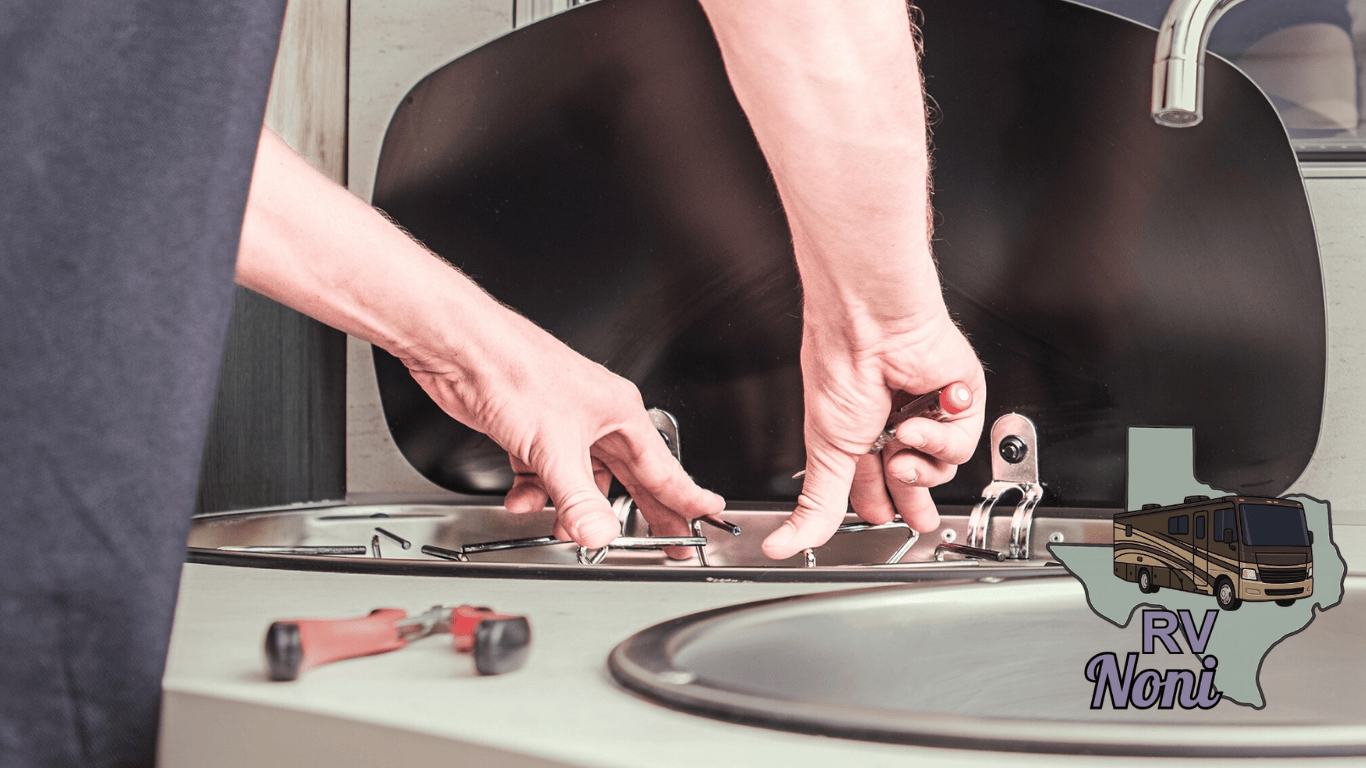
When you’re camping in an RV, surprises are part of the trip. A loose hinge, a blown fuse, or a hose that won’t budge always seem to show up when you least expect them. That’s why it’s smart to keep a small toolbox in your RV—not sitting back in the garage at home. The right tools in the right place mean you can fix the little stuff right away and get back to enjoying your trip. An important note here is not only to keep these tools in your RV but also to return them to their designated “home” after use, whether that be a toolbox or other type of storage.
This list highlights 25 RV tools worth keeping in your rig at all times, with a quick look at when and why you’ll probably use them.
Socket Set + Wrenches
Road miles shake bolts loose. A socket set handles most of them fast, from hitch parts to bed frames. Wrenches are helpful when a socket won’t fit. You’ll grab these more than any other tool.
Screwdrivers (Flathead, and Phillips, )
Cabinet hinges wander. Outlet covers wiggle. Vents shift. Keep a couple of sizes, plus a stubby for tight spots. You’ll fix squeaks and wobbles in minutes.
Cordless Drill with Bits
When hand tools feel slow, the drill steps in. It’s great for vent panels, latch plates, and hanging hooks. Pack a bit set (square, Phillips, hex). RV screws come in all shapes. This is something that is available in all price ranges. If you prefer a higher end brand, look at this Dewalt set.
Pliers + Channel Locks
For stuck sewer caps, hose fittings, or propane connectors. Pliers give control; channel locks add muscle. Consider these your “extra grip” when hands alone can’t do it. If you prefer a higher end brand, see this Channellock Tool Roll.
Utility Knife
Opens boxes. Trims sealant. Cuts rope or tape. Change blades often. A sharp blade is safer than a dull one (and far less annoying).
Tape Measure
“Will this fit through the door?” is a daily RV question. Measure first. It also helps space leveling blocks and plan storage cubbies.
Hammer + Rubber Mallet
A hammer drives nails and bumps metal parts back where they belong. A rubber mallet nudges without dents—handy for leveling blocks, stake taps, and stuck lids.
Level (Bubble or Digital)
Even with auto-leveling, a quick check pays off. Fridges like level. So do backs and coffee cups. A small bubble level lives in a drawer and earns its keep. There are small levels that are made to stick on your wall, too.
Electrical Tester or Multimeter
Campground power isn’t always perfect. A tester says “safe” or “nope” before you plug in. A multimeter goes deeper—batteries, fuses, odd outlets. It’s the detective of RV tools.
Spare Fuses
A blown fuse can cause lights, fans, or a fridge to dim. The fix takes 30 seconds if you have the right size. Carry a small variety pack that matches your panel. Emphasis on small pack.
Duct Tape + Electrical Tape
Duct tape is the “hold it together till we get home” MVP. Electrical tape is for wires and insulation. Both are tiny space trades for a massive peace of mind.
Zip Ties (Assorted Sizes)
They corral cords, lift hoses off gravel, and pinch-hit for broken latches. Toss in a handful of heavy-duty ones. You’ll be surprised how often you reach for them. Make sure you have a variety of lengths to make it easy on yourself.
Flashlight + Headlamp
Campgrounds get dark. A flashlight helps you see; a headlamp frees both hands for hookups and midnight breaker checks. Pack extra batteries.
Extension Cord + Adapters (“Dogbones”)
Pedestals aren’t always close—or the right amp. A heavy extension cord bridges the distance.
Water Pressure Regulator
Some parks push water like a fire hydrant. That pressure can cause lines and fittings to burst. A regulator keeps the flow in the safe zone and stops surprise leaks.
Water Hose Wrench
Ever fought a stuck hose at 7 a.m.? This little wrench saves your knuckles and gets a tight seal without over-torquing. Quick on. Quick off. No drama.
Sewer Hose Support + Gloves
Not glamorous, but you’ll be glad you have them. The support keeps a steady slope for clean drainage. Gloves keep the icky out of your RV. Say no more.
Sealant + Caulk Gun
RVs flex, seals crack. A tiny gap around a vent can turn into a drip. Carry sealant for a quick bead on windows, roof seams, and trim. A five-minute fix beats a soggy cabinet. This takes up valuable storage space-look for small tubes or sealant or silicone if storage space is an issue. For a quick fix, this tube can be tucked away in a drawer.
Tire Pressure Gauge + Portable Inflator
Good pressure = safe handling, better mileage, longer tire life. Check before rolling out. Top off at camp with your own inflator instead of hunting a station.
Torque Wrench
Lug nuts need a “just right” setting—not guesswork. Use the torque wrench after tire work and on long travel days. It’s simple insurance for your wheels.
Jack Rated for Your Rig + Wheel Chocks
Flats happen. Make sure the jack can lift your RV safely. Chocks stop rolling during a roadside tire swap. Be safe!
Collapsible Ladder
Roofs collect leaves and branches; awnings need a rinse. A folding ladder reaches what the built-in one can’t. Stores slim. Saves time (and ankles).
Work Gloves
Sewer hookups, firewood, leveling blocks—your hands meet rough stuff all day. Gloves add grip and keep skin happy. Keep a spare pair for wet days. For Sewer hookups & dump station visits, disposable gloves are highly recommended. One box of gloves will last a while.
Fire Extinguisher (Know How to Use It)
While technically not a tool, this should be in your RV. One near the kitchen. One near the bed. Check the gauge. Practice the PASS steps. In an RV, seconds matter. Check dates on each extinguisher and note in your calendar.
First Aid Kit
Again, not a tool but so important to have in your RV. Scrapes, hot-pan burns, bee stings—camp life happens. A stocked kit turns “uh-oh” into handled. Customize it with your family’s must-haves.
Quick “When You’ll Use It” Snapshots
- Roll in after dark, and the breaker trips? Headlamp, tester, and adapters.
- The fridge won’t cool, right? First, level the unit, then check the power and fuses.
- Drip by the window on a rainy night? Sealant now, full repair later.
- Tire looks low before a day trip? Gauge, inflator, and a once-over with that torque wrench.
- Sewer day? Support, gloves, and a few zip ties to tidy the run.
These tiny scenes are where RV tools shine. They keep small problems small.
Packing Tips That Save Space
- Nest by task. Make a small “power box” (tester, adapters, gauge, inflator). A “water kit” (regulator, hose wrench, spare washers). A “roof bag” (ladder, sealant, rags).
- Go compact. Collapsible ladder, folding hex keys, stubby screwdrivers. Same job, less bulk.
- Double-duty wins. Mallet for blocks and stakes. Channel locks for hoses and stubborn lids.
- Replace consumables. Blades, fuses, batteries. When one goes, restock before the next trip.
- Seasonal check. Spring and fall: open the bin, scan for rust, leaks, dead batteries, and missing sizes.
Why These 25 Tools Cover Almost Everything
It covers five kinds of fixes you see over and over:
- Tighten/secure: sockets, wrenches, screwdrivers, zip ties.
- Cut/shape: utility knife, tape, mallet, hammer.
- Power checks: tester, multimeter, adapters, extension cord.
- Water/seal: regulator, hose wrench, sealant.
- Tires/leveling gauge, inflator, level, torque wrench, jack, chocks.
That’s the whole game: tighten, cut, check, seal, level. With these RV tools, you can handle most campsite surprises without a parts run.
Final Thoughts
You don’t need a mechanic’s truck to camp well. A small bin of RV tools covers the dings, drips, squeaks, and “why is that loose?” moments that show up on the road. Pack the basics. Keep them in the same spot. Do a quick pre-trip check. Then go make s’mores.