
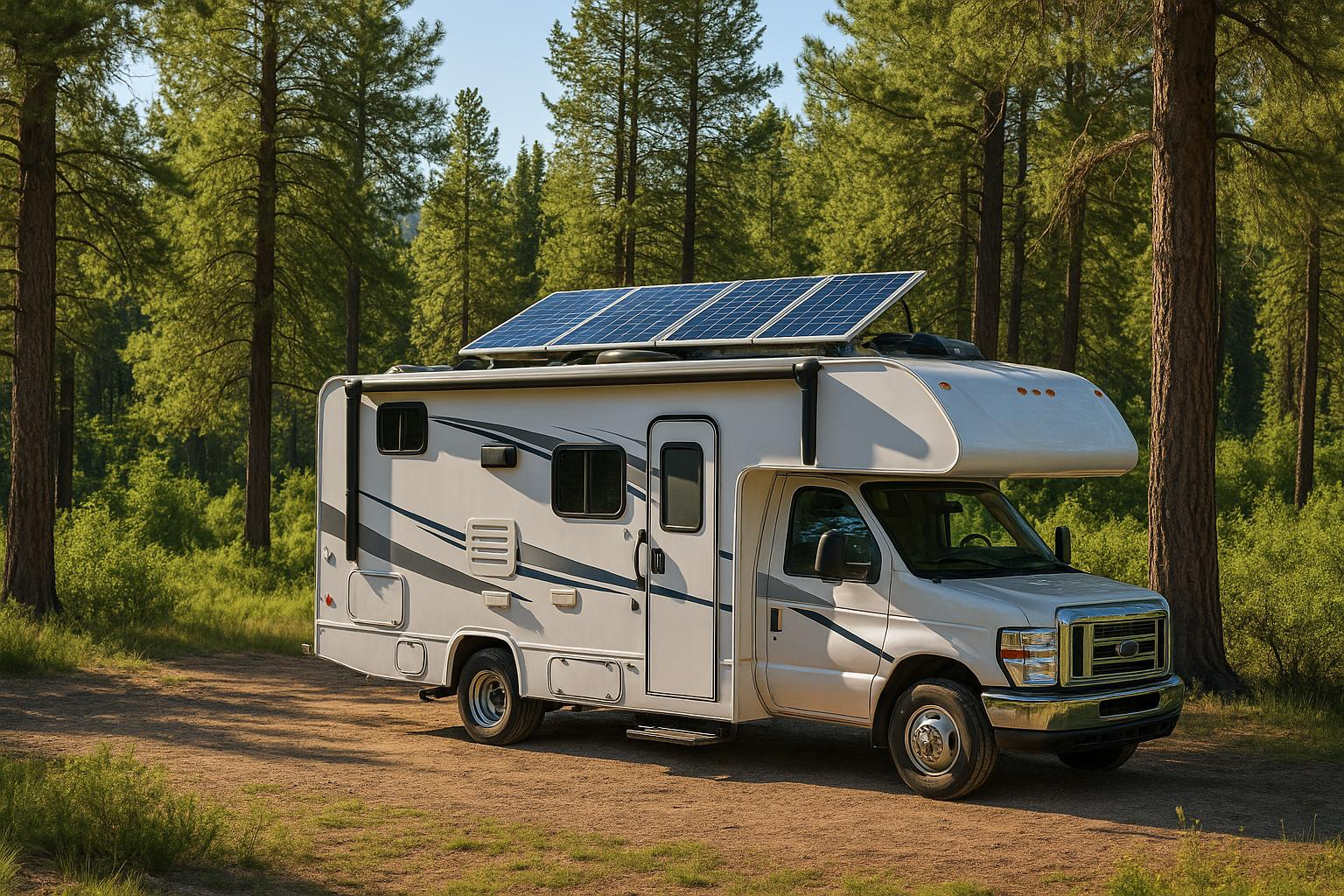
Thinking about going solar for your RV? You’re not alone. More and more RVers—especially weekend campers in Texas—are turning to solar kits for power, freedom, and peace of mind. If you’ve been wondering, “Is an RV solar kit worth the investment?” this guide covers everything you need to know about solar power for RVs: how it works, what it costs, the pros and cons, and whether it’s the right upgrade for your camping style.
With more RVers seeking freedom from hookups and quieter, greener ways to power their adventures, solar power is becoming a popular choice among them. But is it worth the investment? How does solar work in an RV setup, and is it the right upgrade for your camping style?
I did some research, and here is what I learned, from their characteristics and operation to the pros and cons. Whether you’re just beginning to explore the idea or already pricing out kits, this guide will help you decide if it’s the right choice for you.
RV Solar Kit Components: What’s Included
An RV solar kit is a system that harnesses the sun’s energy to power your RV’s electrical needs. It typically includes several components, each playing a crucial role in making your RV more self-sufficient when you’re off the grid. A basic RV solar kit generally includes:
- Solar Panels – These collect sunlight and convert it into electricity.
- Charge Controller – This regulates the flow of electricity to your battery, preventing overcharging.
- Wiring & Connectors – These transport the power from the panels to the RV’s system.
- Mounting Hardware or Portable Frames – These secure the panels, either on the roof or as a portable unit.
- Inverter (Optional) – Converts the DC power stored in the battery to AC power (like the electricity you use in your home).
By installing a solar kit, you can charge your RV’s batteries using the sun, allowing you to power lights, fans, small appliances, and electronics without needing to plug into an electrical hookup. Sounds great, right?
How Solar Power Works in an RV Setup
Here’s a simple breakdown of how solar power works in your RV:
- Solar panels collect sunlight and convert it into DC electricity (direct current).
- The charge controller ensures the power doesn’t overload or damage your batteries.
- The stored energy is kept in your RV’s batteries.
- If you need to run items like a coffee maker or laptop, the inverter (if installed) converts the stored DC power into AC power, which powers household appliances.
In a nutshell, the solar panels charge your batteries, and the batteries run your RV, keeping you powered up when you’re off the grid and enjoying the outdoors.

Pros of Adding Solar to Your RV
After seeing how many RVers are upgrading their rigs with solar, we couldn’t help but be curious about the benefits. Here are the top reasons to consider adding solar to your RV:
1. Off-Grid Freedom
A solar kit lets you camp without hookups. This opens up more opportunities to explore remote, scenic, and peaceful spots—like national forests or dispersed camping areas—without worrying about losing power.
2. Silent Operation
Unlike a noisy generator, solar power is entirely silent. No rumbling engines or exhaust smells disturb the peace of your surroundings. Whether it’s early mornings or late nights, you can enjoy the quiet of nature.
3. Save Money Over Time
While solar kits have an upfront cost, they can help you save in the long run. By reducing your reliance on generators and minimizing the need for full-hookup RV parks, you can lower your camping expenses. Plus, with fewer visits to generator-powered sites, you’ll reduce wear and tear on your RV’s engine.
4. Eco-Friendly
Solar energy is a renewable source, meaning you’re helping the environment while you are staying off the grid. By choosing solar, you can reduce your carbon footprint and rely less on traditional power grids and fossil fuels.
5. Battery Maintenance
Solar power can also keep your batteries in great shape. Even when you’re not using your RV, a solar trickle charger helps maintain your batteries, ensuring they’re ready when you are.
6. Boost Your RV’s Resale Value
Increasingly, buyers are seeking RVs that are solar-ready. Whether it’s for full-time boondockers or weekend warriors, having a solar system can make your RV more appealing and valuable when it’s time to sell.
Cons of RV Solar Systems
While there are numerous benefits, solar energy isn’t perfect. Here are some things to consider before investing in an RV solar kit:
1. Upfront Cost
Solar kits can vary widely in price, depending on size and features. Basic systems with around 200 watts of power might cost $500–$800, but more comprehensive kits with larger panels and lithium batteries can run up to $5,000 or more.
2. Installation Complexity
Installing solar panels, especially roof-mounted ones, can be tricky if you’re not a DIY expert. It often requires drilling into your RV’s roof and wiring the system. While many RVers opt to hire a professional, this can increase the overall cost.
3. Limited Power for Larger Appliances
Solar kits are great for running lights, fans, small electronics, and other low-power devices. But if you’re looking to run high-demand appliances like an air conditioner, microwave, or electric heater, you’ll need a larger system. Even then, your power usage will be limited, especially on cloudy days.
4. Weather and Shade Impact
The performance of solar panels depends on the availability of sunlight. If you’re camping in a shaded area or during cloudy weather, you may not generate enough power to meet your needs. Many RVers keep a generator as a backup for days when the sun isn’t cooperating.
5. Learning Curve
Understanding how solar systems work, including calculating wattage, battery size, and power draw, can be overwhelming for newcomers. It may take some research and a bit of trial and error before you’re comfortable with your system.
Portable vs. Roof-Mounted Panels: Which Is Right for You?
When deciding to go solar, you’ll need to choose between portable solar panels or roof-mounted panels. Here’s a quick comparison:
Portable Solar Panels
Portable solar panels are easy to set up when needed and can be stored when not in use. They’re a good option for beginners or weekend campers.
Pros:
- No installation required
- Easy to set up and store
- Lower cost
Cons:
- You must set them up each time you camp
- May be at risk of theft
Roof-Mounted Solar Panels
Roof-mounted solar panels are installed on your RV’s roof and are always ready to collect power as you travel or camp.
Pros:
- Always working while you travel
- No need to carry or move them
- Ideal for full-time campers or frequent boondockers
Cons:
- Higher upfront cost
- Requires professional installation
- Limited ability to angle panels toward the sun
If you’re new to solar, starting with a portable kit can help you get familiar with how solar energy works, and then you can upgrade to roof-mounted panels later if you need more power.
How Much Power Do You Need For Your RV?
The power you need depends on your camping style and the amount of energy you plan to use. Here’s a rough guide to help you estimate your needs:
- 100 watts – Battery maintenance or trickle charging
- 200–400 watts – Lights, fans, small electronics, and occasional use
- 500+ watts – Power-hungry devices like laptops and TVs
- 800–1,200+ watts – Larger RVs or full-time off-grid living
For us, as weekend campers who use lights, charge devices, and run the water pump, a 200–400-watt system would likely be sufficient.
Is an RV Solar Kit Worth It?
If you’re planning to go off-grid camping, adding a solar kit to your RV can be a game-changer. Even a small solar energy system offers the freedom to camp without hookups, recharge your batteries, and enjoy a peaceful, eco-friendly camping experience.
However, it’s not for everyone. If you always camp at parks with full hookups or rarely go off-grid, the upfront cost and installation process may not be worthwhile for you.
But if you’re ready to embrace the freedom of off-grid camping, reduce your carbon footprint, and save money on long-term campground stays, an RV solar kit could be the perfect addition to your rig.
Ready to Add Solar to Your RV?
If you’re thinking about upgrading your RV with solar power, check out these trusted brands and tools to help you start comparing:
- Renogy offers a 400-watt 12-volt Solar RV kit that features pre-drilled holes and is plug-and-play ready.
- Go Power! Solar Systems supports an expansion kit to complement your existing Go Power! Factory-installed panels.
- Go Power! also offers a portable folding solar panel kit with a carrying case and a 25-year manufacturer’s warranty.
- Keep your battery charged with a Solar Battery Trickle Charger
- Solar Sizing Calculator: www.renogy.com/calculators
More from RV Noni
Hacks to Fight the Brutal Texas Heat