So, you just bought a camper—congratulations! Whether you’ve snagged a travel trailer, a fifth wheel, or a motorhome, welcome to the RV life. One of the first questions new RVers ask is, ‘What do I need to pack for my first trip?’ And when you ask in a forum or Facebook group, you’ll probably get dozens of different answers. That’s because every camper has their own idea of what the camping basics are because we each have own camping style—some cook everything inside, others cook outside; some pack light, others bring everything but the kitchen sink.
The variety of responses can be overwhelming and even confusing. This post is designed to cut through the clutter and provide a friendly, easy-to-follow checklist of RV camping basics. These are the must-have essentials that cover emergency gear, safety, kitchen tools, bedding, and more—the foundational items every camper should start with. You can always customize from there.
1. Leveling Blocks & Wheel Chocks
– Even if the campsite looks level, it probably isn’t. Leveling blocks help balance your RV, which is crucial for maintaining a stable fridge, optimal sleep quality, and adequate water drainage. Wheel chocks prevent accidental rolling—safety first!
2. Surge Protector or EMS (Electrical Management System)
– This protects your RV’s electrical system from campground power surges or faulty wiring. A surge protector is a must-have investment. For more detailed information about surge protectors, what they do, and why they are important, see our RV Surge Protector guide
3. Water Pressure Regulator
– Campground water pressure can vary and even damage your plumbing. A simple, basic water pressure regulator will keep your lines safe and prevent bursts or leaks. Another option is a water pressure regulator with a gauge. A water pressure regulator is also an item that should be considered a must-have.
4. First Aid Kit
– Be ready for minor scrapes, insect bites, or headaches. Include basic supplies such as bandages, antiseptic wipes, tweezers, and any necessary medications.
5. Fire Extinguisher
– Make sure your RV has a working fire extinguisher. It’s wise to keep an extra one accessible, especially near the kitchen or outdoor grill.
6. Emergency Road Kit
– This should include jumper cables, reflective triangles, a flashlight, a tire pressure gauge, a multi-tool, screw drivers, pliers, duct tape, and gloves. You never know when you’ll need it.
7. Drinking Water Hose (with Filter)
– A white or blue food-grade hose is explicitly made for drinking water. Add an inline water filter to remove odd tastes and possible contaminants(optional). Store this hose separately (like in another compartment) from your black tank hoses.
8. Sewer Hose & Hose Support
– Dumping tanks is part of RV life. A quality sewer hose with support ensures the waste flows smoothly and keeps your hose elevated and clean.
9. Disposable Gloves
– Keep a box of disposable gloves for setting up sewer hoses or handling other not-so-clean tasks. It’s one of those small things you’ll be glad you packed.
10. Power Adapters (30-amp to 50-amp or vice versa)
– Sometimes the campground’s electrical hookup won’t match your RV. Having an adapter gives you flexibility and saves a lot of stress. Keep these stored in a compartment so you’ll always have them with you.
11. Cast Iron Skillet, Nonstick Pan & Electric Skillet
– You don’t need a complete cookware set, but you’ll want a couple of basics. Maybe a cast-iron skillet for cooking over the fire, on a grill, or using on an outdoor griddle. A nonstick skillet works best indoors on your RV stovetop, but it won’t withstand campfire cooking. One of the best additions for us was an electric skillet with a lid. It was the first item we purchased for our RV. It’s a lifesaver on rainy days or when you want to whip up a quick one-pan meal without having to go outside.
12. Cutting Board & Sharp Knife
– A decent knife and cutting board make cooking easier and safer. Keep in mind how you will store the cutting board, and base your choice on your storage.
13. Reusable or Disposable Plates, Cups & Utensils
– You have options here! If you choose melamine, be aware that it’s not microwave-safe—so plan accordingly. Some RVers prefer to use decorative, reusable dishware that complements the interior décor. That said, you also have another option—using paper plates, disposable bowls, and plastic utensils to reduce the number of dishes. After all, we came to camp, not to do dishes three times a day- avoid Styrofoam if possible.
14. Dish Drying Rack & Dish Soap
– While some people use collapsible dish bins, most campers rely on the foldable, padded fabric dish drying mat designed to lie flat on the counter. It’s lightweight, space-saving, and perfect for RV sinks. Even though you’re camping, most dishwashing will likely be done inside the RV rather than outdoors. A good drying mat and mild dish soap are all you need.
15. Coffee Maker or Kettle
– If you’re a coffee or tea lover, this is a must. Bring what you use at home—whether it’s a pour-over, French press, or compact electric coffee maker. Are you an iced coffee fan? Check out ‘Iced Coffee in a Jar’ for recipes and hacks to enjoy your iced latte at your campsite.
16. Trash Bags & Food Storage
– Have various sizes of trash bags on hand for the kitchen, bathroom, and quick cleanups. You’ll also want containers or zip-top bags for snacks and leftovers. I keep one box of each size of zip-top bags because they don’t take up much room, and we use them for a variety of purposes, not just food.
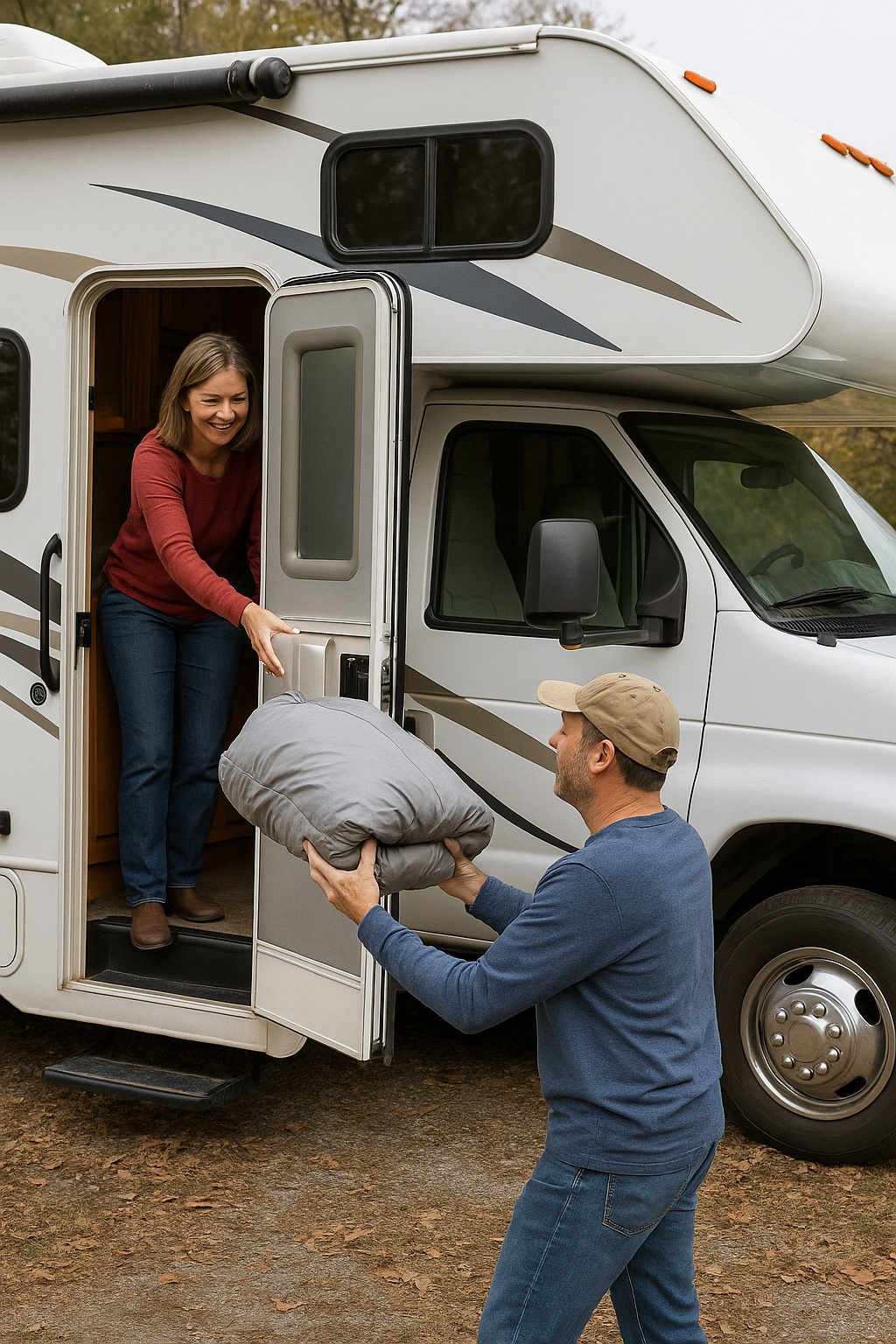
17. Bedding & Pillows
– Your camper mattress may be firm or thin, so bring a mattress topper if needed. Pack sheets, blankets, and your favorite pillows to make it feel more like home. We purchased sheets, blankets, a bedspread, and pillows specifically for the RV. Makes loading up much easier.
18. Towels & Washcloths
– Pack enough towels for showers and separate ones for outdoor or pet use. Microfiber towels dry quickly and store easily, but fluffy ones are a treat. Bring several more towels than you think you will need. Ask me how I know. I now have the towels we use out in the bathroom, but tucked away in a cabinet in our bedroom are about six towels rolled up tightly (space saving)that are there for “emergencies”.
19. Portable Fan or Space Heater
– Depending on the season, a fan or space heater helps control temperature without overloading your RV’s power system. Choose low-wattage options. If the weather is going to be stifling hot, we will also put a fan outside.
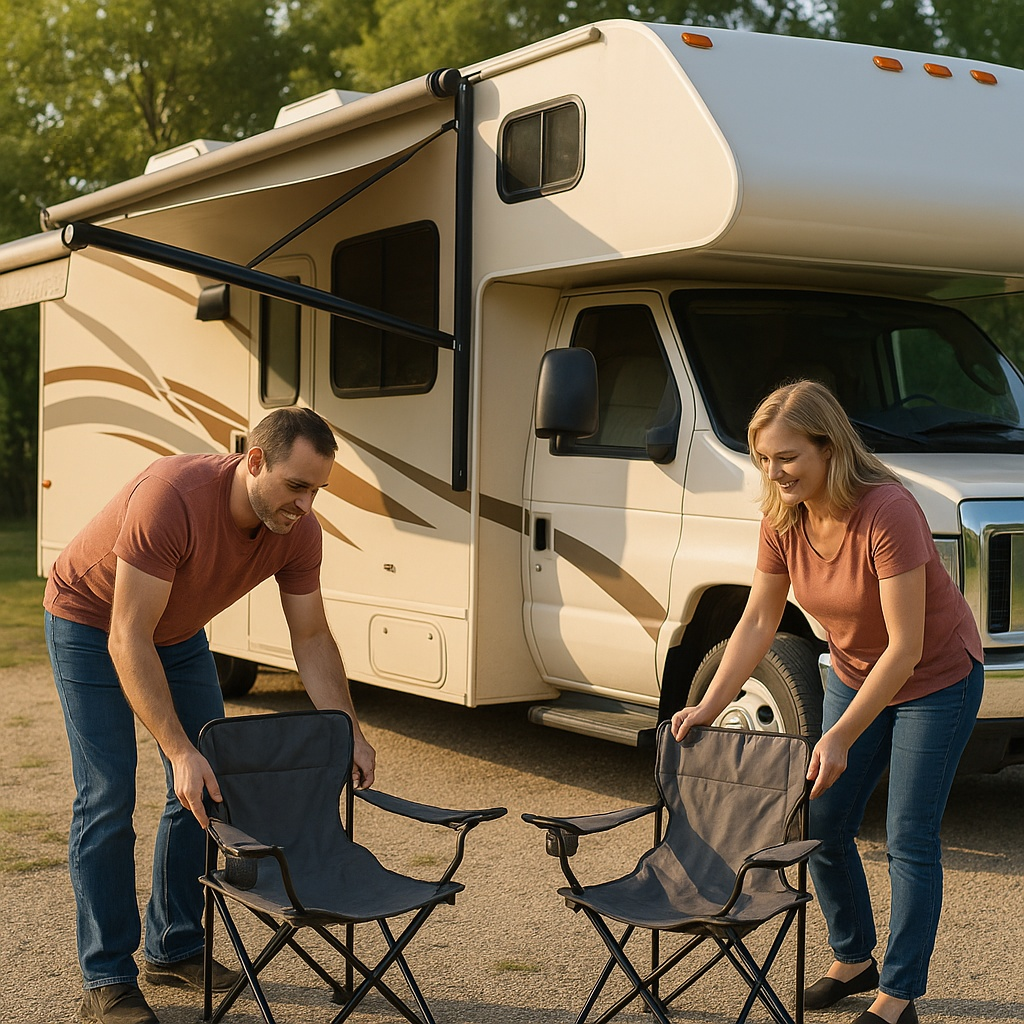
20. Outdoor Rug & Camp Chairs
– Set up your outdoor living area with a mat to catch dirt and comfy chairs for relaxing, eating, or watching the stars.
21. RV-Safe Toilet Paper
– Using the right toilet paper is key to keeping your black tank happy. Regular household TP can clog things up fast. Use only RV-safe toilet paper. 👉 Want to know more about this? Check out our blog post, Tales from the Tank, where we talk all things RV black tank.
22. Black Tank Treatment Enzymes
– These odor-fighting enzymes help break down waste and keep things fresh. Add to the toilet after every tank dump or as directed. Everyone has their favorite brand, so try a few and decide what works best for your camping style. I have tried several brands over the years and am most pleased with Happy Camper.
23. Flashlights & Headlamps
– Perfect for walking to the bathhouse, finding things after dark, or checking hookups at night. Keep one per person if possible. A new hack I have learned about is using individual camp lights (I’ve seen it done with small lanterns, too) that you can set on the ground (2-3 on each side), creating a sort of runway to make backing up at night easier. I purchased solar camping lanterns to use for this purpose.
24. Extension Cord & Power Strip
– Outlets inside the camper are limited. A surge-protected power strip helps when you need to charge devices or plug in extra appliances. However, outdoor extension cords are also handy, but not a must-have in the beginning.
25. Printed Setup & Packing Checklist
– This must-have probably should have been at #1. Even seasoned RVers use checklists. Keep one handy for what to pack, how to set up, and what to double-check before leaving. It saves time and prevents items from being left behind or not being done. The key to this being successful is that you must look at the list each time; otherwise, you might forget something, even if you have been packing the RV for years. I recently forgot to pack our pillows! Yep, I did not check my list; I just assumed they were in the RV. I had forgotten that I had washed them and put them in our guest room, awaiting our next trip.
Real Talk for New RVers
Our best advice? Start with the camping basics, then adjust after your first trip. You’ll quickly learn what you use and what you don’t. Pack light for your first outing—there’s no prize for the most gear in the smallest camper. However, if an item does not work, remove it from the RV so that you don’t continue to accumulate unused items. Space is precious in an RV.
Some of Our Favorite Tips:
– Test camp at home: Sleep in your driveway and try using everything in your RV. You will identify gaps before you’re out at a campsite.
– Take notes: keep a running list during the first few camping trips of what you wish you had brought. Make the adjustments when you get home.
– Ignore pressure to “do it all”: You don’t need twinkle lights, themed flags, and matching dinnerware on day one. Build up your setup slowly and enjoy the process.
Final Thoughts
Starting your RV journey is exciting—and yes, a little overwhelming. With this list of 25 essential RV camping basics, you’ll have what you need to stay safe, cook meals, sleep comfortably, and enjoy your first adventures. Over time, you’ll personalize your packing list and build a setup that fits your camping style.
We hope this post helps you pack with confidence and camp with joy. Welcome to the road—and happy camping from RV Noni!