When you’re out enjoying a peaceful weekend in your RV, the last thing you want is to deal with a fried electrical system. Unfortunately, power surges at campgrounds aren’t just possible, they’re common. A quality RV surge protector is your first line of defense against costly damage to your rig’s electronics. No matter your experience level, whether you’re a new RV owner or looking to upgrade your gear, this guide will explain everything you need to know about surge protectors and how to choose one that keeps your RV safe.
What Is an RV Surge Protector and Why Do You Need One?
Let’s start with the basics: an RV surge protector is a device that shields your RV from voltage spikes, power surges, and wiring issues that often occur in campground electrical hookups. Even so,these problems might not be visible, but they can seriously damage your RV’s refrigerator, air conditioner, TV, microwave, and other appliances.
Without a surge protector, your rig is vulnerable to:
- Lightning strikes near the campground
- Overloaded power pedestals
- Incorrect wiring (which is more common than you’d think)
- Voltage drops from too many campers on the same circuit
Think of it like home insurance. You might not need it every trip, but when something goes wrong—you’ll be glad it’s there.
The Difference Between Surge Protectors and Electrical Management Systems (EMS)
You may hear the terms RV surge protector and electrical management system used interchangeably, but there are key differences. A basic surge protector only protects against high-voltage spikes. On the other hand, an EMS monitors the entire electrical system and shuts off power when it detects issues like:
- Low voltage (which can damage electronics over time)
- Reverse polarity
- Open ground or neutral wires
- Frequency issues
If you’re starting out or camping occasionally, a standard RV surge protector is a good start. If you’re a frequent RVer or planning longer stays, investing in an EMS may be worth the extra cost for peace of mind.
How to Choose the Right RV Surge Protector for Your Setup
When shopping for a surge protector, you’ll notice a few important things to consider. Here’s a breakdown:
1. Choose Between 30-Amp or 50-Amp Surge Protectors
Your RV will use either a 30-amp or 50-amp electrical system. If you chose incorrectly, using the wrong one won’t protect your RV adequately and could even cause damage. Check your RV owner’s manual or look at your power cord to confirm your setup.
2. Portable vs. Hardwired RV Surge Protectors
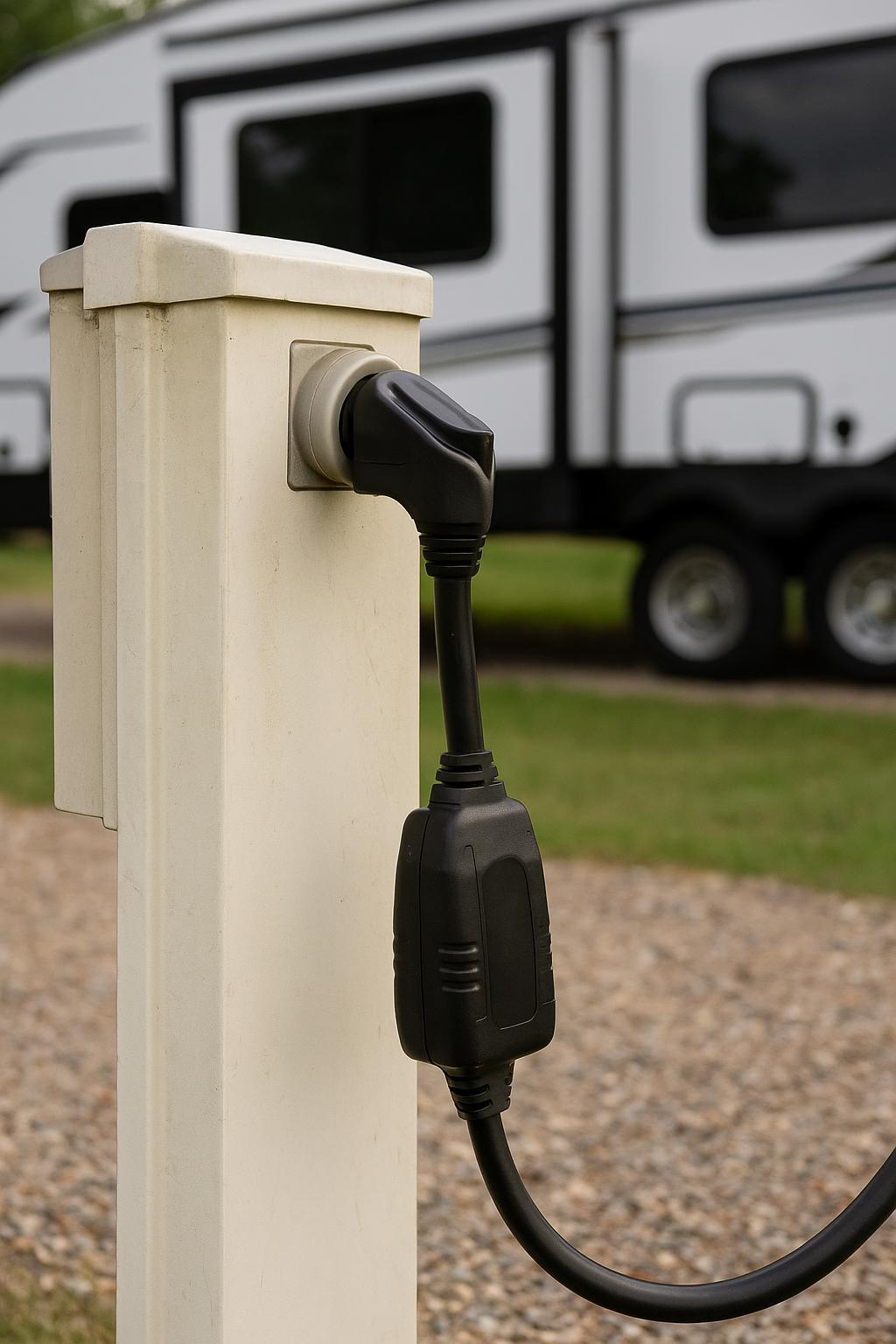
- Portable surge protectors plug directly into the power pedestal and then into your RV. They’re easy to use and can move with you from one RV to another.
- Hardwired surge protectors are installed inside your RV and offer more protection from theft or weather exposure. These are great if you want a permanent, tamper-proof solution.
3. Joule Rating
This tells you how much energy the surge protector can absorb before it fails. Look for a rating of at least 1,200 joules for moderate protection. For higher-end models, joules over 3,000 offer the best protection.
RV Surge Protector Installation Tips for Beginners
If you’re using a portable RV surge protector, installation is simple:
- Plug the surge protector into the campground power pedestal.
- Wait a few seconds for the indicator lights or the display to confirm that the power is safe.
- Plug your RV’s power cord into the surge protector.
For hardwired models, professional installation is recommended unless you’re confident working with electrical components. The process involves wiring the surge protector into your RV’s power panel—something best left to a licensed RV tech if you’re unsure.
How to Read RV Surge Protector Error Codes and Lights
Most surge protectors include LED indicators or LCD screens that tell you whether the pedestal power is safe. Common readings include:
- Green light: Power is safe—go ahead and plug in.
- Red light: There’s an issue like reverse polarity or open ground—do not plug in.
- Flashing indicators: These may signal a recent surge or voltage irregularity.
Be sure to review the manual that comes with your surge protector, so you understand what the lights and codes mean.
Best RV Surge Protectors on the Market in 2025
Here are a few surge protectors that are highly rated among RVers:
● Progressive Industries EMS-PT50X (50 Amp)
- High-end EMS model
- Weather-resistant and portable
- Protects against surges, low/high voltage, and miswiring
● Hughes Autoformers Power Watchdog Smart Surge Protector 30 amp or Hughes Power Watchdog PWD 50 Smart Surge Protector 50 amp
- Bright LED display and Bluetooth monitoring via phone
- Replaceable surge module
- Great mix of price and protection
● GEARGO RV Surge Protectors 50 Amp, or GEARGO RV Surge Protectors 30 Amp
- Budget-friendly option
- Good for weekend RVers
- Basic surge protection without extra features
These products offer a range of features that can be tailored to your budget and RV lifestyle. Just ensure you select the correct amp level.
Common Mistakes to Avoid When Using an RV Surge Protector
- Plugging in without checking the lights: Don’t assume campground power is safe. Always wait for a green light or check the display before connecting your RV.
- Leaving the surge protector out in the rain: While many models are weather-resistant, prolonged exposure to water can reduce their lifespan. Consider a lockbox or cover.
- Forgetting to secure it: Unfortunately, portable surge protectors can be stolen. Use a locking device to keep yours secure at the campsite.
- Using an old or damaged surge protector: Surge protectors wear out over time. If yours survived a significant surge or shows signs of damage, replace it.
Is an RV Surge Protector Really Worth the Cost?
Yes, without a doubt.
A quality RV surge protector typically costs between $100 and $300. That may seem steep, but consider the cost of replacing your air conditioner, microwave, or inverter system. The cost of repairs or insurance claims could easily run into the thousands.
Even if you’re only RVing on weekends, campground power isn’t always predictable. A surge protector gives you peace of mind and helps avoid ruined trips or unexpected repair bills.
Final Thoughts: Protect Your RV and Travel with Confidence
RVing is supposed to be fun—and nothing ruins the fun faster than an unexpected electrical issue. An RV surge protector is one of the smartest investments you can make in protecting your rig and everything in it.
From budget-friendly basics to advanced EMS models, there’s a surge protector for every camper and every budget. Take the time to choose the right one, install it properly, and enjoy your RV adventures knowing your home on wheels is protected.