
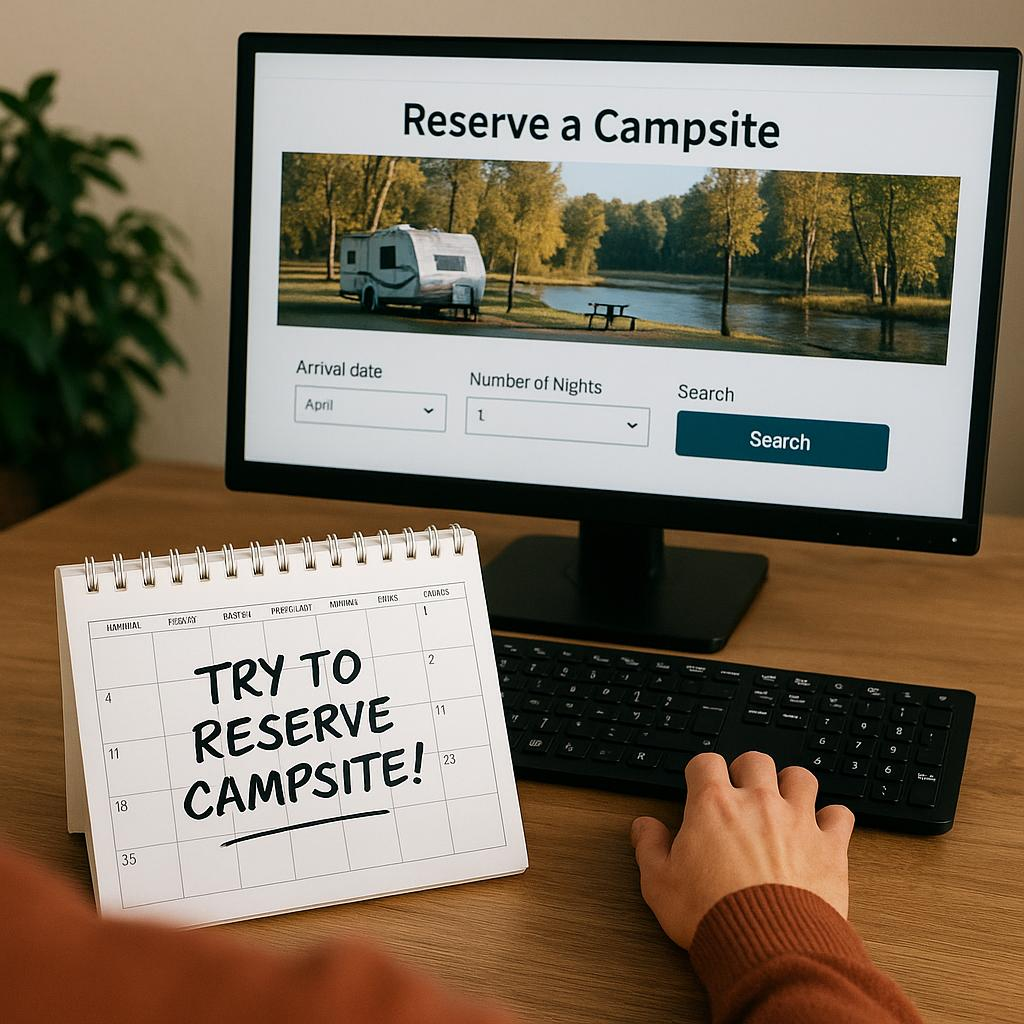
The Struggle Is Real—and You’re Not Alone
If you’ve recently tried to reserve a campsite and felt like screaming at your screen—you’re in good company. State parks, Corps of Engineers (COE) sites, county-run campgrounds, and even private RV parks are all filling up faster than ever. What used to be a peaceful hobby has turned into a digital scramble. Whether you’re a seasoned weekend warrior or a first-time RVer, the frustration is real. We’ve felt it too. We’ve hit refresh dozens of times, logged in early, planned months ahead, and still missed out.
But you’re not powerless. While the demand has exploded, there are still ways to plan smarter and increase your chances of landing that perfect campsite.
Why Is It So Hard to Book a Site Now?
A few years ago, you might have been able to book a site a few weeks—or even days—in advance. Now, sites are getting scooped up as soon as booking opens. Several things are contributing to this:
– The post-pandemic surge in RV ownership
– Limited availability of electric and full-hookup sites
– Increased popularity of state and federal parks
– New remote workers traveling full-time in RVs
More campers + limited sites = frustration. But understanding the system can give you a major edge.
What You Need to Know Before You Book
Preparation is everything when it comes to booking campgrounds. Before you click “Reserve,” make sure you know:
– The length of your RV and whether you need a back-in or pull-through site
– Whether you need a 30 or 50 amp hookup
– If you require full hookups, water/electric only, or can manage with dry camping
– Your desired location: shaded, near water, near a bathhouse, etc.
– Your exact travel dates and how flexible you can be
– Your camping crew: pets, kids, accessibility needs
Having these details ready helps you search faster and avoid filtering through sites that won’t work.
Planning Ahead Is Key
Set yourself up for success by planning ahead—sometimes well in advance. Many Texas State Parks allow booking 5–6 months in advance. Some private parks open reservations up to a year out. If you know you want to camp over a holiday or during peak season, it’s essential to plan and begin making reservations as soon as possible.
We recommend maintaining a camping calendar—either digital or physical. Mark down important reservation windows. Use reminders or alarms a few days before and the morning of booking windows. Sounds excessive, but sometimes it’s the excessive effort that gets you the site you want.
Apps like Campendium, RV Life, The Dyrt, and CampNab are also great tools to help you scout sites, find cancellations, and read reviews in advance.
Tips on How to Book Texas State Parks
Texas State Park systems operate on a rolling reservation window—usually 5 or 6 months in advance. Reservations open at 8 a.m. local time, and popular parks can fill in minutes.
* Create your account in advance and log in early.
-Use the email option to receive an email notification when a cancellation occurs. However, those who requested an email when a cancellation occurs are also rushing to secure the booking.
– Set multiple reminders in your phone or calendar
– Know your exact dates and have backups ready
– Use the ‘sliding window’ trick: book a longer stay that starts earlier than your target date, then cancel extra days later
– Be flexible with weekdays instead of weekends
Tools that help: CampNab, state park email alerts, and setting “favorites” on booking platforms to move fast
Hacks for Booking Corps of Engineers (COE) Parks
COE campgrounds are known for scenic sites and great prices—but they also book quickly. Reservations open 6 months in advance via Recreation.gov.
– Have your Recreation.gov account ready and be logged in early
– Use the flexible date search feature to see what’s open nearby
– Target mid-week stays or off-season trips for more availability
– Consider checking parks that are a little farther from metro areas
Tools that help: Recreation.gov mobile app, browser autofill for faster checkout, and the Campflare alert system for cancellations
How to Book at a Private Park
Private parks often offer more amenities and allow for longer stays, but they don’t all have modern booking systems—and they fill up during peak seasons too.
– Don’t rely solely on online booking—call the park directly
– Ask if they have a waiting list or last-minute cancellations
– Join loyalty or membership programs for early access
– Be polite but persistent—cancellations happen all the time
– Avoid holidays and school breaks when families book early
Tools that help: The Dyrt PRO, RV Parky, and joining Facebook groups for campground swap alerts
Hacks to Book a Site at a County & City Parks
Often overlooked, county and city-run parks can be just as easy to book and just as beautiful. These vary widely by region but can be real hidden gems.
– Research lesser-known parks through local tourism websites
– Call or email the parks department—some require manual reservations
– Use Google Maps to spot campgrounds not listed on major apps
– Ask locals or other RVers for recommendations
Tools that help: Local county websites, Google Reviews, Campendium, and RV Life Trip Wizard
Final Thoughts: You’re Not Alone
It’s easy to feel defeated when you’ve planned a trip and can’t find an open site—but don’t give up. The system may feel stacked against you, but with the right strategy, a bit of patience, and some backup plans, you’ll find your way.
We’ve all been there. We’ve stayed up late refreshing pages, only to watch our dream site disappear. But we’ve also scored last-minute sites, found new favorite parks off the beaten path, and learned to make the most of weekday trips and shoulder seasons.
Keep planning, stay flexible, and remember—the goal isn’t just to reserve a spot, it’s to enjoy the journey.
Here are the key websites and resources mentioned—perfect for bookmarking or adding to your planning toolkit:
Reservation Platforms
Texas State Park booking (ReserveAmerica):
https://texasstateparks.reserveamerica.com
Corps of Engineers & federal campgrounds (Recreation.gov):
https://www.recreation.gov
Cancellation Alert & Planning Apps
CampNab – Paid cancellation-alert service:
https://campnab.com/ (Hipcamp Help, campnab.com)
Campflare – Free campsite alert service:
https://campflare.com/ (Campflare)
Hipcamp Alerts – Uses Campflare backend for alerts via Hipcamp:
https://www.hipcamp.com/alerts (hereandthere.club)
RV Travel & Campground Discovery Tools
Campendium – Reviews, maps & cell service info:
https://www.campendium.com
RV Life – Trip planning, campground database:
https://www.rvlife.com
The Dyrt – Public & private campground listings, PRO memberships:
https://www.thedyrt.com
RV Parky – Private park directory & reviews:
https://www.rvparky.com
