
If you’re new to RV camping, you’ve probably heard people talk about black tanks, gray tanks, and fresh water tanks. Maybe you’ve nodded along like you understood what they meant, but deep down you were thinking… what does all of this actually do?
You’re not alone. We had a conversation with someone in our own family who had heard us talk about “the tanks” for years, but didn’t really understand what any of it meant until we explained it in simple terms. Once it clicked, everything else about RV camping started to make more sense.
That’s exactly what this post is here to do. This guide will walk you through RV tanks explained in a way that’s easy to understand, so you can feel more confident the next time you hear those terms—or use them yourself.
What Are RV Tanks and Why Do They Matter?
At the most basic level, your RV has a system that brings in clean water and carries waste water out. That system is made up of three main tanks, and each one has a very specific job.
When people talk about RV tanks, they’re really talking about how water moves through your RV from the moment it comes in clean to the moment it leaves as waste. Understanding that flow is what helps everything else make sense, from using your sinks to connecting at a campsite.
Once you see how each tank fits into that process, it stops feeling confusing and starts feeling pretty straightforward.
The Fresh Water Tank: Your Clean Water Supply
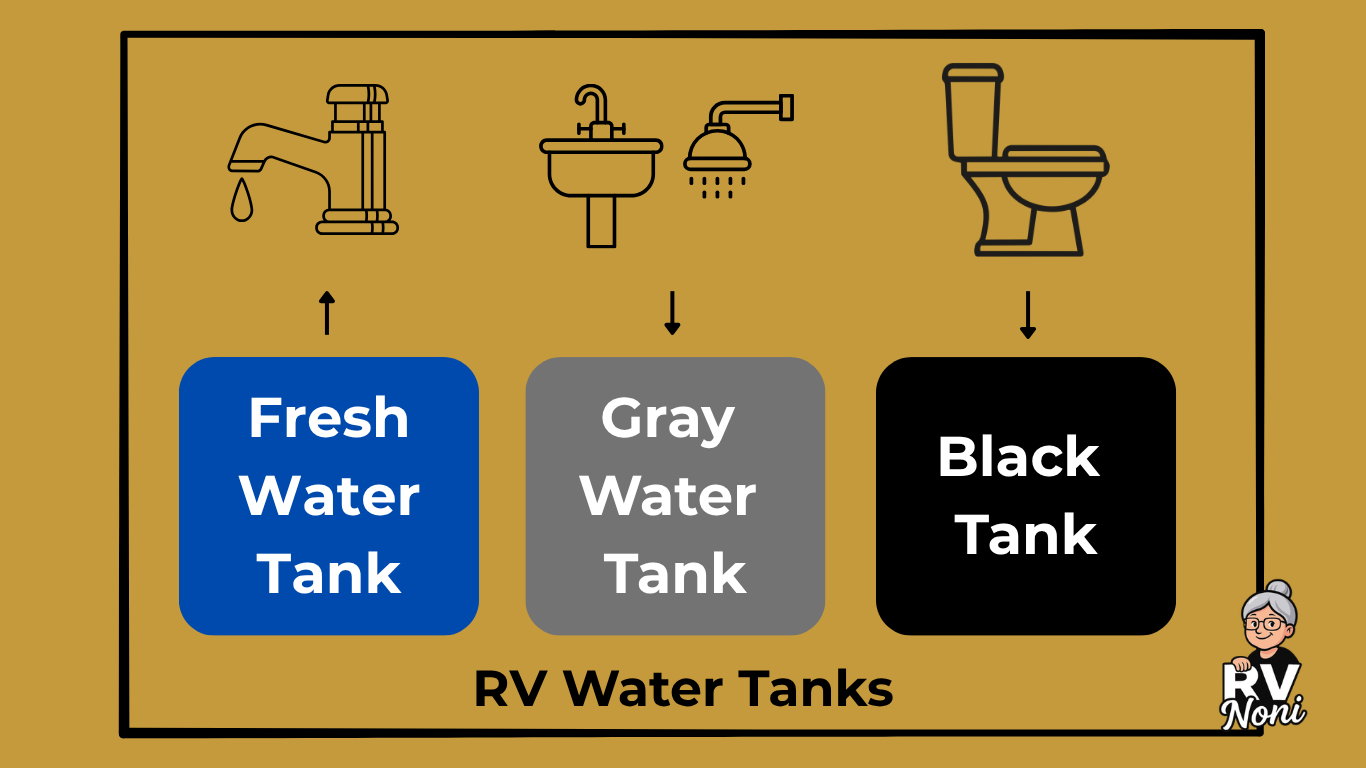
The fresh water tank is the easiest one to understand because it holds clean, usable water. This is the water you use for washing your hands, taking a shower, brushing your teeth, and sometimes even drinking if you choose.
Think of it like a portable water supply that travels with you. If you’re not connected to a campground water source, this tank lets you still use your RV like you would at home.
When learning about RV tanks, it helps to think of the fresh water tank as the starting point. Water comes in here first, and from there it gets used throughout your RV.
As you use that water, it doesn’t just disappear. It has to go somewhere, and that’s where the other tanks come in.
The Gray Tank: Where Used Water Goes
The gray tank holds water that has already been used but isn’t considered waste from the toilet. This includes water from your sinks and shower.
So when you wash dishes, rinse your hands, or take a shower, that water drains into the gray tank. It’s no longer clean, but it’s also not as harsh or contaminated as what goes into the black tank.
In simple terms, when people hear RV tanks explained, the gray tank is often described as “everything but the toilet.” That’s an easy way to remember it.
Understanding the gray tank also helps you understand why it fills up faster than you might expect. Everyday activities like washing dishes and showering add up quickly, especially on longer trips.
The Black Tank: What Most People Worry About
The black tank is the one that gets the most attention, mostly because it sounds intimidating. This tank holds waste from the toilet, and that’s why many beginners feel unsure about it at first.
But when you look at RV tanks explained in a simple way, the black tank is just another holding tank with a specific purpose. It collects waste until you’re ready to empty it at a dump station or through a full hookup connection.
The key thing to understand is that this tank needs to function properly to avoid issues. It’s not something to be afraid of, but it is something to respect and handle correctly. If you’re new to all of this, I break down simple black tank basics so you know exactly how to take care of it without overthinking the process.
Once you understand what it does and how it fits into the system, it becomes much less intimidating.
How All Three Tanks Work Together
When you put it all together, the RV tank system becomes much easier to understand.
Clean water starts in the fresh water tank. As you use it, that water moves into the gray tank or the black tank depending on how it’s used. From there, both of those tanks are eventually emptied at a campsite or dump station.
It’s simply a flow: clean water in, used water out.
Seeing it this way removes a lot of the confusion. You’re not dealing with three separate, complicated systems—you’re working with one system that moves water through your RV in a logical way.
Why Understanding Your Tanks Builds Confidence
One of the biggest reasons beginners feel overwhelmed is because they don’t fully understand what’s happening behind the scenes. Once you have the RV tanks explained in clear, simple terms, everything else starts to feel more manageable.
Suddenly, hooking up your sewer hose makes more sense. Dumping your tanks feels less intimidating. Even simple things like conserving water become easier to understand.
It’s not about memorizing technical details. It’s about knowing enough to feel comfortable and in control.
A Simple Way to Remember It All
If you ever find yourself second-guessing what each tank does, just go back to this:
Fresh water tank holds clean water coming in.
Gray tank holds used water from sinks and showers.
Black tank holds waste from the toilet.
That’s really all there is to it.
When people talk about RV tanks, it doesn’t have to be complicated. Keeping it simple is what makes it stick.
Final Thoughts: It’s Easier Than It Sounds If RV tanks have felt confusing up to this point, that’s completely normal. Most people hear the terms long before anyone explains them clearly.
But once you see how each tank works and how they connect, everything starts to click. And when that happens, you’re no longer guessing—you’re understanding what’s actually happening in your RV.
That confidence carries over into every part of your trip, from setup to cleanup and everything in between.
And the next time you hear someone talking about RV tanks, you won’t just nod along… you’ll actually know exactly what they mean.
Next Steps for RV Tank Basics
Now that you understand how RV tanks work, the next step is learning how to take care of them and use them at the campsite. If you’re getting ready for your first trip, these guides will help you feel more confident: