Tag: RV camping

  • Our $ 100.00 RV Coastal Refresh

    Our $ 100.00 RV Coastal Refresh

    Have you ever walked into a room and thought, “This just doesn’t work, and I can’t look at it one more day”? That’s exactly how I felt about our RV earlier this year. Last May, I had back surgery, and during that time, we purchased a new-to-us Class A motorhome. We were so excited to purchase our dream…a Tiffin Class A. We absolutely fell in love with the coach the moment we saw it. The layout was perfect for us, the space felt comfortable, and we immediately started dreaming about all the trips we would take.

    From the beginning, we knew we wanted a coastal theme inside the RV. There was already a framed turtle print in the RV from the factory, and the Allegro Open Road décor theme was called Ocean. That seemed like the perfect starting point.

    So naturally, I leaned into the RV coastal décor idea.

    I bought a bright turquoise comforter that had an ocean theme. Quilted into the comforter were starfish, seashells, and seahorses. We also picked up turquoise items for the kitchen to match. At first, I loved it. But every time I walked into the RV, something felt a little off. But since decorating is not exactly one of my talents, I couldn’t figure out what the problem was.

    When a Decorating Idea Doesn’t Work

    This February, I finally admitted to myself that the look just wasn’t working. Now let me be honest here… I have loved the ocean and the beach my entire life. If I see something with shells or starfish on it, I’m probably going to love it. But I came to realize the comforter looked more like something a teenage girl would pick for her beach-themed bedroom than the relaxed coastal look I wanted for our RV.

    In my heart, I’m still that teenage girl who loves ocean décor. But I’m also 60-plus years old, and suddenly the RV bedroom felt a little too youthful. So, I had one of those decorating moments many people recognize:

    “Okay… I’m done. I have to fix this.”

    Finding an RV Coast Style

    The challenge was figuring out an RV Coastal color palette.

    The RV already had:

    • warm wood cabinets
    • taupe seating
    • neutral flooring

    Whatever I chose had to work with those existing colors.

    After thinking about it for a while, we decided sea glass would be a great color direction. I could see it in my mind and loved it. It felt coastal without being overly beachy, and it would look good against the warm cabinetry.

    So, I found a beautiful comforter on Amazon with a light sea-glass background and white coral pieces, and, best of all, it was labeled “sea glass,” so it had to be the one to buy. I also found a blanket for the loveseat that looked like it would match. Problem solved… or so I thought.

    When the Plan Changes

    The blanket for the loveseat was suddenly backordered for a month. And when the comforter arrived, it turned out the color called “sea glass” wasn’t sea glass at all. Instead of a greenish sea glass tone, it was actually a soft coastal blue. At that point, I had two choices.

    Send it back… or see how it looked in the RV.

    So, I put it on the bed. And I immediately loved it. The calmer blue tone worked beautifully with the wood cabinets and instantly made the bedroom feel more relaxed. That’s when I realized something important. Instead of trying to force sea glass green into the RV, I needed to pivot the color palette to blues.

    Building the New RV Coastal Look

    Once the comforter was in place, everything else started falling into place, too.

    First, I added a navy waffle blanket folded at the end of the bed. The darker navy added contrast and helped anchor the softer blue comforter. I added a small 12″ x 20″ pillow that says “love you to the beach & back” to finish the bedroom.

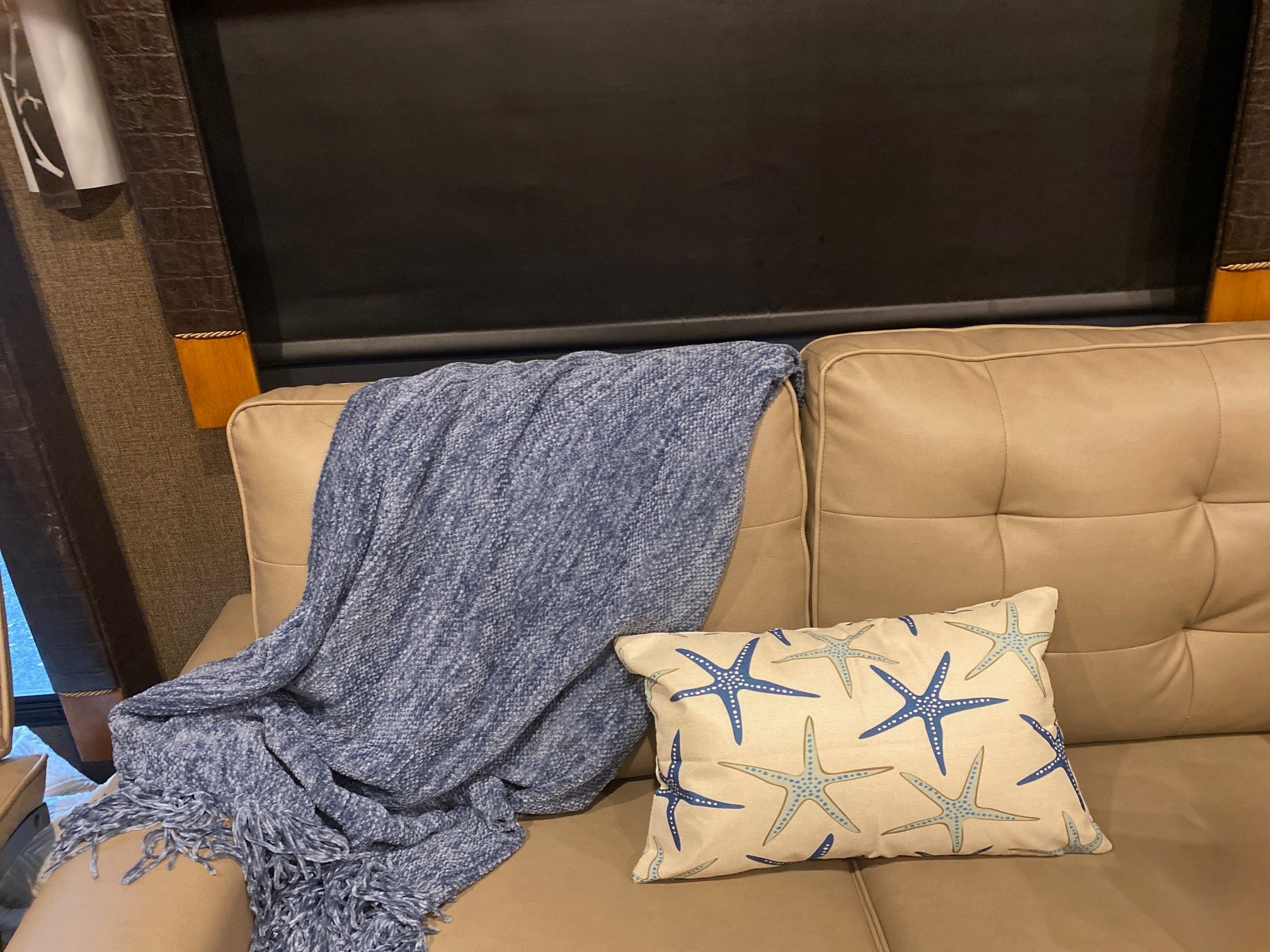
    Next, I went back to search for the loveseat blanket. Since we were now working with a blue palette instead of sea glass, I started looking for a blanket with different shades of blue. After being disappointed with the colors on Amazon, I went in person to shop for the blanket and found the perfect one. It added texture, color, and a relaxed coastal feel to the loveseat without overpowering the small space.

    The Perfect Pillow

    Because the loveseat is small, I didn’t want large pillows taking up the seating area. Instead, I looked for one small lumbar pillow that would add a little personality. I wanted something slightly whimsical but still grown-up. The pillow I chose has navy starfish with a soft turquoise accent on a neutral linen background. It ties together the shades of blue from the blanket while still keeping the coastal theme subtle.

    A Surprise Color Connection

    Once the blues were in place, something funny happened. I realized that the color tying everything together was navy. The navy blanket on the bed anchored the bedroom. The loveseat had a mixture of light blue and darker blue threads. And suddenly, navy became the accent color throughout the RV.

    That’s when I remembered something. My bathroom towels were already a muted grayish navy. So, I swapped them. I moved the newer towels into my bathroom at home (which gave that space a little refresh, too) and brought the navy towels into the RV. They worked perfectly.

    Using What I Already Had to Create an RV Coastal Theme

    Once I saw how well the navy worked, I went through the house to see what else I could use. I grabbed a few navy kitchen towels and swapped them with the turquoise ones we had originally purchased for the RV kitchen.

    Now the entire RV has a consistent look:

    • soft coastal blues
    • navy accents
    • warm wood cabinets
    • neutral seating

    It felt coastal without feeling like a themed beach bedroom.

    A Small Coastal Touch

    While we were in Port Aransas, I found one more fun addition. A small whale butter dish in a local shop. It was one of those things that just made me smile, so it came home with us and now lives in the RV kitchen. Little touches like that add personality and remind us of the places we visit.

    The Best Part of the RV Coastal Refresh: It Cost Less Than $100

    The best part of this entire refresh? Between the new items and the things I already owned, the total cost was under $100. We didn’t replace furniture. We didn’t repaint cabinets. We didn’t remodel anything. We simply adjusted the color palette and added a few carefully chosen accents. And now, when I walk into the RV, I feel exactly what I hoped for from the beginning: A relaxed coastal space that reflects our love of the beach without looking like a teenage girl decorated it.

    Simple Ways to Add RV Coastal Décor to Your RV

    If you’re trying to create an RV coastal look without replacing furniture, start with small changes:

    • coastal bedding
    • throw blankets in ocean blues
    • navy accent towels
    • natural textures like baskets
    • small beach-themed accents

    These simple updates can completely change the feel of an RV interior.

    Items We Used in This Refresh

    The starfish throw pillow added a soft coastal feel to the seating area without taking up much space. view on Amazon

    The comforter, this simple update, made the space feel fresh and comfortable. It’s lightweight, which we like, and it fits the bed well without much overhang. view on Amazon

    Butterdish similar to ours, view on Amazon

    The navy waffle blanket adds a simple layer of comfort and texture without making the bed feel visually heavy. view on Amazon

    I added a ” Love You to the Beach & Back” small pillow to the bed. It is a small accent that brings a little bit of personality into the RV while keeping the space light and uncluttered. View on Amazon.

    The blue throw blanket on the love seat was purchased locally because I wanted to see the colors before purchasing.

  • Friday Night Camping Tips for Weekend RVers

    Friday Night Camping Tips for Weekend RVers

    If you’re a weekend RV camper like we are, your trips probably follow the same rhythm.

    Work all week.
    Pack Thursday night.
    Leave straight after work on Friday.
    Pull into your campsite sometime between sunset and “where did the daylight go?”

    That’s exactly why having practical Friday night camping tips matters more than most people think. Because Friday evening isn’t a full vacation day.

    It’s a transition.

    And if you treat it like a full adventure day, Saturday — your only real day — ends up paying the price.

    First, Let’s Be Honest About Timing

    Before we go any further, let’s clarify something important.

    If we arrive at a campground at 2:00 or 3:00 in the afternoon with full daylight and no work stress behind us, that’s a completely different situation. We might take a short walk and maybe explore a little. We might ease into the park while the sun is still high.

    But that’s not the typical Friday scenario for most weekend RVers. rida

    Most of the time, we arrive after work. We’re tired. Daylight is fading. Our brains are still half in “email mode.”

    That’s when the rules shift. And that’s where the most important of all Friday night camping tips comes into play — something I call The First Night Rule.

    What The First Night Rule Actually Means

    The First Night Rule isn’t about doing nothing. It’s about doing the right things in the right order when energy is low and daylight is limited.For after-work arrivals, The First Night Rule means:

    • Safe, unhurried setup
    • A very simple dinner
    • Sitting down after set up & dinner to relax

    No full hikes.
    No ambitious park exploration.
    Along with no pressure to “make the most of it.”

    Just land. Enjoy the calm. Reset.

    When we pull into a park close to dusk, we use to remind ourselves that Friday night is not an activity night (now it is just what we do-a habit).

    It’s transition night. That mindset alone lowers stress.

    Friday Night Camping Tips #1: Lower Expectations about Arrival

    One of the biggest mistakes weekend campers make is expecting Friday night to feel like Saturday.

    It won’t.

    You’ve worked all day. You’ve driven. You’re navigating a site in fading light. Your mental bandwidth is thinner than you think. The smartest Friday night camping tips start with lowering expectations.

    That shift changes everything.

    Friday Night Camping Tips #2: Slow Setup Beats Fast Setup

    Arriving in low light changes depth perception. You can’t see the slope clearly. You’re guessing at tree branches. Even experienced RVers feel that subtle tension backing in at dusk.

    One of our most practical Friday night camping tips is simply this: slow down.

    Don’t rush.

    No trying to impress neighbors with your skills

    No irritation if something takes longer than expected.

    Level carefully. Double-check hookups. Use extra lighting if needed (headlamps are great for this).

    This is part of The First Night Rule. Calm beats fast every time on a late Friday arrival.

    Friday Night Camping Tips #3: Make Dinner Almost Boring

    Friday is not gourmet night.

    If you want your weekend to feel relaxed, dinner must be simple. This might be the most underrated of all Friday night camping tips.

    For us, that means:

    • Pre-made food from home
    • Sandwiches and chips
    • Something that reheats in microwave

    The goal is to be sitting outside within 30–45 minutes of finishing setup. If it takes longer than that, we need to bring less.

    I have always made a meal at home that is easy to warm up…I think a lot of campers have spaghetti on Friday night because it’s an easy prep meal. It just made sense to have an easy meal; now looking back, that was probably one of my best newbie ideas. Because Saturday deserves your energy — not Friday dinner.

    Friday Night Camping Tips #4: Protect Your Only Full Day

    Weekend camping gives you one golden day.

    Saturday is for:

    • Morning coffee outside
    • Hiking trails
    • Time by the river or lake
    • Scenic drives
    • Doing absolutely nothing

    If you burn mental and physical energy Friday night, Saturday starts at 60 percent instead of 100.

    One of the most overlooked Friday night camping tips is recognizing that energy is limited — especially after a work week.

    When we honor the First Night Rule, we wake up refreshed on Saturday. Coffee tastes better. We’re not already irritated from pushing too hard the night before.

    And that changes the entire weekend.

    Friday Night Camping Tips #5: Do Less Than You Think You Should

    This is where people sometimes push back. “But we always hike the first evening,” or “We love exploring right away.” And that’s fine — if you arrive early with energy to spare.

    But when we’re arriving after work in fading light, doing less actually makes the weekend feel longer. It’s ok to take a short walk to stretch your legs if your drive is long.

    But stop there.

    The best Friday night camping tips include giving yourself permission to pause.

    Sit outside.
    Listen to the sounds of nature.
    Watch other campers settle in.

    You don’t need an activity to justify being there. Sometimes the quiet first hour is the reset you didn’t realize you needed.

    Why The First Night Rule Works

    All of these Friday night camping tips flow into one simple idea: protect the transition.

    The First Night Rule works because it acknowledges reality:

    • You’re tired.
    • It’s getting dark.
    • Saturday matters most.

    It isn’t rigid. It isn’t universal. It applies the most to after-work arrivals with limited daylight. Because we have:

    Less friction.
    Better sleep Friday night.
    More energy Saturday morning.

    Short Texas trips began feeling restorative instead of compressed.

    A Gentle Challenge for Your Next Weekend Trip

    On your next weekend RV trip — especially if you’re arriving after work — decide ahead of time that Friday has a different purpose.

    Keep dinner simple.
    Move slowly during setup.
    Leave the schedule blank.

    Let Saturday hold the adventure.

    The most practical Friday night camping tips aren’t about squeezing in more. They’re about protecting what little time you actually have camping. And when you follow The First Night Rule on after-work arrivals, you’ll notice something subtle but powerful:

    Your only full day feels bigger.
    Your patience lasts longer.
    And your weekend feels calmer.

    Not because you did more.

    But because you knew when to stop and take time to watch the stars.

  • The Smart March RV Camping Strategy for Texas

    The Smart March RV Camping Strategy for Texas

    Cold Mornings and Warm Afternoons

    March camping in Texas keeps you humble. You step outside at sunrise wrapped in a hoodie, clutching a hot cup of coffee, and by mid-afternoon, you’re hunting for short sleeves and cracking open the windows. If you’ve camped here long enough, you already know that March does not believe in consistency. That’s exactly why you need a solid March RV camping strategy instead of just tossing random layers into a duffel bag and hoping for the best.

    Texas in early spring is a tug-of-war between winter and summer. One day brings crisp 40-degree mornings, and the next feels like late April. It’s the temperature swing that impacts everything inside your RV, from propane usage to humidity levels to how comfortable you feel sitting under the awning at 4 p.m. A March RV camping strategy makes those swings manageable instead of miserable.

    Why March in Texas Feels So Extreme

    March weather changes fast across Texas. Cold fronts still sweep through, but strong sun angles warm everything quickly by midday. That combination creates rapid temperature swings. Your RV absorbs overnight chill, and then by mid-afternoon, the interior can feel stuffy and warm, especially if you’re parked in direct sun.

    These swings aren’t just about comfort. They affect condensation inside the rig, how often your furnace kicks on, and even how well you sleep. When you understand this pattern, you can build your March RV camping strategy around it instead of reacting to it.

    The key is to expect fluctuation. Plan for two seasons in one day.

    Mastering Layering Clothing (Without Packing the Closet)

    If you’ve ever overpacked for a spring trip, you know how fast closet space disappears. A good March RV camping strategy doesn’t mean bringing every sweatshirt you own. It means building simple, mix-and-match layers.

    Start with breathable base layers. Think lightweight long sleeves or simple tees that can stand alone in the afternoon. Add one mid-layer, like a fleece or a thin sweatshirt, that provides warmth without bulk. Then include a lightweight outer layer, such as a windbreaker or packable jacket. That outer layer often matters more than a heavy coat because March wind can cut through you even when temperatures aren’t terrible, no matter what part of Texas you are camping in.

    For bottoms, comfortable jeans or thicker leggings handle cool mornings, while one pair of lighter pants or capris covers warmer afternoons. Shoes should follow the same principle. Closed-toe shoes for chilly mornings and sandals for the sunny stretch.

    The goal isn’t variety. It’s versatility. When every piece works with every other piece, you eliminate half your clothing and still feel prepared. Layering well often comes down to knowing your packing tendencies. If you’ve ever wondered why you consistently bring too much or not quite enough, I share a deeper look at the different RV packing personalities here.

    Packing Smart for Temperature Swings

    Packing for March requires restraint. It’s easy to think, “What if it’s freezing?” and then panic-pack bulky items. Instead, think in removable layers. A solid March RV camping strategy focuses on function, not fear.

    Choose clothing that folds small and dries quickly. Avoid heavy sweaters that take up half a cabinet. Roll items instead of stacking them to maximize space. Store rarely used cold-weather gear in an overhead compartment rather than prime closet space. Smart packing reduces clutter and keeps your RV feeling calm instead of chaotic.

    Propane Awareness During Temperature Swings

    Cold mornings mean your furnace will run more than you expect. In March, it may not run all night, but those early morning cycles can quietly drain propane if you’re not paying attention. A thoughtful March RV camping strategy includes checking tank levels before you leave and knowing how long your typical overnight usage lasts.

    If you’re on full hookups, a small electric space heater can reduce propane use, but it must be used carefully and never overloaded on a circuit. If you’re dry camping, propane management becomes even more important. Set your thermostat a little lower at night and use layered bedding instead of relying solely on heat.

    It’s also wise to track interior temperatures with a small digital thermometer. RV thermostats are not always perfectly accurate. Knowing the actual temperature inside your rig helps you avoid overheating in the afternoon, when the sun quickly warms the space.

    Propane awareness is an important part of any March RV camping strategy.

    Managing Humidity Inside the RV

    March mornings often bring condensation on RV windows. That’s because cold exterior air meets warm interior air overnight. Add in showers, cooking, and even breathing in a small space, and humidity rises quickly. Humidity sneaks up fast in small spaces, which is why I’ve shared a more detailed look at how we monitor and manage moisture inside our RV in this guide.

    When afternoon temperatures spike, that trapped moisture can make the RV feel sticky. A practical March RV camping strategy includes airflow. Crack a roof vent slightly overnight if the weather allows. Use your vent fan when cooking. Wipe down window condensation in the morning so it doesn’t sit and create long-term moisture issues.

    In especially damp conditions, a compact dehumidifier can make a noticeable difference. Even small adjustments in airflow dramatically improve comfort. Humidity control isn’t glamorous, but it’s part of what separates a comfortable spring trip from a frustrating one.

    Afternoon Heat Surprises

    By 3 p.m., especially on clear days, the interior of your RV can warm up quickly. Sunlight hitting one side of the rig makes a noticeable difference. Part of a balanced March RV camping strategy involves managing solar gain.

    Use your awning strategically to shade windows. Close blinds on the sun-facing side during peak heat. Open opposite-side windows to create cross-ventilation. These small adjustments often prevent the need to run the air conditioner on mild afternoons.

    Outdoor comfort matters too. Bring lightweight camp chair blankets for mornings and evenings after the sun goes down.

    Sleep Comfort When Nights Are Cold

    Nighttime temperatures can drop quickly in March, even after warm afternoons. Instead of cranking up the furnace, adjust your bedding. Flannel sheets or a slightly heavier blanket layered over lighter bedding works well. You can always peel layers back if you get too warm.

    A good March RV camping strategy includes preparing your bed for fluctuation. Keep an extra throw within arm’s reach rather than stored away. That way, you’re not climbing out of bed at 2 a.m. because the temperature shifted again.

    Sleep quality makes or breaks a trip. Managing warmth thoughtfully helps you wake up refreshed instead of chilled.

    The Beauty of March Camping in Texas

    The unpredictable nature of March is also what makes it special. Fewer crowds. Blooming wildflowers are starting to show. Crisp mornings that make coffee taste better. Warm afternoons are perfect for hiking or sitting outside without summer heat pressing down.

    When you approach it with a plan, a March RV camping strategy turns wild temperature swings into part of the journey instead of a source of frustration. You expect the hoodie in the morning. You anticipate the short sleeves by the afternoon. You monitor propane without obsessing over it. You control humidity before it becomes a problem.

    Texas in March will always keep you guessing. But with layering clothing, propane awareness, humidity control, and smart packing strategies, you’re no longer reacting. You’re prepared.

    That’s the difference between simply surviving early spring camping and genuinely enjoying it. And once you dial in your March RV camping strategy, those cold mornings and warm afternoons start to feel less like chaos and more like charm.

    March may be chaotic, but you don’t have to be.

  • The RV Camper Personality Guide to Trip Planning

    The RV Camper Personality Guide to Trip Planning

    Are You a Planner or a Wanderer?

    There’s a moment on every RV trip when it becomes clear who you really are.

    It might happen at the campground check-in desk. Or at 8:00 a.m., when one person is lacing up hiking boots with a printed trail map in hand, while the other is still sipping coffee, saying, “Let’s just see how the day unfolds.”

    When it comes to RV trip planning, RV campers tend to fall into distinct personality styles. And the funny thing? Most of us don’t even realize we have a “type” until we travel with someone completely opposite.

    So let’s talk about it. Are you the camper who plans every detail… or the one who wings it? And is one better than the other?

    Spoiler alert: not at all. But understanding your style can absolutely make your trips smoother, more fun, and less stressful.

    The Structured Explorer: “I Booked This Three Months Ago”

    The Structured Explorer doesn’t just arrive at a destination. They arrive prepared.

    They’ve researched the top trails. They know which ranger-led programs fill up first. They have screenshots of park maps, restaurant menus, and backup plans in case the weather shifts. If there’s a guided kayaking tour, they’ve already secured a spot. If a historic site requires timed entry, they’ve got it locked in.

    This camper views RV trip planning as part of the fun. The anticipation builds excitement. There’s something deeply satisfying about pulling into a park knowing exactly what tomorrow holds.

    You’ll often find them at national and state parks that offer robust programming. Places like Yosemite National Park, Grand Canyon National Park, or Acadia National Park reward planners because popular hikes, shuttle systems, and tours can require reservations.

    For this personality type, RV trip planning provides structure. It prevents wasted time. It ensures the “must-see” moments don’t slip through the cracks. And honestly? It reduces anxiety.

    Because nothing stresses out a Structured Explorer more than arriving somewhere incredible and realizing they missed something iconic simply because they didn’t look ahead.

    If this is you, you probably love checklists. You may even build a loose itinerary for each day. Morning hike. Afternoon scenic drive. Evening ranger talk. You go to bed feeling accomplished.

    And you know what? That’s a beautiful thing.

    The Free-Range Wanderer: “We’ll Figure It Out”

    Now let’s talk about the other side of the picnic table.

    The Free-Range Wanderer arrives with curiosity instead of a schedule. They might have glanced at the park website, but they prefer discovering things organically. They wake up slowly. They step outside. They notice which trail looks inviting or which direction the breeze feels best. Maybe they chat with a neighbor who mentions a hidden overlook. Maybe they decide to skip hiking entirely and read a book under the awning. To them, RV trip planning can feel restrictive. Too many reservations create pressure. Too many scheduled tours feel like being back at work.

    This personality thrives in places where exploration is flexible. Parks with multiple trails, open-access lakes, scenic drives, and quiet corners. They enjoy stumbling onto beauty rather than chasing it.

    And here’s the secret: this type often notices things planners miss.

    They aren’t rushing from one reserved time slot to another. They linger. They watch wildlife. They talk to locals. Their stories tend to include phrases like, “We weren’t even planning on stopping there…”

    There’s freedom in that.

    The Hybrid Camper: “Plan the Big Stuff, Float the Rest”

    Most RVers, if we’re honest, land somewhere in the middle.

    The Hybrid Camper believes in activity planning… but selectively. They reserve the can’t-miss experiences and leave space around them. For example, they might secure a guided cave tour or a timed boat excursion, but leave afternoons open. They’ll plan one anchor activity per day and allow the rest to unfold naturally.

    This style often works beautifully for couples where one person leans structured, and the other leans spontaneous. It gives enough predictability to feel organized without suffocating the trip with rigidity.

    And in real life? This might be the sweet spot. Because RV trip planning is not about control, it’s about maximizing enjoyment.

    Why This Actually Matters

    You might be thinking, “Does this really need a category?”

    Yes. It does.

    RV trip planning styles affect trip satisfaction more than most people realize. When two travelers have different planning personalities and never talk about it, frustration creeps in. The planner feels anxious when nothing is scheduled. The wanderer feels pressured when the day looks packed. Neither is wrong. They’re just wired differently.

    Understanding your personality type helps you communicate expectations before you hit the road. It also shapes which destinations suit you best. Highly regulated parks with limited access windows? Probably better for planners. Wide-open state parks with flexible exploration? Wanderers thrive there.

    Even how you pack can reflect your style. Planners often bring specific gear for scheduled activities. Wanderers bring versatile basics and adapt on the fly.

    The Over-Planner (A Gentle Warning)

    There is, however, a fourth category worth mentioning.

    The Over-Planner.

    This camper means well. Truly. But they may accidentally schedule the joy right out of the trip. If every hour is spoken for, there’s no breathing room. If a trail runs long or the weather shifts, stress replaces spontaneity.

    RV trip planning works best when it leaves space for real life. Flat tires happen. Trails close. Coffee runs long. And sometimes the best memories happen in the gaps. If your itinerary starts looking like a corporate conference schedule, it might be time to loosen the grip just a bit.

    The Chronic Winger (Also a Gentle Warning)

    On the flip side, there’s the Chronic Winger.

    This is the camper who refuses to research anything and then feels disappointed when popular attractions are fully booked. Some experiences truly do require advance planning. Shuttle passes, guided tours, seasonal events, and even certain hiking permits can sell out.

    Complete spontaneity can backfire in high-demand destinations. A little light activity planning—even just identifying top priorities—can prevent the “I wish we had known” regret.

    How to Identify Your Type

    Ask yourself a few honest questions.

    Do you enjoy building a loose itinerary before a trip? Or does that feel like homework? Do reservations calm you down or make you feel boxed in? When plans change unexpectedly, do you feel unsettled—or excited?

    Your answers tell the story.

    There is no superior personality type here. RV travel is about freedom. But freedom looks different to different people. For some, freedom means knowing everything is secured. For others, freedom means having nothing pinned down.

    Finding Balance on the Road

    If you travel solo, lean into your style. Embrace it fully. Let activity planning serve you, not control you. If you travel with others, have the conversation early. Decide together what kind of experience you want this trip to be.

    Maybe one day is structured. The next is open. Maybe mornings are scheduled and afternoons are flexible. Or maybe you alternate who “leads” the day.

    The beauty of RV travel is that it allows you to customize not just your destination—but your rhythm.

    The Bigger Picture

    At its core, this isn’t just about hiking reservations or ranger programs. It’s about understanding how you approach life. Are you energized by structure? Or by possibility? RV trip planning simply reveals those tendencies in a very visible way.

    And once you recognize your pattern, you can plan trips that align with it instead of fighting it because the goal is not to hike every trail or attend every program, or check every box.

    The goal is to come home feeling restored. If planning restores you, plan away. If wandering restores you, wander boldly. And if you’re somewhere in between, that’s probably exactly where you’re meant to be. So next time you’re sitting outside your RV with coffee in hand, ask yourself: did today feel right? That answer matters far more than whether you had a reservation.

  • RV Travel Day Tips: What Campers Do Differently

    RV Travel Day Tips: What Campers Do Differently

    Travel day can either feel smooth and exciting… or rushed and chaotic before you ever reach the campground. The difference usually comes down to a handful of smart RV travel day tips that shape how you prep, drive, and arrive. Over time, every camper develops their own rhythm — and what works for one RVer might look completely different for another.

    There are two kinds of RV campers on travel day. The ones who treat it like a military operation… and the ones who treat it like a road trip that just happens to have a house attached.

    Neither one is wrong.

    Over the years, I’ve learned that RV travel day tips aren’t about doing it “the right way.” They’re about figuring out what makes your day smoother, calmer, and more enjoyable because travel day sets the tone for the entire trip. Some people cook dinner in a crockpot sitting in the kitchen sink while they drive. Gotta love those who stock snacks like they’re packing for a ten-year-old at summer camp.
    Some curl up with a book and blanket like they’re already on vacation. And most of us? We’re somewhere in between. Let’s talk about the different travel day personalities — and the RV travel day tips that actually work in real life.

    The Crockpot Crew: Dinner Ready at Setup

    There is something brilliant about pulling into your campsite, leveling, hooking up, and realizing dinner is already done. No chopping, no dishes, and no “what are we eating?”Some RVers swear by setting a crockpot in the kitchen sink (with towels around it to prevent shifting) and letting dinner cook while they drive. Chili, shredded chicken tacos, and roast with potatoes — all the comforting meals that make a campsite feel like home. This is one of those RV travel day tips that feels next-level smart. After a long drive, no one wants to cook, especially if it’s hot outside. Especially if you just backed into a tight site. Especially if you’re tired, the key is to plan simple meals that don’t require last-minute prep. If it needs sautéing, browning, or multiple steps, it defeats the purpose. Travel day dinner should feel effortless.

    The Snack Stockpilers: Road Trip Mode Activated

    Then there’s the snack crew.

    You know the type. There are individual chip bags. Candy. Trail mix. String cheese. Beef jerky. Maybe three different drinks within arm’s reach. It looks like a ten-year-old packed the pantry.

    And honestly? It works. Long stretches of highway can get boring. Wind noise can wear you out. Traffic can spike stress. Having easy snacks within reach keeps everyone happy and prevents those “we’re starving” moments right before arrival. A smart RV travel day tips is to build a designated snack bin. Not the entire pantry. Just a travel-day basket. When you arrive, it goes back into its cabinet. But while you’re driving, it keeps the day smooth because nothing ruins the mood faster than low blood sugar and nowhere to pull over.

    The Comfort Campers: Blanket, Book, and Quiet Time

    Not everyone treats travel day like a marathon.

    Some RVers use that time to mentally settle in. A cozy blanket. A good book. Headphones. A podcast queued up. Windows cracked just enough to feel the air shift from town to open road.

    If you’re not driving, travel day can feel like the first soft exhale of vacation.

    This is one of those RV travel day tips people don’t talk about enough: protect your peace on the road. If the driver is handling the stress, the passenger can create calm inside the coach.

    Soft lighting. Organized surfaces. Clear counters. A made-up bed in the back.

    Little details change the entire vibe.

    The “Everything Must Be Perfect” Planners

    Some campers don’t relax until every cabinet latch is checked twice. Slides in. Fridge locked. Water pump off. Antenna down. Tire pressure double-checked. Route reviewed. Fuel stops mapped. And listen — that’s not overkill. That’s preparation.

    One of the most practical RV travel day tips is creating a repeatable departure checklist. Not in your head. On paper. Or laminated. Or taped inside a cabinet door. When travel days feel chaotic, a checklist reduces decision fatigue. It turns “Did we remember…?” into confidence. Prepared feels peaceful.

    The “We’ll Figure It Out” Adventurers

    Then there’s the opposite personality. The spontaneous ones. They pack the night before. Leave a little later than planned. Stop when something looks interesting. Try a new truck stop. Maybe even overnight somewhere unexpected. And sometimes? Those are the most memorable trips.

    Not every travel day has to be rigid. Some of the best RV travel day tips are about building margin into the schedule. Leave earlier than you think you need to. Plan fewer miles than you technically could drive. When you’re not racing the clock, you notice more. You stress less. You arrive happier.

    The In-Between Campers (Most of Us)

    Truthfully, most RVers blend these styles. Maybe you prep a simple dinner, but still bring the snacks. Maybe you have a checklist, but leave room for a scenic detour. Perhaps you drive four hours instead of eight because you’ve learned your limits. That’s the beauty of RV travel.

    The best RV travel day tips aren’t about copying someone else’s system. They’re about refining your own.

    Over time, you learn:

    • How many miles feel comfortable.
    • What time of day traffic stresses you out.
    • Whether you prefer arriving before dark.
    • If setup feels easier before or after dinner.

    Experience becomes your best teacher.

    What Travel Day Really Affects

    Travel day doesn’t just get you from point A to point B.

    It affects:

    • Your mood when you arrive
    • Your energy for setup
    • How well you sleep that first night
    • Whether the trip starts calm or chaotic

    That’s why thoughtful RV travel day tips matter.

    If you arrive exhausted, irritated, and hungry, even the prettiest campsite feels overwhelming. But if you arrive fed, rested, and unrushed, the same site feels magical. Small decisions create big differences.

    Our Personal Travel Day Rhythm

    For us, travel day usually means shorter drive times at the beginning of the season. Four hours feels good. Six is doable. Eight feels like too much unless there’s a specific reason.

    We like having something simple planned for dinner. Usually, a couple of entrees are made at home that can be warmed in the microwave when we are ready.

    Snacks? Absolutely.

    Checklist? Yes — because I don’t trust my brain to remember everything when I’m excited about leaving. And we prefer not to arrive after dark if we can help it. Backing into a site when you can actually see the hookups lowers everyone’s stress level. Over time, those little patterns became our version of smart RV travel day tips.

    The Real Goal of Travel Day

    It’s not perfection. It’s not efficiency. Or even how many miles you can log before sunset.

    he goal of travel day is simple: arrive ready to enjoy the trip. If that means chili in a crockpot, do it. If that means snack overload, embrace it even if that means fewer miles and more coffee stops, lean in. There is no single right way to do a travel day. There’s just the way that makes your RV feel like home on wheels. And once you figure that out, every trip starts smoother.

  • How to Pack for a Long RV Trip – What’s Your Style?

    How to Pack for a Long RV Trip – What’s Your Style?

    What Kind of RVer Are You?

    Packing for a long RV trip is basically a personality test on wheels.

    Two RVers can head to the same campground for the same number of days… and pack completely differently. One packs like they’re crossing the Oregon Trail in a covered wagon. The other packs like they’re running to the grocery store for milk and will “be right back.”

    Both are going to the same place.

    Both will have a great time.

    But how they pack for a long RV trip? That tells you everything.

    If you’ve ever wondered whether you overpack, underpack, or pack just right, you’re not alone. Figuring out how to pack for a long RV trip isn’t about copying someone else’s checklist. It’s about understanding your style — and packing in a way that supports how you travel.

    Let’s talk about the different types of RV packers and what each one teaches us.

    The Just-In-Case Packer

    This RVer believes deeply in preparation. When thinking about how to pack for a long RV trip, their first thought is simple: what could possibly go wrong?

    They bring the backup water hose. The extra extension cord. The spare flashlight. Three jackets in case the weather forecast changes its mind. They might even have an extra coffee maker tucked somewhere “just in case.”

    To some people, this looks like overpacking. But to the Just-In-Case Packer, it’s peace of mind.

    They’ve either forgotten something critical before or watched someone else do it. And they decided that would never be them again.

    When you’re on a long RV trip, being prepared feels good. The downside is that storage fills up quickly, and weight limits creep up on you faster than you planned. But the upside? When someone else forgets a tool or needs an extra hose washer, you become the campground hero.

    If your version of packing for a long RV trip includes backups for your backups, this might be you.

    The Minimalist Traveler

    On the other end of the spectrum is the Minimalist.

    When they think about how to pack for a long RV trip, their focus is simplicity. They bring what they know they’ll use and skip the rest. Two pairs of shoes. A few mix-and-match outfits. A streamlined kitchen setup. No extras.

    They value space and ease. Cabinets close without force. Basement storage isn’t crammed. There’s room to breathe.

    Minimalists trust that most things can be purchased if necessary. They’d rather travel light than manage bins of “maybe” items.

    For them, learning how to pack for a long RV trip meant realizing they don’t actually use half the things they used to bring.

    And honestly? There’s something freeing about that.

    The Comfort Creator

    Some RVers don’t care how efficiently they pack. They care about how comfortable they feel once they arrive.

    When deciding how to pack for a long RV trip, the Comfort Creator asks one main question: What makes this feel like home?

    That means the favorite pillow from the bedroom comes along. The soft throw blanket. The upgraded coffee setup instead of settling for whatever works-because mornings at the campsite deserve something better. Even the outdoor rug makes the campsite feel cozy—maybe even the “good” kitchen knife.

    They know long RV trips aren’t enjoyable if you’re uncomfortable. Sleeping poorly for a week changes the entire experience. So they prioritize the small comforts that make extended travel sustainable.

    To someone else, it might look excessive. To them, it’s smart.

    If you’ve ever repacked because you forgot your favorite pillow, you understand this mindset completely.

    The Activity Planner

    This RVer builds their packing list around what they plan to do.

    When thinking about how to pack for a long RV trip, they start with the destination. Is there fishing? Hiking? Biking trails? Kayaking? Are grandkids visiting for part of the trip?

    Their packing reflects the experience.

    Fishing rods get organized carefully. Hiking boots are checked for wear. Outdoor chairs are upgraded if needed. Games are tucked into cabinets. The packing process becomes part of the anticipation.

    They don’t just pack for where they’re staying. They pack for how they’ll live while they’re there.

    For this person, learning how to pack for a long RV trip means studying the park, the weather, and the season before loading a single bin.

    The Last-Minute Loader

    We all know one. We might even be one.

    The Last-Minute Loader fully intends to start early. But somehow, the night before departure arrives, and they’re still deciding which sweatshirt to bring.

    Their version of how to pack for a long RV trip often happens in waves. Some items stay permanently in the RV. Others get added in a final rush.

    This doesn’t always mean chaos. Sometimes it means experience. After enough trips, you know the basics are already stocked. You know the systems. You trust that if something is missing, you’ll manage.

    Still, there’s usually that one moment standing in the driveway thinking, “Did we forget anything?”

    And somehow, it always works out.

    The Seasonal Resetter

    For many RVers, especially those who travel seasonally, the first long trip of the year feels different.

    When they consider how to pack for a long RV trip in early spring, it isn’t just about loading clothes. It’s about resetting systems. Cabinets get reorganized. Expired items get tossed. Storage solutions get rethought.

    They use the beginning of the travel season as a chance to improve.

    Maybe last year the pantry setup was inefficient. Maybe the tool bin needed a better container. Maybe clothing storage felt crowded.

    The Seasonal Resetter sees packing as part of refining their RV lifestyle.

    Over time, that mindset leads to a smoother travel rhythm.

    Why There’s No “Right” Way to Pack

    If you search online for how to pack for a long RV trip, you’ll find dozens of lists. Essentials. Must-haves. Don’t-forget items. If you’re new to RV travel, starting with a solid essentials list helps build confidence before you personalize your packing style.

    Those lists are helpful. But they don’t account for personality.

    Some people need preparation to relax. Others need simplicity. Some prioritize comfort. Others prioritize adventure.

    The truth is, most of us are a blend. You might be a Minimalist with clothes but a Just-In-Case packer with tools. You might be an Activity Planner who also insists on your comfort blanket.

    The more long trips you take, the more you refine your system. You start noticing what you never use. You remember what you wished you had. Each trip teaches you something new about packing for a long RV trip, in a way that fits your travel style.

    A Better Question to Ask

    Instead of asking whether you’re packing “too much” or “too little,” try asking something else.

    How do you want to feel on this trip?

    Do you want to feel prepared?
    Light and flexible?
    Cozy and settled?
    Ready for adventure?

    How to pack for a long RV trip becomes easier when you connect it to how you want the experience to feel.

    If bringing extra gear helps you relax, that matters. If traveling light reduces stress, that matters too.

    Long RV trips aren’t about packing perfectly. They’re about creating a travel rhythm that works for you.

    So… What Kind of RV Packer Are You?

    Maybe you pack like you’re heading across the Oregon Trail, prepared for every possible detour. Maybe you pack like you’re running to the grocery store and will be back before dinner.

    Most of us land somewhere in between.

    The good news is that figuring out how to pack for a long RV trip isn’t a one-time decision. It evolves. Every trip refines your system a little more.

    And sometimes, the packing differences between travel partners are half the fun. One loads the tools. The other loads the throw blankets. Together, it balances out.

    In the end, packing isn’t about proving anything. It’s about making sure your long RV trip feels enjoyable, manageable, and uniquely yours.

    And once you understand your packing personality, the process becomes a little less stressful — and maybe even something you look forward to.