
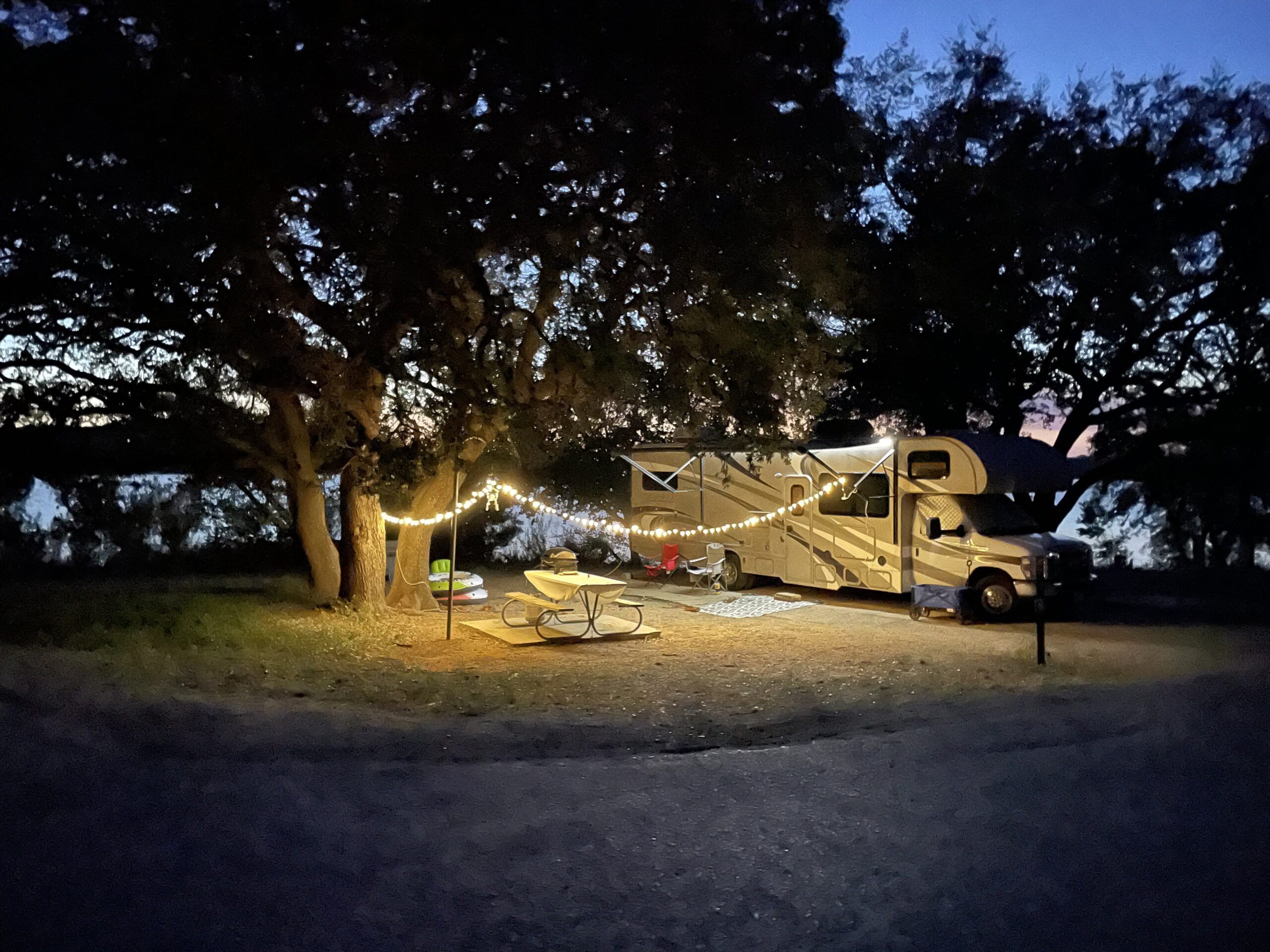
Campground Lighting Etiquette Matters More Than Many Campers Realize
Over the years of RV camping, we have noticed that campground lighting etiquette is one of those campground courtesy topics people usually understand better after they have camped around others for a while. Most campers are not intentionally trying to bother nearby campsites with bright lights. In fact, many campers simply enjoy creating a cozy campsite atmosphere after dark.
Honestly, we do too.
String lights, awning lights, lanterns, and soft outdoor lighting can make a campsite feel warm and relaxing after the sun goes down. Sitting outside with the lights on while visiting with family or relaxing after dinner is part of the camping experience for many RV campers.
The part newer campers may not realize right away is that campground lighting etiquette changes a little once the campground settles down for the night. At home, outdoor lights often stay on all night without much thought. Campgrounds are different because RV sites are close together, windows face directly toward neighboring campsites, and even smaller lights can reflect brightly off nearby RVs after dark.
That is why campground lighting etiquette matters.
Campground Darkness Is Part of the Camping Experience
One thing we have learned is that darkness is actually part of what makes camping feel different from everyday life. Many campers enjoy sitting outside once the campground quiets down. Campfires glow a little brighter, stars become easier to see, and the entire campground atmosphere usually becomes calmer and more peaceful. Even large RV resorts often feel surprisingly relaxed once the evening settles in.
Some of our favorite camping moments have honestly happened after most of the campground lights dimmed down for the night. Sitting outside under a clear sky, watching stars appear, and enjoying the quieter atmosphere is part of why many people love camping in the first place. That is one reason campground lighting etiquette is less about “rules” and more about respecting the shared campground experience around you.
Most campers are not expecting complete darkness. Campgrounds naturally have porch lights, lanterns, pathway lights, and campfires throughout the evening. Campground lighting etiquette is really just about recognizing when bright lighting begins affecting neighboring campsites that may already be trying to sleep or enjoy a darker evening atmosphere.
Many RV Lights Are Brighter Than Owners Realize
One thing we see discussed often among campers is how bright some newer RV lighting systems have become. Many factory-installed LED awning lights and exterior lights are extremely bright compared to older RV lighting.
The funny part is that many RV owners honestly do not realize how much light those fixtures throw onto nearby campsites after dark. Inside your own campsite, the lighting may feel comfortable and useful. From the neighboring campsite, though, that same light may be reflecting directly off another RV window or shining across someone’s outdoor sitting area long after they have settled in for the evening. That is especially true in campgrounds where RV sites are fairly close together.
Most campers do not mind seeing lights on during the evening. Campgrounds are active places, especially around dinner time and during the first few evening hours. The bigger issue usually comes later at night when bright exterior lights remain on long after nearby campers have gone inside for the night. That is where campground lighting etiquette becomes more noticeable.
Campground Lighting Etiquette Is About Being Aware of Your Neighbors
One thing experienced campers often learn naturally over time is that campground courtesy usually comes down to awareness. Campground lighting etiquette works the same way. Most campers are not sitting outside judging nearby campsites or becoming upset over a few lights. People understand campers need lighting for cooking, walking dogs, gathering around the campsite, or simply relaxing outside during the evening.
What many campers appreciate, though, is when nearby campers gradually dim things down as the campground quiets for the night. Our group usually turns off the awning light once we head inside for the evening. If we stay outside later, we often switch to a smaller lantern just bright enough to prevent somebody from tripping over Rya’s leash. Somehow, she always manages to place that leash exactly where somebody is about to walk.
The softer lighting honestly feels more relaxing to us anyway once the campground gets quiet. That smaller amount of light still lets us enjoy sitting outside while also helping preserve the darker campground atmosphere, many nearby campers are probably enjoying too.
Small Lighting Adjustments Can Make Campgrounds Feel More Relaxing
Campground lighting etiquette usually involves small adjustments rather than major changes. Sometimes simply dimming string lights later in the evening makes a huge difference. In other situations, turning off bright awning lights before bed helps neighboring campers enjoy a darker campsite once they head inside for the night. Even lantern placement can matter more than people realize. A lantern sitting low near a picnic table creates a completely different campground atmosphere than a bright light shining outward across multiple campsites.
Campers often become more aware of lighting after experiencing both sides of it firsthand. Nearly everybody eventually camps next to a very bright campsite at some point, especially in RV parks where sites are closer together. Usually, that experience simply helps campers become more thoughtful about their own campsite lighting later on. Again, most people are not trying to create an overly bright campsite. Many campers simply do not realize how visible their lights become once the campground gets darker.
Campground Lighting Etiquette Helps Everyone Enjoy Their Trip
One reason campground lighting etiquette matters is because every camper experiences the campground a little differently after dark. Some campers enjoy sitting outside watching the stars. Others are trying to help children settle down for the night. Some may wake up very early for fishing trips or travel days and are already heading to bed earlier than nearby campers realize. That shared campground environment is part of what makes campground courtesy so important.
One thing we appreciate about RV camping is that most campers genuinely want everyone nearby to enjoy their trip too. Campground lighting etiquette is really just part of that shared understanding. Nobody expects campsites to become completely dark the moment quiet hours begin. Campers are still cooking dinner, walking dogs, visiting with friends, and enjoying the evening outdoors. But as the night settles in, thoughtful lighting choices help preserve the peaceful atmosphere many campers came to enjoy in the first place.
Honestly, that balance between enjoying your own campsite while also respecting nearby campers is part of what makes the camping community feel welcoming in so many campgrounds.