
Long RV Travel Days Look Different with a Dog Onboard
One thing I have learned while RV camping with Rya is that dogs quickly become part of the travel rhythm. Travel days are no longer just about fuel stops, snacks, and making good time down the highway. Now there is another traveler on board whose comfort matters too. And honestly, every dog handles long RV travel days differently.
Some dogs love road trips immediately. Some sleep through most of the drive. Others become restless every couple of hours and need frequent breaks to stretch their legs and reset a little before continuing down the road.
That is why RV traveling long distances with dogs usually works best when owners stop trying to follow somebody else’s perfect travel schedule and start paying attention to their own dog instead. Over the years, we have learned that calm, flexible travel days tend to work much better than rigid plans.
Learning Your Dog’s Travel Personality Matters
One thing people ask all the time in camping groups is:
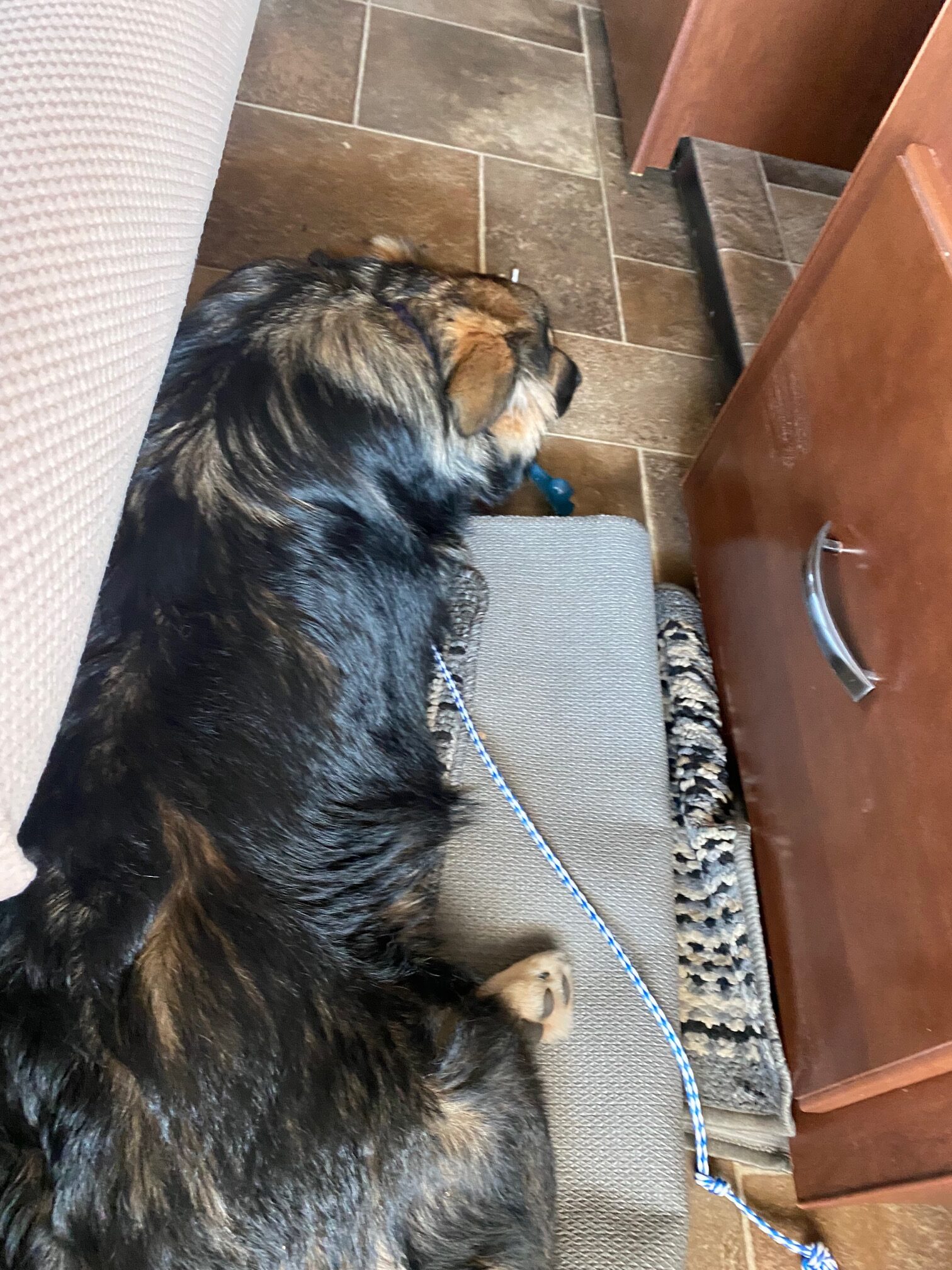
“How often should I stop with my dog during long travel days?” Honestly, the answer usually depends on the dog. Rya is extremely calm during RV travel. She settles into the cab area between us and usually sleeps through most of the drive. At this point, I think the movement of the RV simply relaxes her.
But even calm dogs eventually need breaks. We usually notice Rya needs a potty stop when she starts getting a little fidgety during travel. That change in behavior tells us it is probably time to pull over and let her stretch her legs for a while. Other dogs may need much more frequent stops, especially nervous travelers or younger dogs with more energy. That is one reason RV traveling long distances with dogs becomes easier over time. Owners start learning their dog’s habits, routines, and travel personality.
And honestly, that knowledge helps more than any universal travel schedule ever could.
Potty Stops Rarely Go Exactly as Planned
One thing nobody really tells you about camping with dogs is that potty breaks often take longer than expected. Especially with dogs that want to investigate absolutely everything. When we traveled to Davis Mountains State Park with Rya, she slept through most of the drive beautifully. But whenever we stopped for gas or took breaks to stretch our legs, she became completely fascinated with every smell in the parking area. Meanwhile, we were standing there hoping she would simply go potty so we could continue driving. Instead, she wanted to smell bushes, grass, signs, parking lot edges, and apparently every molecule that existed within a fifty-foot radius. Honestly, it became a good reminder that dogs experience travel stops very differently than humans do. For us, the stop is functional. For them, it is an entirely new world of smells.
That means patience becomes part of RV traveling long distances with dogs, too. Sometimes the dog needs a little extra time before everyone gets back on the road.
Texas Heat Changes Travel Days
One thing I think Texas campers especially need to remember is how quickly pavement and asphalt heat up during travel stops. Gas stations, rest areas, truck stops, and parking lots can become brutally hot during summer travel days. Even if your dog only needs a quick potty break, hot pavement can still become uncomfortable or dangerous for paws. That is another reason flexible travel timing matters.
Morning travel days usually feel much easier on dogs than afternoon stops during peak heat. We also try to pay attention to where Rya is walking during fuel stops instead of automatically leading her across scorching asphalt. Sometimes simply walking farther toward grass or shaded areas makes a huge difference. RV traveling long distances with dogs in Texas almost always requires more awareness about heat than people initially expect.
Food and Water During Long Drives Depends on the Dog
Another thing RV campers debate constantly is whether dogs should eat during long travel days. And honestly, there probably is not one perfect answer for every dog. Some dogs travel perfectly fine with food available throughout the day. Others may become carsick or uncomfortable if they eat too much while moving. Again, this goes back to knowing your dog.
Rya has access to food and water during travel because she handles RV travel comfortably and calmly. But some owners may choose smaller meals, different feeding times, or only offering water until reaching the campground for the evening.
The important thing is paying attention to how your individual dog handles travel days instead of assuming every dog reacts the same way. Hydration matters especially during Texas travel days, even for dogs mostly sleeping through the drive.
Keeping RV Calm Helps Dogs Relax
One thing that helps long RV travel days feel smoother is keeping the dog’s area comfortable and relatively calm. Dogs usually settle better when they have a predictable place to lie down during travel.
For Rya, that space is the floor area between the driver and passenger seats. We keep a sheet down there partly for comfort and partly because long-haired German shepherds shed enough fur to qualify as a second passenger by the end of a trip.
Keeping loose items secured around the RV also matters during travel days.Sharp turns, sudden stops, and shifting items can create unnecessary stress for both people and pets. A calmer travel environment usually helps dogs settle into the drive more comfortably. And honestly, calmer dogs help make travel days feel less stressful for everybody on board, too.
Long Travel Days Usually Get Easier with Experience
One thing I think surprises many RV campers is how quickly dogs adapt to camping routines once they understand the pattern. The RV starts moving. Travel breaks happen periodically.
Eventually, the campground appears. Then come the walks, the campsite smells, the outdoor chairs, and the campground routines they love. Most dogs eventually figure out that the travel day leads to something exciting. I know Rya does… she knows that when I start stacking food and clothing on our kitchen table, a trip is coming. But when I start loading those items in the RV, she gets frantic because she thinks she might be left behind and miss out on something exciting.
That is one reason RV traveling long distances with dogs often becomes easier after a few trips. Owners gain confidence, dogs settle into routines, and everybody learns what works best during travel days. And honestly, long travel days usually become much less intimidating once you stop expecting perfection. Sometimes the dog sleeps peacefully all day. Sometimes every potty stop turns into a twenty-minute smell investigation. Sometimes travel plans shift because the dog needs extra breaks.
That is simply part of traveling with pets.
Camping With Dogs Is Worth the Extra Effort
Even with the extra planning, travel stops, fur cleanup, and slower pacing, I would still choose camping with Rya every single time. She has become part of our RV travel routine just like campground coffee, fishing gear, and folding chairs sitting outside at sunset. And honestly, once you learn your dog’s travel habits, long RV travel days usually become much more manageable than people expect. The key is flexibility, patience, preparation, and understanding that your dog is part of the journey too.
Sometimes the best road trip companion is simply a calm dog sleeping peacefully beside you while the highway rolls by outside the windshield.