
If you are new to RVing, few topics create more confusion than RV electricity. You arrive at a campground and hear other campers talking about shore power, generators, 30-amp service, and transfer switches. It can feel like everyone else understands the language except you.
The good news is that the basics are much simpler than they sound.
Understanding shore power vs generator is one of the first steps toward feeling comfortable with your RV. Both provide electricity to your RV, but they work differently and are designed for different situations. Once you understand when to use each one, campground conversations start making a lot more sense.
In this guide, we’ll explain shore power vs generator in plain English, define some common RV jargon, and help you understand which option is best for your camping style.
What Is Shore Power?
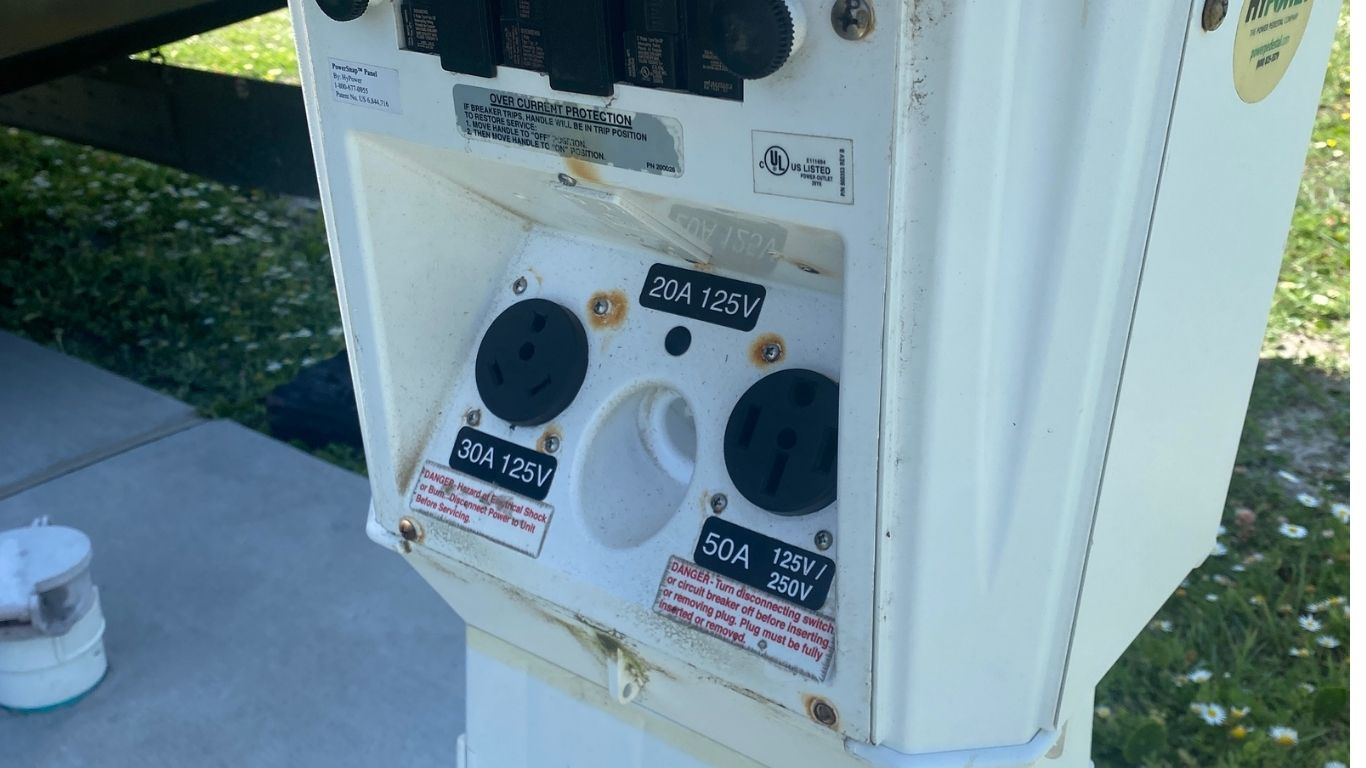
Shore power is simply electricity supplied by an outside source. In most cases, that source is the electrical pedestal at your campsite.
When you arrive at a campground and connect your RV’s power cord to the campground pedestal, you are using shore power. The term originally came from the boating world, where boats connected to electrical service on shore while docked in a marina.
For RVers, shore power is usually the easiest and most convenient source of electricity. Once connected, your RV can operate appliances, charge batteries, run air conditioners, and power outlets throughout the coach. If you’re wondering what happens after that electricity reaches your RV, What Happens When I Plug In My RV? explains the process step by step.
Many beginners assume shore power is a special type of RV equipment. In reality, it is simply campground electricity delivered to your RV through a power cord.
What Is an RV Generator?
An RV generator is a self-contained machine that produces electricity when campground power is unavailable. Many motorhomes have built-in generators, while some travel trailer owners carry portable generators. Instead of plugging into a campground pedestal, the generator creates electricity by burning fuel such as gasoline, diesel, or propane.
A generator allows you to use many of the same appliances you would use while connected to shore power. Air conditioners, microwaves, televisions, and outlets can often operate normally when the generator is running.
Generators are especially useful when camping without hookups, during power outages, or while making travel stops where electrical service is unavailable.
When comparing shore power vs generator, the biggest difference is the source of electricity. Shore power comes from the campground. A generator creates its own electricity.
Why Do RVers Prefer Shore Power?
Most RVers spend the majority of their camping time connected to shore power. When staying at Texas state parks, private RV resorts, county parks, or Corps of Engineers campgrounds, electrical hookups are often available. Once connected, electricity is available around the clock without needing fuel or additional maintenance.
Shore power is also quieter. There is no engine running, no fuel consumption, and no generator noise disturbing neighboring campers.
Many campgrounds have generator restrictions during certain hours, especially overnight. Shore power eliminates concerns about quiet hours and allows you to run appliances continuously.
For most weekend campers, shore power is the preferred choice whenever hookups are available.
When Is a Generator Better?
Generators become valuable when shore power is unavailable. Dry camping, boondocking, beach camping, Harvest Hosts stays, and some parking lot overnight stops may not provide electrical hookups. In these situations, a generator can provide the power needed to run major appliances and recharge batteries.
Generators are also useful during unexpected power outages. Even campgrounds with electrical service occasionally experience outages caused by storms, equipment failures, or high demand during extreme weather.
Many RV owners appreciate the flexibility a generator provides. Instead of being limited to campsites with hookups, they can camp in a wider variety of locations.
While shore power vs generator often sounds like an either-or decision, many RVers use both throughout the year depending on where they are camping.
Understanding 30-Amp and 50-Amp Service
One piece of RV jargon that confuses many beginners is amp service. When someone says a campsite has 30-amp service or 50-amp service, they are describing how much electrical capacity is available.
Most smaller RVs use 30-amp service. Larger fifth wheels and Class A motorhomes often use 50-amp service because they have greater electrical demands.
The important thing for beginners to understand is that more amps generally means more available power. A larger RV with multiple air conditioners may require 50-amp service to operate comfortably. If you want a better understanding of how much power each connection provides, 30 Amp vs. 50 Amp RV Power: What’s the Difference? explains the difference and why it matters when choosing a campsite.
Fortunately, adapters are available when campground connections do not match your RV’s plug configuration.
Understanding amp service helps make the shore power vs generator conversation much less intimidating because both systems are ultimately supplying electricity to the RV’s electrical system.
Common Beginner Mistakes
Many new RV owners assume that plugging into shore power automatically means everything is operating correctly. In reality, it is important to verify that power is reaching the RV and that breakers are functioning properly. This is one reason many experienced RVers use surge protectors or electrical management systems to help protect their RV from electrical issues.
Another common mistake is assuming generators require no maintenance. Like any engine, generators need regular exercise, fuel management, and scheduled maintenance to remain reliable. RV Generator Maintenance provides basics on how to keep them running smoothly,
Some beginners are also surprised to learn that generators consume fuel while operating. Running an air conditioner for several hours on generator power may use significantly more fuel than expected.
When comparing shore power vs generator, each option has responsibilities. Shore power requires safe hookup practices, while generators require fuel and maintenance.
Can Shore Power and a Generator Work Together?
This is one of the most common questions new RV owners ask. In most RVs, shore power and generator power are not used simultaneously as separate power sources. Instead, the RV uses one primary source of incoming electricity at a time.
Many motorhomes use an automatic transfer switch. When the generator starts, the transfer switch redirects power from the campground pedestal to the generator. When the generator is shut down, the system switches back to shore power.
The process happens automatically in many RVs, which is why owners may never notice the transition. The important takeaway is that your RV is designed to safely use one primary source of 120-volt power at a time.
Which Costs Less?
In most situations, shore power is less expensive. When electrical service is included in your campsite fee, there is no additional fuel cost. You simply plug in and use the electricity provided by the campground.
Generators require fuel and periodic maintenance. Oil changes, air filters, spark plugs, and fuel consumption all contribute to operating costs. For short periods, those costs may be relatively small. However, over several days of camping, generator expenses can add up quickly.
This is one reason many RVers prefer campsites with electrical hookups during hot summer weather when air conditioners run frequently. From a cost perspective, shore power generally wins the shore power vs generator comparison.
Which Is Better for Most RV Campers?
For most weekend RVers, shore power is the clear winner. It is quiet, convenient, reliable, and usually included with the campsite. Once connected, you can enjoy the comforts of home without worrying about fuel levels or generator maintenance.
That does not mean generators are unnecessary. Generators provide valuable backup power and allow RVers to camp in places where hookups are unavailable. Rather than viewing shore power vs generator as a competition, it helps to think of them as tools designed for different situations.
Shore power is your everyday solution when hookups are available. A generator is your backup plan and your ticket to camping where electrical service does not exist.
Final Thoughts
Understanding shore power vs generator does not require an electrical engineering degree. At its core, the difference is simple. Shore power brings electricity from the campground to your RV. A generator creates electricity when campground power is unavailable.
Most RV owners will spend far more time using shore power than generator power, especially when staying at campgrounds with electrical hookups. However, having a generator provides flexibility, backup power, and confidence when camping away from traditional campsites.
Once you understand the basics of shore power vs generator, campground conversations become much easier to follow, and your RV electrical system feels much less intimidating.
The next time someone asks whether you’re running on shore power or generator power, you’ll know exactly what they mean.