
For many new RV owners, connecting to campground water can feel intimidating the first few times. The process is actually simple, but there are a few important details that can protect your RV, improve water quality, and help you avoid common beginner mistakes.
When we purchased our first RV, we assumed hooking up water was as simple as connecting a garden hose to a faucet. We quickly learned there was more to it than that. Over the years, we’ve picked up a few tips that make the process easier and help keep our fresh water system clean and safe.
If you’re wondering how to hook up RV water at a campground, this guide will walk you through the process step by step while sharing a few lessons we’ve learned along the way.
What Equipment Do You Need to Hook Up RV Water?
Before learning how to hook up RV water, it helps to understand the basic equipment involved. The most important item is a white drinking water hose. These hoses are designed specifically for potable water and are safe for supplying drinking water to your RV. A standard green garden hose may be fine for watering plants at home, but it is not intended for drinking water use.
You will also want a water pressure regulator. Campground water pressure can vary significantly, and excessive pressure can damage RV plumbing. We learned this lesson firsthand when high water pressure caused a leak inside our RV during a visit with family. Since then, we never connect to an outside water source without using a pressure regulator. For more information on why you might want to consider using a water pressure regulator, read our article, ” How to Use a Water Pressure Regulator”.
Many RV owners also choose to use a water filter. Some filters attach outside at the campground spigot while others are installed inside the RV. A filter is optional, but it can improve water quality and reduce sediment entering your fresh water system.
Having a few extra washers on hand is also helpful. A worn washer is often the cause of small leaks at hose connections.
Why You Should Never Use a Regular Garden Hose
One of the most common mistakes beginners make is assuming any hose will work. When learning how to hook up RV water, always start with a drinking water hose designed for potable water use. These hoses are typically white, making them easy to identify and helping prevent accidental mix-ups.
A regular garden hose can contain materials that are not intended for drinking water. While it may not seem like a big difference, your RV water system supplies water for drinking, cooking, brushing teeth, and washing dishes.
Using a dedicated drinking water hose helps protect both your health and your RV’s fresh water system. We also recommend keeping your drinking water hose completely separate from sewer equipment. Water hoses and sewer hoses should never be stored together. Keeping them in separate storage areas helps maintain sanitation and prevents contamination.
How to Hook Up RV Water
Once you have the proper equipment, the process becomes straightforward. Start by locating the campground water spigot. Before attaching anything, take a quick look at the spigot to make sure it appears clean and in good condition.
Next, attach your water pressure regulator to the spigot. If you use an outside water filter, it can be attached after the regulator according to the manufacturer’s recommendations.
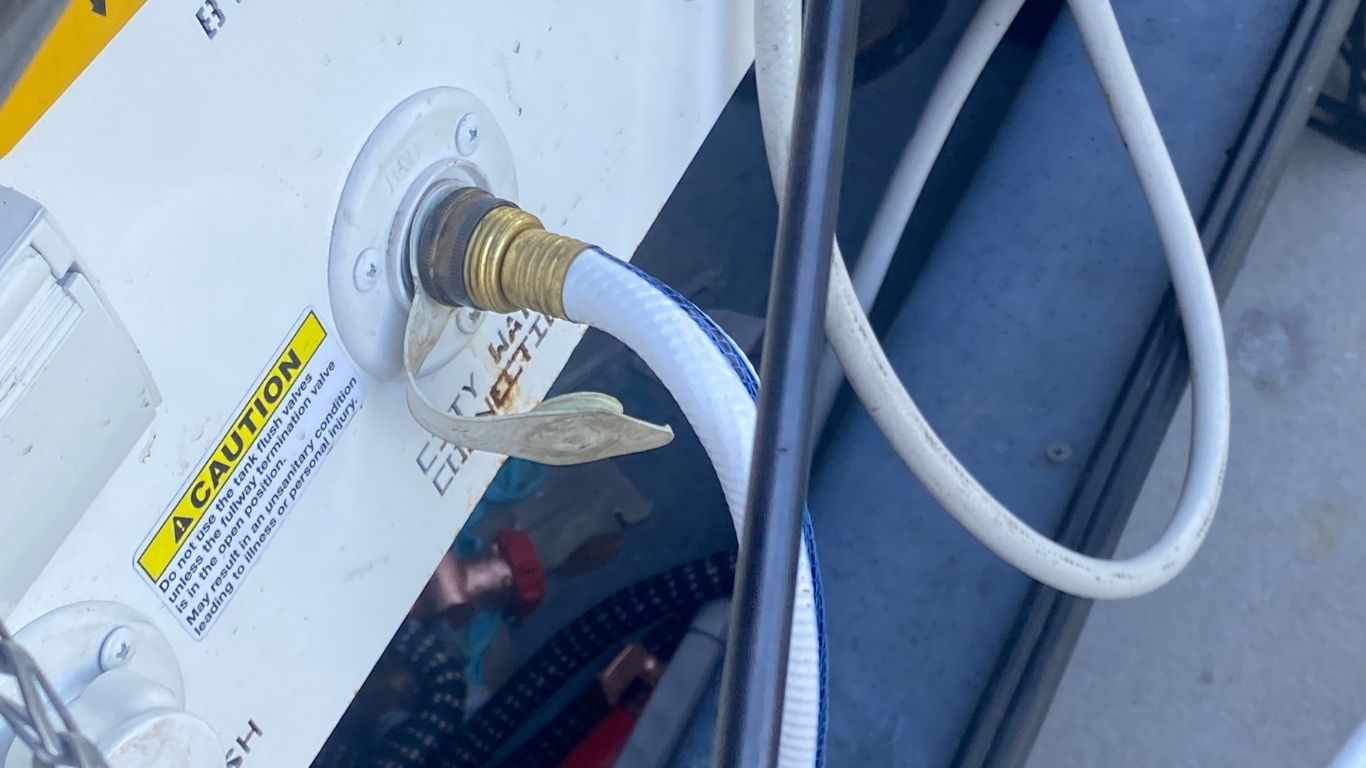
Connect your white drinking water hose to the regulator or filter and then connect the opposite end of the hose to your RV’s city water connection.
Once everything is connected, slowly turn on the water. Turning the water on gradually allows pressure to build slowly and gives you an opportunity to check for leaks.
After the water is flowing, inspect all connections. A quick inspection can help catch loose fittings or damaged washers before they become larger problems.
Learning how to hook up RV water properly only takes a few minutes and quickly becomes part of your normal campground setup routine.
City Water vs Fresh Water Tank
Another area that often confuses new RV owners is the difference between city water and the fresh water tank. When connected to city water, the campground water supply provides water directly to your RV. This is the setup most campers use when staying at a full-hookup site.
Your fresh water tank is different. The tank stores water inside the RV and is commonly used while traveling, boondocking, or staying at campsites without water hookups.
Most RVs have separate settings or connections for filling the fresh water tank versus supplying city water to the RV.
Before connecting anything, take a few moments to familiarize yourself with your RV’s owner’s manual. Understanding the difference can help prevent accidental overfilling or connection mistakes.
If you’re unsure about maintaining your fresh water system, be sure to read our article about sanitizing your RV fresh water tank.
Common Mistakes New RV Owners Make
Many beginners make the same mistakes when learning how to hook up RV water.
One common mistake is forgetting the pressure regulator. Water pressure varies widely between campgrounds, and you never know what pressure level you’ll encounter until you arrive.
Another mistake is failing to inspect connections for leaks. A small drip may not seem important at first, but it can waste water and create unnecessary frustration.
Some RV owners also leave hose ends lying directly on the ground when disconnected. Dirt, mud, and bacteria can collect on hose fittings and potentially enter the fresh water system later.
Finally, storing drinking water hoses with sewer equipment is a mistake that is easily avoided through proper organization.
Keeping Your Water Hose Clean
Sanitation is an important part of RV ownership, and your water hose deserves attention too. Many RV owners focus on sanitizing their fresh water tank but forget about the hose supplying that water.
Whenever we sanitize our fresh water tank, we also allow some of the sanitizing solution to run through the drinking water hose. This helps sanitize the hose at the same time. After use, we allow the hose to drain, store it separately from sewer equipment, and keep the fittings protected whenever possible.
These small habits take very little effort but help maintain a cleaner fresh water system.
An Optional Upgrade We Love
A water splitter is not necessary when learning how to hook up RV water, but it is one of our favorite campground upgrades. The splitter attaches directly to the campground spigot and creates two separate water connections.
One side supplies water to the RV through the pressure regulator and drinking water hose. The second side can be used for a standard garden hose equipped with a spray nozzle.
Having a separate utility hose is surprisingly useful. We use it for rinsing sandy feet after a day at the beach, washing mud off shoes, cleaning outdoor mats, rinsing fishing gear, and spraying dirt off bicycles before putting them away.
Because this hose is not supplying drinking water to the RV, we use an expandable garden hose. These hoses shrink down to a compact size when not in use, making them easy to store in an RV compartment. When water is turned on, they expand to their full length.
It is a simple upgrade that many RV owners find themselves using far more often than expected.
How to Make RV Water Hookups Easier
Like many RV tasks, water hookups become easier with repetition. Keeping all of your water equipment organized in one location can save time during setup. We keep our pressure regulator, hose washers, and water-related supplies together so everything is easy to find when we arrive at a campsite. Taking a few extra moments to inspect connections, protect hose ends, and use the proper equipment can help prevent many common problems.
The goal is not just learning how to hook up RV water. It is learning how to do it safely and consistently every time you camp.
Final Thoughts
Learning how to hook up RV water is one of the first skills every RV owner needs to master. Fortunately, the process is straightforward once you understand the equipment involved. A white drinking water hose, a pressure regulator, and a few good habits can go a long way toward protecting your RV and keeping your fresh water system safe.
As you gain experience, you may discover additional upgrades that work for your camping style. For us, a water splitter and compact utility hose have become valuable additions to our setup.
Whether you’re preparing for your first camping trip or simply looking to improve your setup routine, understanding how to hook up RV water properly will help make every trip a little smoother.