
When we bought our first RV, I never really thought about how the electricity worked. We plugged the RV into the campground pedestal, things came on, and we went camping. I knew we had house batteries. I knew we had a generator. And I had heard words like converter and inverter, although I couldn’t have explained the difference between them. Electricity was firmly in Doo Doo’s department, and I was perfectly happy to leave it there.
The problem is that RV electricity can sound much more complicated than it needs to because beginners are introduced to a whole collection of unfamiliar terms at once. Shore power. AC. DC. 30 amp. 50 amp. Converter. Inverter. House batteries.
Once you understand how those pieces connect, RV power explained in plain English is actually much easier to follow. You don’t need to know how to repair an electrical system. You just need to understand where the electricity comes from, where it goes, and why your RV needs several different pieces to make everything work.
Your RV Has Two Kinds of Electricity
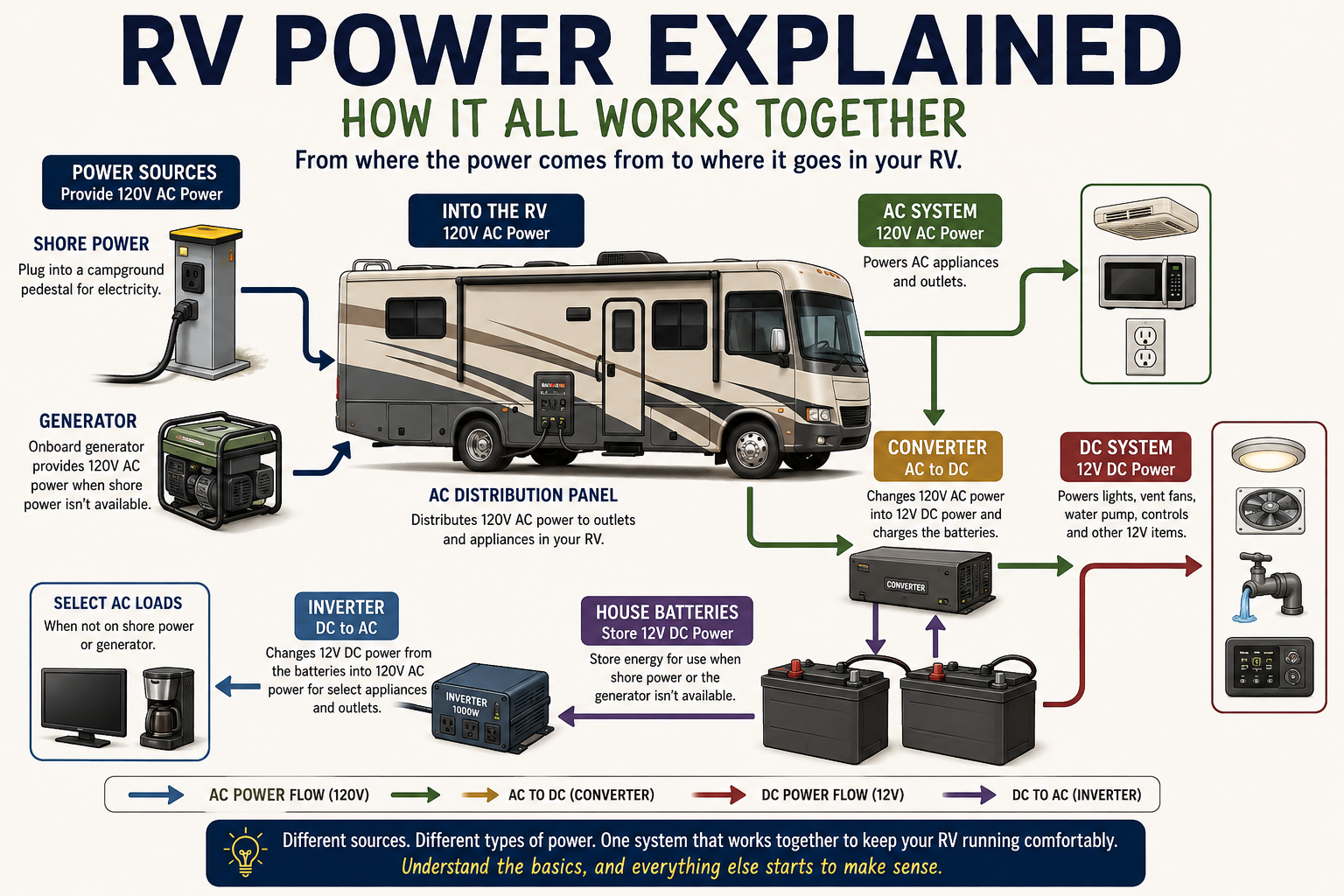
This is the best place to start because almost everything else makes more sense once you understand it. Your RV uses both 120-volt AC electricity and 12-volt DC electricity.
AC power runs many of the things that remind you of home, such as certain outlets and appliances. Your air conditioners and microwave typically need AC power.
The 12-volt DC system powers many of the systems that make the RV function, including things such as lights, vent fans, the water pump and various control systems.
The exact equipment varies by RV, but the important part is understanding that your RV has two electrical systems working together. If this is completely new information, Why Does My RV Have 2 Kinds of Electricity? breaks down AC and DC power before adding the rest of the electrical system.
Where Does RV Electricity Come From?
Now that we have two kinds of electricity, we need somewhere for that electricity to come from. One source is shore power. When you connect your RV’s electrical cord to the pedestal at a campground, you’re connecting to an outside source of 120-volt AC electricity. That’s really all shore power means.
What Is Shore Power? explains where the term comes from and what happens when your RV is connected to campground electricity.
Another source of AC electricity can be your generator. A generator and shore power aren’t the same thing, but from a beginner’s perspective they can serve a similar purpose: both can provide AC electricity to the RV.
We use both regularly. At a campsite, we normally use shore power. Going down the highway, we run our generator so we can operate the air conditioners. Texas highways in the summer can get hot quickly, and we’d rather keep the RV cool while we’re traveling than try to cool it down after we arrive. Other RVers use their generators differently, and not every RV has an onboard generator.
If you’re trying to understand when you might use one source instead of the other, Shore Power vs. Generator goes deeper into the differences.
What Do 30 Amp and 50 Amp Mean?
Then we add another set of numbers to the conversation. Thirty amp and 50 amp don’t describe a different kind of electricity. They describe the electrical service available to the RV. Generally, smaller RVs may use 30-amp service while larger RVs with greater electrical demands often use 50-amp service.
A 50-amp RV has significantly more available electrical capacity than a 30-amp RV. That matters when you’re trying to operate multiple high-demand appliances at the same time.
For the beginner overview, though, you don’t need to calculate electrical loads. You mainly need to know which service your RV uses and which campground connection you should use.
30 Amp vs. 50 Amp: What’s the Difference? explains that part of the system without requiring an electrical engineering degree.
What Happens When I Plug In My RV?
This is where all these separate pieces begin connecting. You arrive at the campground and plug your RV into the electrical pedestal. The shore power cord brings AC electricity into the RV. From there, the RV’s electrical system distributes power where it’s needed.
Some equipment can use that AC electricity. But remember, your RV also has a 12-volt DC system. Campground AC electricity can’t simply become DC electricity by itself. We need another piece.
What Happens When I Plug In My RV? takes a closer look at that entire process from the moment you connect the shore power cord.
This Is Where the Converter Finally Made Sense to Me
The converter was one of those RV words I knew but didn’t understand. Now it may be the easiest part for me to remember. A converter takes 120-volt AC electricity and converts it into 12-volt DC electricity.
That’s it.
When your RV is connected to shore power, the converter allows that incoming AC electricity to help supply the RV’s 12-volt system. It also plays an important role in charging the house batteries. So now our path looks something like this:
Shore power → 120V AC → converter → 12V DC
Once I understood that, the converter finally had a logical place in the electrical system. What Is an RV Converter? explains what the converter does and why your RV needs it. Then the Inverter goes the other direction: converter and inverter were the two words I constantly confused.
It turns out the easiest way to understand them is together. A converter changes AC electricity into DC electricity. An inverter does essentially the opposite. It takes 12-volt DC electricity stored in your house batteries and changes it into 120-volt AC electricity that certain equipment can use.
So:
Converter: AC → DC
Inverter: DC → AC
That was the part of this entire power series that finally clicked for me. Our Class A has a residential refrigerator and an inverter. The inverter provides a way for stored battery energy to be converted into the AC electricity certain equipment needs when shore power isn’t supplying it.
That doesn’t mean an inverter can power everything in every RV. Inverter size, battery capacity and RV wiring all matter. For the beginner version, just remember the direction.
What Is an RV Inverter? explains the rest without getting overly technical.
Where Do the House Batteries Fit?
Now the batteries have a logical place too. Your house batteries store 12-volt DC electricity. They don’t create electricity. They store energy so it can be used later.
When you’re connected to shore power, your converter can help recharge those batteries. When shore power isn’t available, the batteries can supply 12-volt DC power. If the RV has an inverter, some of that stored DC energy can also be changed into AC electricity for certain appliances or outlets. That’s why the batteries aren’t a completely separate subject from shore power, converters and inverters. They’re all parts of the same system.
What If My RV Batteries Keep Going Dead?
Once you understand what the batteries are supposed to do, battery problems make a little more sense too. A dead battery isn’t automatically a bad battery. Maybe it wasn’t properly charged. Maybe something in the RV continued using stored electricity. Or maybe there’s a problem elsewhere in the charging system. Or the battery itself may be old or damaged and no longer able to store energy properly.
Why Won’t My RV Batteries Hold a Charge? explains those possibilities and helps beginners understand what may be happening before automatically assuming the batteries need replacement. Battery age also matters, but RV batteries don’t have one universal expiration date. Different battery types have different expected lifespans, and how they’re used, charged, stored and maintained can affect how long they last.
How Long Do RV Batteries Last? explains the differences and what battery age can—and can’t—tell you.
And once you know what batteries you have, RV Battery Care Basics: Maintenance Made Easy covers the routine care that can help keep them working properly.
What Protects My RV From Campground Power Problems?
Understanding how electricity gets into the RV also makes protecting the electrical system more important. Campground power isn’t always perfect. Electrical problems at a pedestal can potentially damage equipment inside an RV, which is why electrical protection belongs between the campground power source and your RV.
The terminology surrounding surge protectors can get confusing quickly because different products offer different levels of protection.
RV Surge Protectors: Protect Your Rig explains what surge protection does and what beginners should understand before connecting their RV to campground electricity. You don’t have to memorize every possible electrical problem at a pedestal. You just need to understand that plugging into shore power connects your RV to an outside electrical source, and protecting the RV from problems with that source matters.
Don’t Forget About the Generator
If your RV has a generator, it’s another part of the power picture. Unlike house batteries, the generator produces AC electricity rather than storing it. That gives you another source of power when shore power isn’t available. But generators need maintenance too. A generator that sits unused for long periods or doesn’t receive appropriate maintenance may not be ready when you need it. RV Generator Maintenance covers the routine care involved in keeping an RV generator dependable.
You Don’t Have to Understand Everything at Once
If you’ve made it this far and still don’t completely understand RV electricity, that’s okay.
You don’t need to. Start with the map. Your RV uses AC and DC electricity.
Shore power or a generator can supply AC power. The converter changes AC to DC and helps supply the 12-volt system and charge the house batteries.
The house batteries store DC electricity. An inverter can change stored DC electricity back into AC electricity for certain equipment.
That’s the basic path.
Everything else we’ve covered this month adds another piece to that foundation. You don’t have to know how to diagnose a converter, calculate an electrical load or rewire an RV to benefit from understanding what these components do. Sometimes knowing what should be happening is enough to recognize when something isn’t.
Final Thoughts
At the beginning of this series, I couldn’t have explained the difference between a converter and an inverter. Honestly, I had never given much thought to what happened after we plugged our RV into the campground pedestal. We connected the cord, electricity worked, and I went about setting up camp. After breaking RV power into smaller pieces, the system finally makes more sense.
Electricity comes from somewhere. Your RV has two different electrical systems. The converter helps connect one side to the other. The batteries store electricity. The inverter can send stored power back in the other direction for certain AC needs. There are plenty of more advanced things to learn about RV electricity.
But you don’t need to start there. Start by understanding the path. Once you can picture where the electricity comes from and where it’s going, all those strange RV electrical terms stop sounding quite so strange.
Leave a Reply