
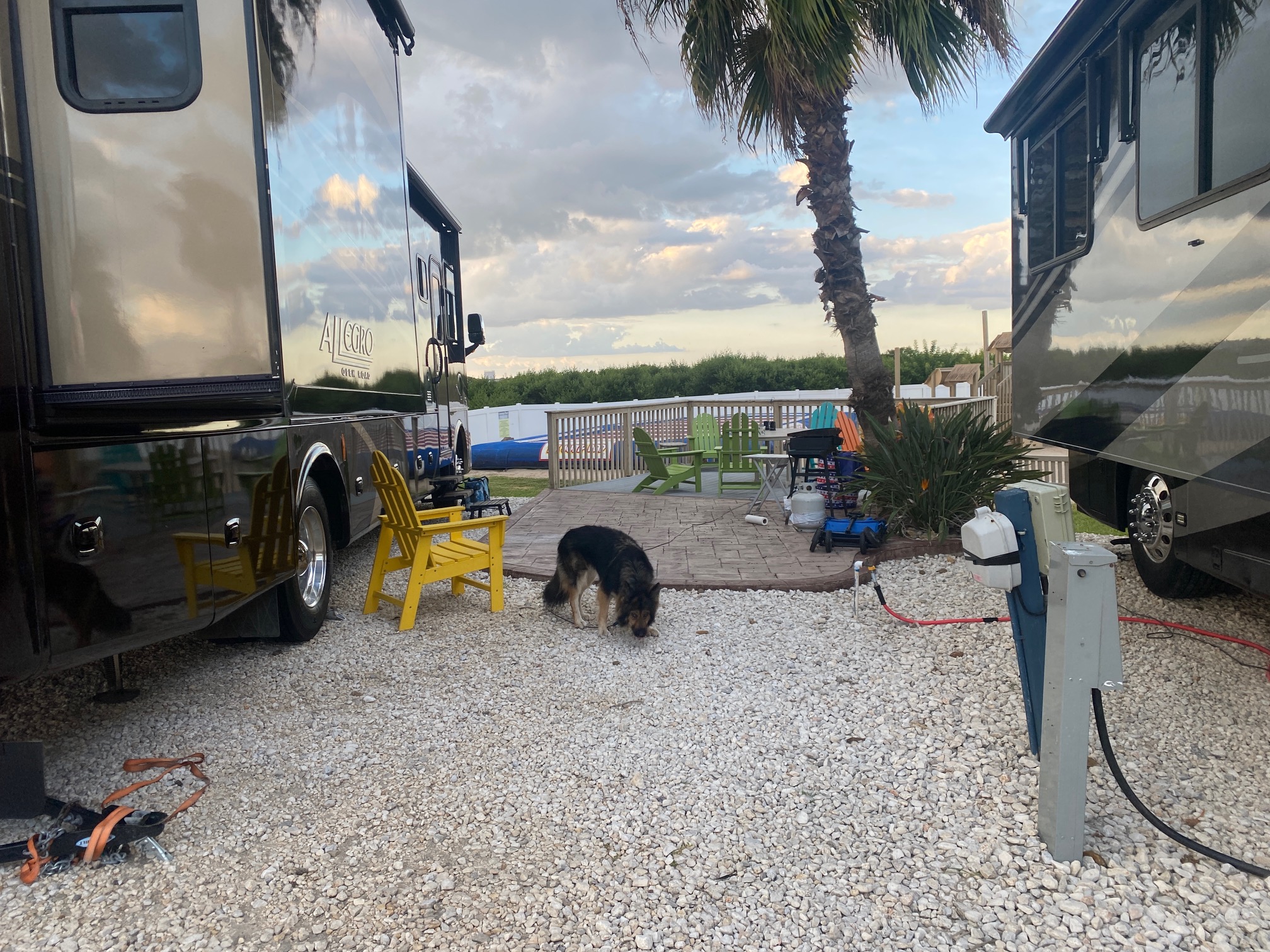
Campgrounds Sound Very Different to Dogs
One thing I have learned over the years is that campground life feels completely normal to us much faster than it does to our dogs.
People arrive at a campsite, hook up the RV, set out chairs, and settle in pretty quickly. Meanwhile, the dog is trying to process an entirely unfamiliar environment filled with new sounds, new smells, unfamiliar people, golf carts, campground doors slamming, bikes rolling past, kids running through campsites, and other dogs walking nearby every few minutes.
That is a lot happening all at once.
Honestly, I think many dog owners sometimes forget that their dog may feel a little “on guard” at first while camping. Dogs often bark because they are alerting, protecting, reacting to movement, or simply trying to understand what is happening around them.
And every dog adjusts differently.
Some dogs settle into campground life almost immediately. Others take a full day or two before they completely relax. That is one reason barking dogs at campgrounds becomes such a common topic in camping groups online. Most dog owners are not trying to disturb their neighbors. Usually, the dog is simply reacting to an unfamiliar environment.
Most Campers Understand Occasional Barking
Honestly, most campers are pretty understanding about occasional barking. If a dog barks briefly because somebody walked past the campsite or another dog suddenly appeared nearby, most campground neighbors probably are not going to think much about it.
Dogs are still dogs.
Campgrounds are active places with constant movement and noise. Most people understand that occasional reactions happen. Where frustration usually starts is ongoing barking that continues for long periods without interruption. Especially if owners leave the campground and the dog continues barking inside the RV for an extended time, neighboring campers can become irritated fairly quickly.
And honestly, that reaction makes sense too.
Most people go camping hoping for some version of peace, quiet, relaxation, or at least manageable campground noise. That balance between understanding dogs and respecting campground neighbors is really what barking dogs at campgrounds comes down to.
Some Dogs Watch Everything Happening Outside
One thing I have noticed while camping with Rya is that some dogs simply like monitoring campground activity. In our old Class C motorhome, Rya would sit on the sofa and lay her head across the back cushion so she could look out the window and supervise campground activity like a full-time neighborhood watch volunteer.
In our current Class A, she lost access to those larger side windows facing the campground. So instead, she somehow squeezes herself into the tiny floor space near the passenger seat and watches campground activity through the small side window used for visibility while driving.
Honestly, it is both ridiculous and impressive.
But that behavior also reminds me that dogs are constantly observing what is happening around them while camping. Some dogs bark because they feel responsible for alerting their people about movement outside the RV. Other dogs bark because they are nervous. Some become overstimulated by constant campground activity. And sometimes they simply need time to settle into the environment.
Campground Sounds Trigger Dogs Differently
One thing many people do not realize until camping with dogs is how unpredictable campground sounds can feel to pets.
Some dogs ignore everything.
Others react strongly to:
- golf carts,
- campground doors,
- people walking past,
- bicycles,
- kids playing,
- neighboring dogs,
- generators,
- or even squirrels running through leaves.
Dogs process unfamiliar environments differently from humans do. And honestly, owners usually know their dog’s personality pretty quickly once camping begins. Some dogs naturally relax outdoors. Some remain alert constantly. Some love campground life immediately. Others never fully settle in the way owners hoped they would.
And that is okay too.
Not every dog enjoys busy campground environments, especially crowded parks with nonstop activity and noise. That does not make someone a bad owner or mean the dog is “bad.” Sometimes personalities and environments simply do not match perfectly.
A Little Prevention Usually Helps
One thing I think helps tremendously with barking dogs at campgrounds is simply recognizing what tends to trigger your dog before the barking becomes constant. For some dogs, more exercise helps. A long campground walk or trail hike earlier in the day sometimes helps dogs relax better back at the campsite later. For other dogs, staying outside with the family instead of being left alone inside the RV helps reduce anxiety and barking. Some dogs settle faster if they can see their owners nearby. Others actually bark less if window coverings are partially closed, so every passing golf cart or dog is not constantly triggering them.
Again, every dog is different.
That is why campground routines usually work better than strict “one-size-fits-all” advice. Owners who pay attention to their dog’s behavior patterns usually figure out what helps their particular dog settle into campground life more comfortably.
Calm Owners Usually Help Create Calmer Dogs
One thing I have quietly noticed while camping is that dogs often feed off the overall energy around them. If owners seem tense, frustrated, or constantly reacting every time the dog makes noise, many dogs become even more alert.
Meanwhile, calm campground routines often help dogs relax faster, too. Walks. Shade. Water. Time outside together. Predictable routines. Quiet evenings at the campsite. Most dogs eventually start realizing: this place is safe.
And once that happens, campground barking often improves naturally.
Being a Good Camping Neighbor Goes Both Ways
At the end of the day, barking dogs at campgrounds is really about balance. Dog owners should absolutely try to be respectful of neighboring campers. But campers without dogs probably benefit from remembering that dogs are also trying to adjust to unfamiliar surroundings filled with stimulation and noise. Most campground situations are not about “bad dogs” or “bad owners.” Usually, it is simply a dog trying to figure out a new environment. The good news is that many campground barking situations improve with patience, realistic expectations, exercise, routine, and owners who stay aware of how their dog is responding to campground life. And honestly, most campers appreciate owners who are clearly making an effort. Sometimes that effort matters more than perfection ever could.