
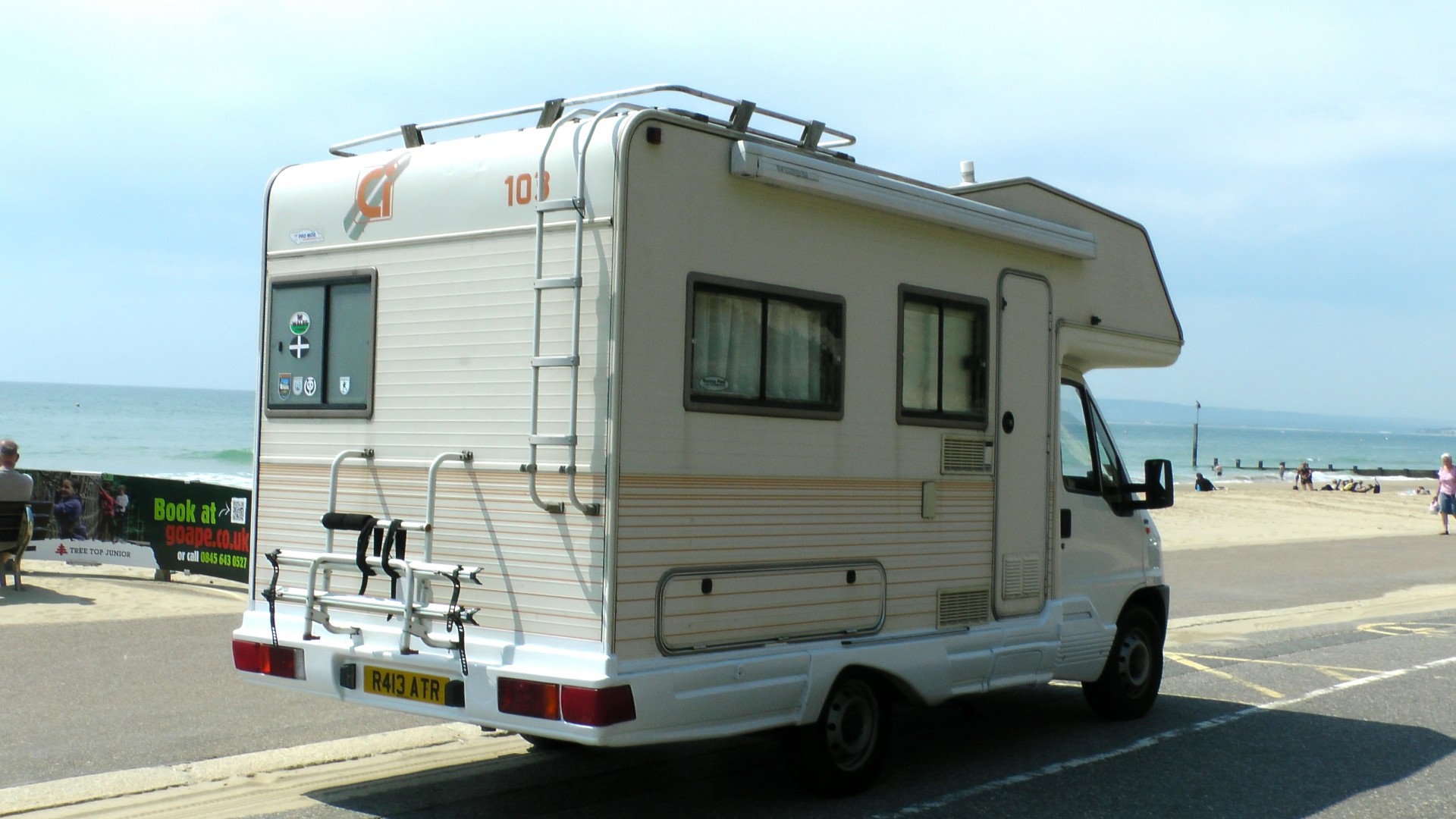
If you’re new to driving a Class A or Class C motorhome, you’ll quickly discover that RV owners have their own language. You’ll hear terms like boondocking, black tank, tow vehicle, and one phrase that often gets repeated when discussing driving: tail swing. For many new owners, that warning sounds intimidating. It sounds like one more thing that can go wrong when driving a large RV.
The good news is that RV tail swing is not difficult to understand. Once you know what it is and when it happens, you can drive with more confidence and avoid some common mistakes.
Watch Your RV Tail Swing
If you’ve spent any time talking with experienced motorhome owners, you’ve probably heard someone say, “Watch your RV tail swing.” They aren’t trying to scare you.
They are simply reminding you that the rear of a motorhome moves differently than most people expect during a turn. Understanding that movement can help prevent damage to your RV, nearby vehicles, campground obstacles, and other objects that may be close to your coach.
What Is RV Tail Swing?
RV tail swing is the sideways movement of the rear end of a motorhome when the vehicle begins a turn. As the front of the RV turns in one direction, the rear of the motorhome swings in the opposite direction before following through the turn.This movement is most noticeable in Class A and Class C motorhomes because a significant portion of the coach extends beyond the rear axle.
Imagine holding a broom near the middle of the handle. If you swing one end of the broom to the left, the opposite end moves to the right. The rear of a motorhome behaves in a similar way. The longer the section behind the rear axle, the more noticeable the movement can be.
That movement is called RV tail swing.
Why Does RV Tail Swing Happen?
The simple answer is geometry. The rear wheels act as the pivot point during a turn. Everything located behind those wheels follows a different path than the front of the RV. When you begin turning left, the front of the motorhome moves left immediately. At the same moment, the rear corner of the coach briefly swings right before following through the turn. When you turn right, the opposite happens. The rear corner initially swings left.
This movement surprises many first-time motorhome drivers because it is not something most people experience when driving a passenger vehicle. The longer the motorhome, the more important it becomes to understand how RV tail swing works.
Which RVs Experience Tail Swing?
RV tail swing is primarily a concern for Class A and Class C motorhomes. Because these vehicles have a coach body extending behind the rear axle, there is enough rear overhang for noticeable swing during turns.
A larger Class A motorhome often experiences more tail swing than a smaller Class C simply because there is more coach extending beyond the rear wheels. That does not mean Class C owners can ignore the issue. Even smaller motorhomes can have enough rear overhang to create problems when turning near fuel pumps, campground posts, signs, vehicles, or other obstacles.
The important thing is understanding that every motorhome has different dimensions. Learning how your specific RV behaves is part of becoming a confident driver.
When Does RV Tail Swing Cause Problems?
Most RV tail swing incidents happen in locations where space is limited. Campgrounds are a common example. Utility pedestals, picnic tables, trees, posts, and neighboring RVs can all be positioned near the turning path of your motorhome. Fuel stations are another area where drivers need to remain aware of tail swing. While focusing on the front of the coach and nearby fuel pumps, it is easy to forget that the rear of the RV is moving differently.
Parking lots, tight intersections, and storage facilities can also create situations where tail swing becomes important. The good news is that understanding the risk is often enough to prevent a problem. Most experienced drivers simply allow extra space and remain aware of what is happening behind the rear axle.
How Do You Avoid RV Tail Swing Problems?
The easiest way to avoid RV tail swing problems is to give yourself more room. Many new drivers focus almost entirely on the front of the RV during a turn. They watch the curb, the lane, or the obstacle they are trying to avoid. Experienced motorhome drivers also think about what the rear of the coach is doing.
Allowing additional space before beginning a turn can reduce the likelihood of the rear corner contacting an object. Taking turns slowly also helps. Slower speeds provide more time to monitor mirrors and make adjustments if necessary. This does not mean you need to be nervous every time you make a turn. It simply means being aware that the rear of the RV may move differently than you expect.
Awareness is often the most important safety tool.
Why New Motorhome Drivers Worry About Tail Swing
One reason RV tail swing gets so much attention is that it sounds complicated. Many new owners hear the term before they ever understand what it means. As a result, it becomes one more thing to worry about during an already stressful learning process. The reality is that learning to drive a motorhome involves adjusting to several new experiences.
Even experienced drivers notice differences.
DooDoo has spent most of his life around boats, trailers, trucks, and equipment. He has driven and pulled just about everything imaginable. Yet when we first moved into a Class A motorhome, he immediately noticed that the turning experience felt different. In a Class A, the front wheels are located directly beneath the driver rather than several feet ahead like a typical vehicle. That changes how turns feel from the driver’s seat. Like most aspects of RV driving, confidence grows with experience.
Understanding RV tail swing removes some of the mystery and helps drivers focus on developing good habits.
Common Misconceptions About RV Tail Swing
One common misconception is that tail swing makes motorhomes dangerous to drive. That simply is not true. Millions of RV owners safely operate motorhomes every year. Tail swing is a characteristic of the vehicle, not a defect.
Another misconception is that tail swing only affects large Class A coaches. While larger motorhomes often experience greater rear movement, many Class C motorhomes also have enough rear overhang to require attention during turns. Some new owners also assume they must constantly worry about tail swing.
In reality, once drivers understand when it occurs, monitoring it becomes second nature. It eventually becomes another part of normal driving awareness.
How to Practice Understanding Tail Swing
One of the best ways to become comfortable with RV tail swing is to observe it in a safe environment. An empty parking lot can provide an opportunity to practice slow turns while paying attention to the mirrors. Many drivers are surprised to see how the rear corners move during the first part of a turn.
Watching that movement in a controlled setting helps build confidence before navigating tighter campground roads or busy fuel stations. The goal is not to become obsessed with tail swing. The goal is to become familiar with how your motorhome behaves. Once you understand the movement, it becomes much easier to anticipate.
RV Tail Swing and Campground Safety
Campgrounds are often where new RV owners encounter tail swing for the first time. Trees, utility hookups, picnic tables, and neighboring campsites can make turning space feel limited.
Taking your time when entering or leaving a campsite is one of the simplest ways to avoid problems. Many experienced RVers use a spotter whenever visibility is limited. A second set of eyes can provide reassurance and help identify obstacles that may not be visible from the driver’s seat.
Patience often prevents mistakes.
Most campground damage occurs when drivers feel rushed or attempt to squeeze into spaces without allowing enough room.
Final Thoughts
If you’ve been wondering what RV tail swing is, the answer is actually quite simple. RV tail swing is the sideways movement of the rear portion of a motorhome when the vehicle begins a turn. It occurs because the rear of the coach extends beyond the rear axle and follows a different path than many drivers expect.
The term may sound intimidating, but understanding RV tail swing is often enough to eliminate much of the anxiety surrounding it. By giving yourself extra space, turning slowly, monitoring your mirrors, and learning how your specific motorhome behaves, you can drive with greater confidence.
The next time someone tells you to watch your RV tail swing, you’ll know exactly what they mean.