
It All Starts with Shore Power
So you pull into your campsite, level your RV, and plug the shore power cord into the campground pedestal. A few seconds later, you hear a click, the microwave display lights up, and the air conditioner is ready to cool things down.
But have you ever wondered what actually happened?
Many new RV owners know they need to plug into shore power, but they aren’t always sure what happens when they plug in their RV. Does the electricity go straight to the outlets? Does it charge the batteries? Why do some things start working immediately while others don’t?
If you’ve ever wondered, “What happens when I plug in my RV?” the answer is simpler than most people expect. Knowing the basic path electricity takes makes the rest of your RV’s electrical system much easier to understand. In this article, I’ll explain what happens when you plug your RV into shore power—in plain English. If shore power is a new term for you, What Is Shore Power? explains what it is and how campground electricity reaches your RV.
Electricity Starts at the Campground Pedestal
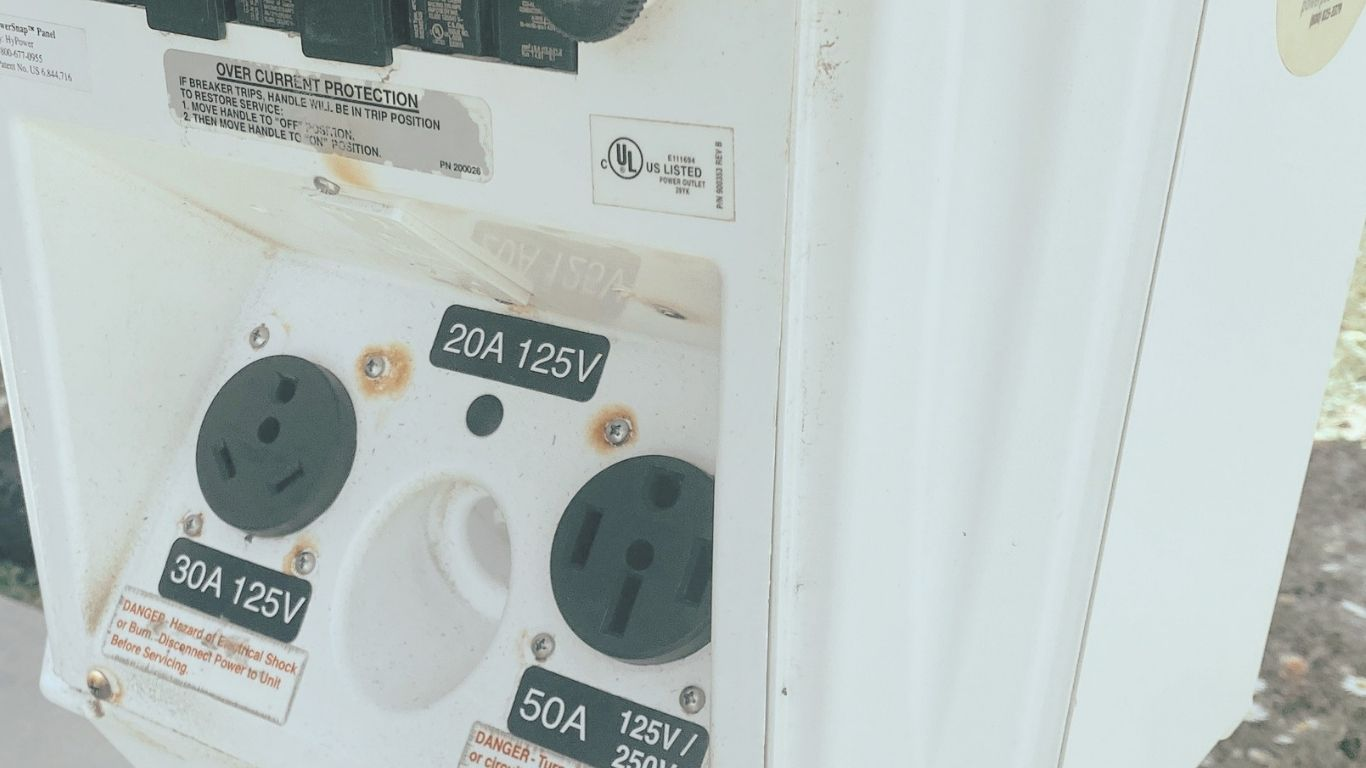
Electricity starts at the campground’s power pedestal beside your campsite. Think of the pedestal as your campsite’s power source. Just like the electrical outlet in your house supplies electricity when you plug in a lamp, the campground pedestal supplies electricity to your RV.
The large electrical cord that connects your RV to the pedestal is called a shore power cord. It carries electricity from the campground into your RV. Once your RV is plugged in and the pedestal breaker is turned on, electricity travels through the shore power cord and into your RV’s electrical system.
From there, your RV takes over.
What Happens After Electricity Reaches Your RV?
If you’ve ever wondered, “What happens when I plug in my RV?” this is where the process really begins. Once electricity reaches your RV, several things begin happening at the same time. One of the first things you’ll probably notice is that appliances that run on campground power suddenly become available. Your microwave display lights up, your wall outlets have power, and you can turn on your air conditioner if you need it.
At the same time, your RV automatically begins recharging its batteries. This happens quietly in the background while you’re connected to shore power. Think of it this way: plugging into shore power doesn’t just run your RV while you’re camping—it also helps keep your coach batteries charged.
What Can You Use Once You’re Plugged In?
Once you’re connected to shore power, you can start using many of the same conveniences you enjoy at home. Your wall outlets have power, the microwave is ready to use, and—at least during a Texas summer—the air conditioner is usually one of the first things I turn on.
Depending on your RV, your television, electric water heater, and other appliances may also run on campground electricity. While you’re enjoying those comforts, your batteries continue charging in the background.
The important thing to remember is that plugging into shore power doesn’t just provide electricity for your campsite. It gives your RV the power it needs for many of the comforts that make camping feel a little more like home.
What If Nothing Happens?
If your RV doesn’t seem to have power after you plug in, don’t panic. Most power problems turn out to be something simple.
Start by making sure the campground pedestal breaker is turned on and that your shore power cord is fully connected. If you’re using a surge protector or electrical management system, check to see if it’s displaying an error or preventing power from reaching your RV. Finally, look inside your RV to see if a main breaker has tripped.
Once you’re comfortable with the basics of shore power, troubleshooting becomes much less intimidating.
Final Thoughts
The important thing to remember is that plugging into shore power doesn’t just provide electricity. It powers many of the things that make your RV feel like a home away from home—from keeping the air conditioner running on a hot afternoon to making that first cup of campground coffee the next morning.
You don’t need to understand every wire behind the walls to enjoy camping with confidence. But knowing the basic path electricity takes after you plug in makes the rest of your RV’s electrical system much easier to understand.