
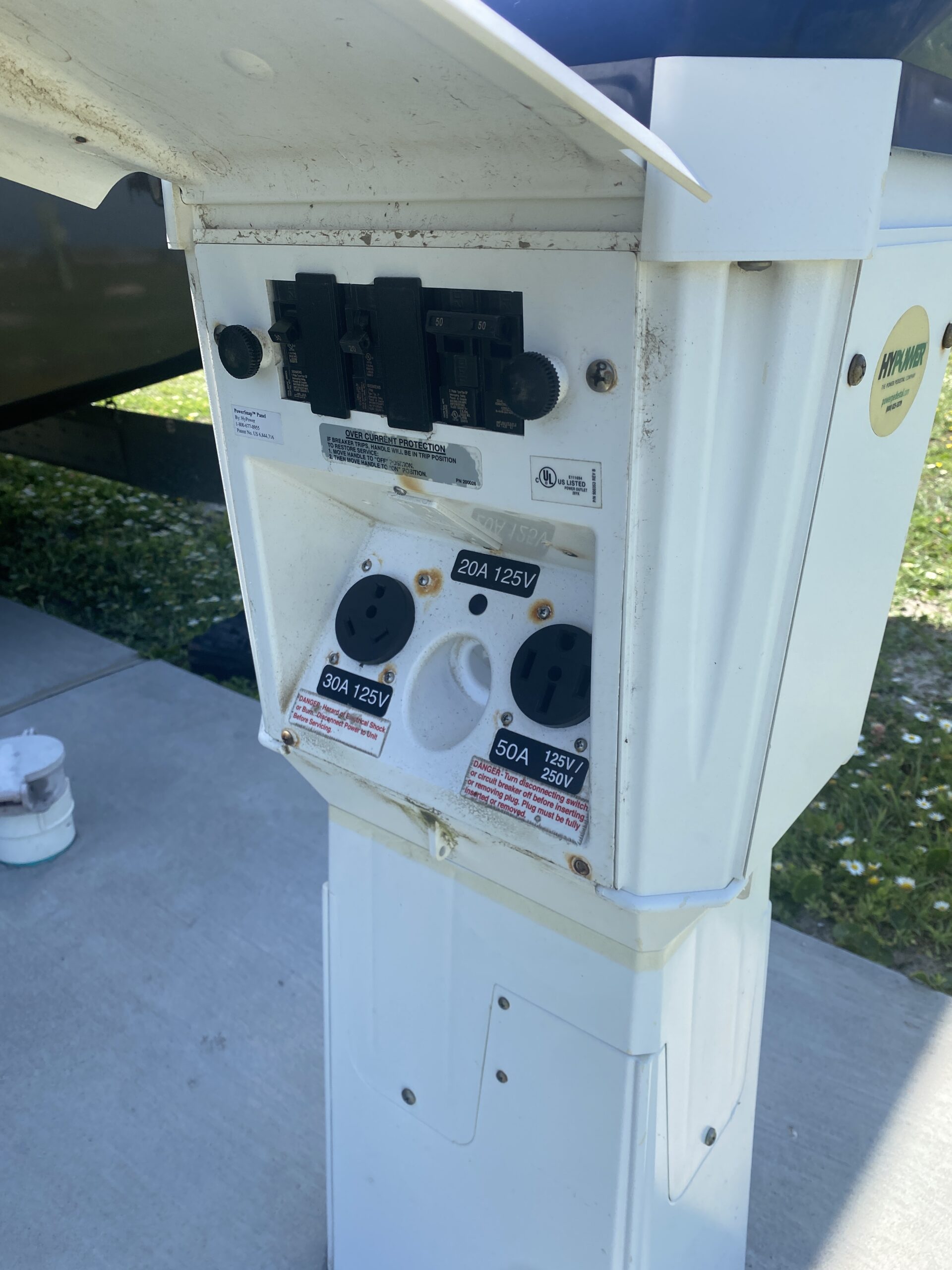
If you’re new to RV camping, you’ve probably heard someone mention “shore power.” It sounds like an electrical term that only experienced RVers understand, but it’s actually much simpler than it sounds.
Shore power is simply the electricity your RV receives when you plug it into an outside power source, usually the electrical pedestal at your campsite. Instead of making electricity with a generator or relying only on your batteries, your RV uses power supplied by the campground.
Once you understand what shore power is, plugging in your RV becomes one of the easiest parts of setting up camp.
What Is Shore Power?
Shore power is electricity that comes from an outside electrical source rather than from your RV itself. Most RV parks, state parks, and many campgrounds provide electrical hookups at each campsite. After you plug your RV into that outlet, electricity flows into your RV just like it does in your home.
The term “shore power” actually comes from boating. Boats docked at a marina would connect to electricity from the shore instead of running their engines to create power. The RV world adopted the same name because the idea is exactly the same.
Whether you own a Class A motorhome, a Class C motorhome, a travel trailer, or a fifth wheel, shore power works much the same way.
What Does It Do?
Once your RV is connected to shore power, many of the things you use every day can run on campground electricity instead of your batteries.
Your air conditioner, microwave, television, wall outlets, and many other appliances can all operate while you’re plugged in. If your refrigerator is set to run on electric, shore power can handle that too.
Another important job happens behind the scenes. While you’re plugged in, your RV’s electrical system usually charges your house batteries, so they’re ready to use when you leave the campground.
Where Can You Find Electric Hook Ups?
Most private RV parks include electrical hookups at every campsite. Many Texas State Parks also offer electric sites, although the amount of available power can vary from one campground to another.
You’ll also find shore power at many county parks, Corps of Engineers campgrounds, and some fairgrounds.
Not every campsite has electricity, though. Some parks offer water-only sites or completely primitive campsites where you’ll rely on your batteries or a generator instead.
If you’re camping in a location without electrical hookups, planning ahead becomes much more important.
How Do You Connect to Shore Power?
Connecting your RV to shore power is a simple process once you’ve done it a few times.
After parking and leveling your RV, locate the campground’s electrical pedestal. Before plugging in your power cord, make sure the pedestal breaker is turned off. Once the cord is securely connected, switch the breaker on and check that power is reaching your RV.
Many experienced RV owners also connect a surge protector before plugging into the pedestal. A surge protector can help guard your RV against wiring problems and unexpected electrical surges at the campground.
If you’re not familiar with how surge protectors work, our guide to Surge Protectors Explained walks through everything beginners need to know.
Is Shore Power the Same as a Generator?
No, although both provide electricity to your RV.
Shore power comes from the campground’s electrical system. As long as you’re plugged into the pedestal, you don’t need to burn fuel to produce electricity.
A generator creates electricity for your RV when no outside power is available. Generators are especially helpful while boondocking, staying at primitive campsites, or making overnight stops without electrical hookups.
If you’re trying to decide when to use each one, read our comparison of Shore Power vs. Generator.
Does Every RV Use Shore Power?
Almost every modern RV is designed to connect to shore power.
Whether you own a large Class A motorhome, a smaller Class C, a travel trailer, or a fifth wheel, you’ll likely have a power cord that connects to campground electricity.
Some RVs plug into 30-amp service, while larger models may use 50-amp service. Both provide shore power, but they supply different amounts of electricity.
What Happens When There Isn’t A Pedestal?
Camping without shore power doesn’t mean you have to give up modern comforts, but it does mean you’ll need to manage your electricity differently.
Your RV batteries can power lights, the water pump, and several smaller systems for a while. However, batteries alone usually can’t run high-demand appliances like the air conditioner or microwave for very long.
Many RV owners use a generator when they camp without electrical hookups, while others rely on larger battery banks and solar power. Read our solar power guide if you are interested in learning more about how solar power works and when it is a good idea.
Frequently Asked Questions
Can I leave my RV plugged in?
In most cases, yes. Modern RV charging systems are designed to maintain your batteries while you’re connected to campground electricity. If you’ll be plugged in for long periods, it’s still a good idea to check your battery condition from time to time.
Does shore power charge my RV batteries?
Yes. In most RVs, plugging into shore power allows the converter to recharge your house batteries while also supplying electricity to many of your appliances.
Can I run my air conditioner on electricity?
Usually, yes. If your campsite provides enough electrical service for your RV, your air conditioner can operate using shore power instead of a generator.
Final Thoughts
Learning what shore power means is one of the first steps toward feeling comfortable with your RV’s electrical system. The name may sound intimidating at first, but using shore power is simply a matter of plugging your RV into campground electricity.
After a trip or two, connecting to shore power becomes part of your normal campsite setup. Before long, you’ll do it without giving it a second thought.
As you become more comfortable with your RV, you’ll also want to understand how generators, batteries, converters, inverters, and campground electrical service all work together.