
Wait, My RV Has Two Electrical Systems?
About four months after we bought our first RV, we woke up one morning and had no lights. Until that morning, I didn’t even know our RV had house batteries. I knew we plugged the RV into the campground pedestal when we arrived, and I knew things worked after we plugged in. Beyond that, I hadn’t given the electrical system much thought. Apparently, I had a lot to learn.
That house battery problem introduced me to something I hadn’t realized: an RV actually uses two different kinds of electricity.
If you’re wondering why does my RV have 2 kinds of electricity, you’re definitely not the only one asking. RV electrical systems can sound complicated when people start throwing around terms like AC, DC, volts, converters, and inverters. For now, forget most of those terms.
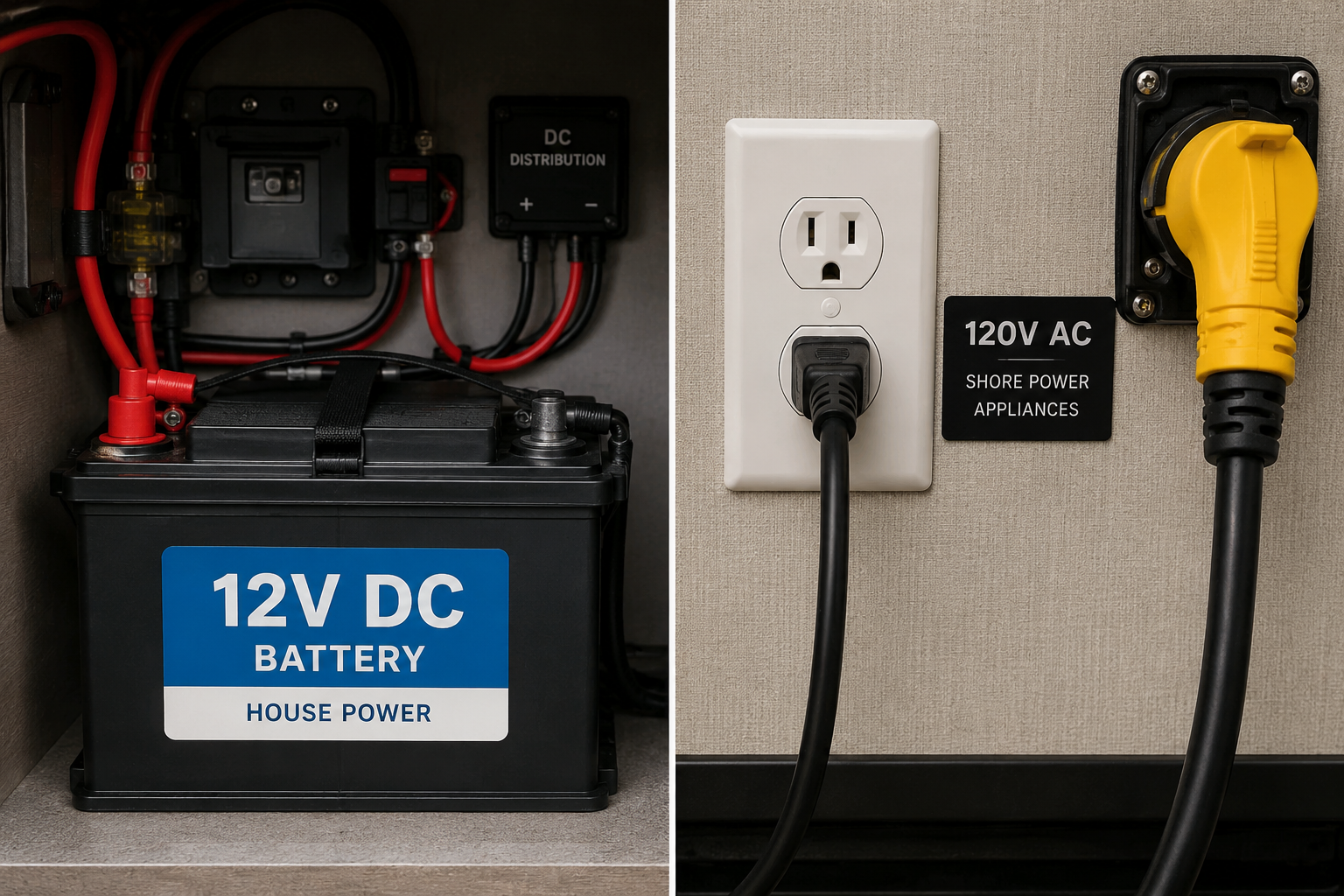
The basic idea is much simpler. Your RV has a 120-volt AC electrical system and a 12-volt DC electrical system. Different things inside your RV use different systems, and the two work together to make your RV function whether you’re camping or traveling.
What Is 120-Volt AC Power in an RV?
Let’s start with the electricity that probably feels the most familiar. The 120-volt AC side of your RV is similar to the electricity you use in your house. When you’re connected to campground shore power, you’re supplying your RV with AC electricity. If you’re still learning how campground electricity works, What Is Shore Power? explains the basics of connecting your RV to a campground power source.
Your generator can also supply 120-volt AC electricity. That’s why many of the same things that work while you’re connected to shore power can also work while the generator is running.
Air conditioners are a good example. Your microwave and many standard household-style outlets also use 120-volt AC power. In our case, we often travel with the generator running because Texas highways get hot. Running the generator allows us to use the RV’s air conditioners while we’re driving. Otherwise, we can arrive at a campsite with an RV that’s been baking in the Texas sun for hours and then wait forever for it to cool down.
I also occasionally plug in a crockpot while we’re traveling so dinner can cook on the road. After a travel day, having dinner ready when we reach the campground is pretty hard to beat. Those are all examples of why the AC electrical system matters in our RV.
What Is 12-Volt DC Power?
The other side of the RV electrical system is 12-volt DC power. This is where your RV’s house batteries come into the picture. Your house batteries store DC electricity, and many basic RV functions are designed to operate on 12-volt power. Interior lights are one of the easiest examples. That’s exactly how I discovered this system existed.
When our house batteries had a problem in that first RV, we woke up without lights. Until then, I had never stopped to think about where those lights were getting their electricity. Depending on the RV, the 12-volt system can also operate things such as the water pump, control boards, vent fans, and other equipment. The exact setup varies from one RV to another, which is why your owner’s manual is useful when you’re trying to determine exactly what runs on your particular coach. The important beginner lesson isn’t memorizing every 12-volt item. It’s realizing that your batteries aren’t just sitting there waiting for the campground electricity to go out. Your RV uses its 12-volt system as part of normal operation.
Why Does My RV Need Both?
This was the part that finally made the whole thing click for me. An RV isn’t simply a house with wheels. Some of the things inside it are very similar to household appliances and need 120-volt AC electricity. Other parts of the RV are specifically designed to operate from a 12-volt battery system. That allows important RV functions to operate without requiring your RV to be connected to a campground pedestal every second.
So when someone asks, why does my RV have 2 kinds of electricity, the simplest answer is that the two systems have different jobs. The 120-volt AC system handles many of the larger appliances and household-style electrical needs. The 12-volt DC system handles many of the basic systems that make the RV function.
And here’s where things get interesting: they aren’t completely separate from each other.
How Do the Two Electrical Systems Work Together?
When you plug your RV into shore power, it may seem like campground electricity simply takes over everything. There’s actually more happening behind the scenes.
What Happens When I Plug In My RV? walks through what happens after you connect your shore power cord and campground electricity reaches your RV.
While you’re connected to shore power, 120-volt AC electricity can power the AC side of your RV. At the same time, your RV can use that incoming electricity to help keep the house batteries charged and supply the 12-volt system. That’s one reason I didn’t realize we had two electrical systems when we first started camping. From my perspective, we plugged in, and everything worked. I didn’t need to know which system was doing what—until something didn’t work.
Your RV has equipment that helps the AC and DC sides work together. Two terms you’ll eventually hear are converter and inverter.
They sound almost identical, which isn’t particularly helpful when you’re already trying to understand RV electricity. For now, you don’t need to understand how either one works. Just know that they’re part of the reason electricity can move between the AC and DC sides of your RV’s electrical system in useful ways. We’ll tackle those individually because each deserves a plain-English explanation of its own.
Does Everything Work When I’m Not Plugged In?
Not necessarily. This is where RVs can be very different from one another. A basic 12-volt system can keep certain RV equipment operating from the house batteries, but that doesn’t automatically mean your air conditioner, microwave and every wall outlet will work when you’re disconnected from shore power.
Some RVs also have an inverter, which can use battery power to supply AC electricity to certain appliances or outlets. The size of the inverter, the battery bank, and the way the RV is wired all affect what can operate. Our current RV, for example, has an inverter that can power certain outlets and our refrigerator. But when we’re traveling and want to run the air conditioners, we run the generator.
That’s why it’s difficult to give one universal list of what works when an RV isn’t plugged in. The better question is: What runs on 12-volt DC power in my RV, and what requires 120-volt AC power? Once you know that, a lot of RV electrical mysteries start making sense.
Why Does This Matter to a Beginner?
You certainly don’t need to become an electrician to go camping. We managed to own an RV for several months before I knew house batteries were part of the equation. But understanding that your RV has two electrical systems makes troubleshooting much easier when something suddenly doesn’t work. If your lights work but your microwave doesn’t, that tells you something. If your microwave and outlets work but you’re having trouble with your 12-volt lights, that tells you something different.
You may not know how to fix the problem yourself—and that’s okay. Simply knowing that your RV has two kinds of electricity gives you a much better starting point for figuring out which side of the electrical system may have a problem.
Final Thoughts
So, why does my RV have 2 kinds of electricity? Because an RV needs to do two very different things, it needs to operate many of the household-style appliances we expect when campground or generator power is available, while also having a battery-powered electrical system for many of the basic functions of the RV.
That’s where 120-volt AC and 12-volt DC electricity come in. You don’t have to memorize which wire goes where or understand electrical theory. Start by remembering this: some things in your RV run on AC power, some run on DC power, and your RV has equipment that helps those two systems work together.
Once I understood that much, the rest of RV electricity became a whole lot less mysterious.
Author’s Note
I didn’t learn that our first RV had two electrical systems because I sat down and read an electrical manual. I learned because we woke up one morning without lights. Sometimes RV ownership teaches you the lesson first and gives you the explanation later.