
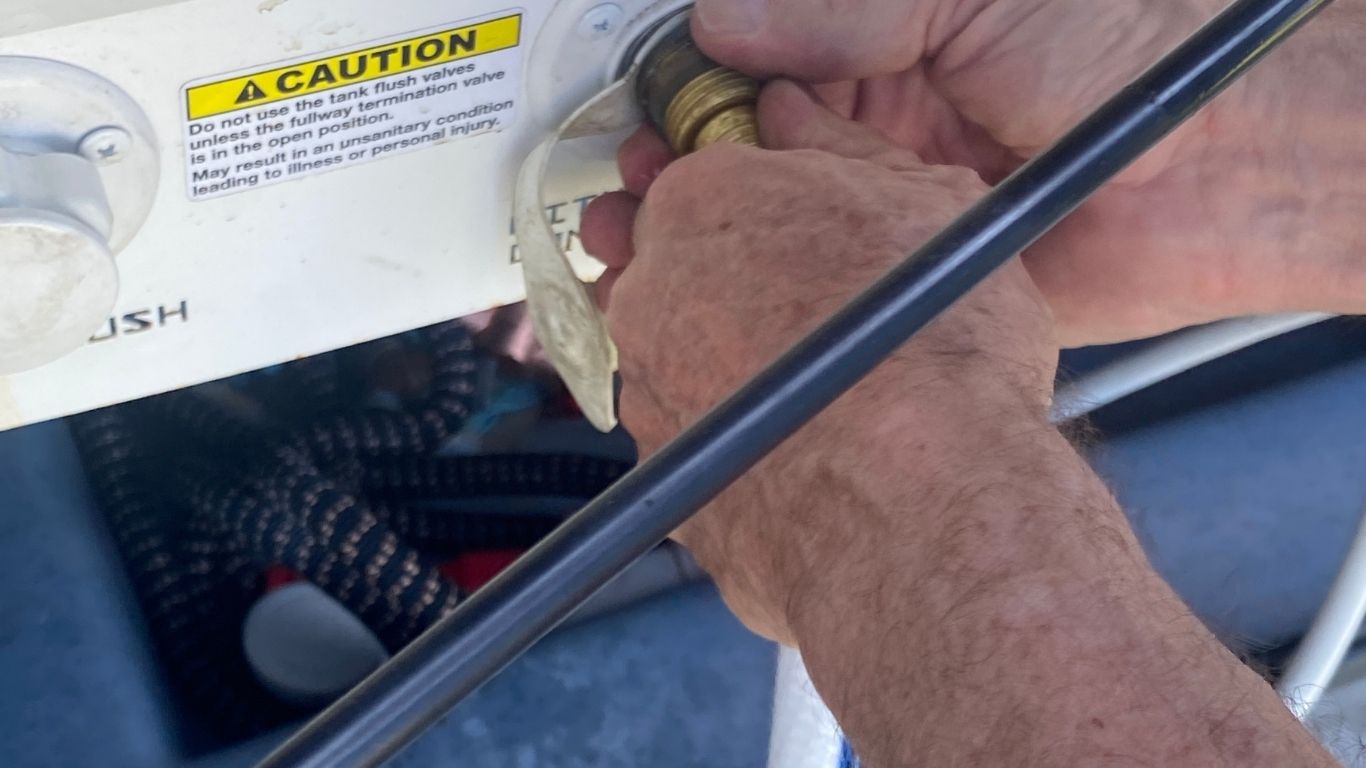
We learned an important RV lesson the hard way.
Several years ago, we traveled out of state to visit family. They had recently installed an electrical hookup so we could stay in our RV during our visit. When we arrived, we set up exactly as we would at any campground. We plugged in the power cord, connected the water hose, and started settling in. Within minutes, we noticed water running across the floor inside the RV. Fortunately, we caught the problem quickly and avoided any lasting damage. The excessive water pressure had caused a leak in our plumbing system.
We were lucky. Many RV owners are not. Water damage can spread quickly and become an expensive repair.
That experience changed how we connect to water sources. We no longer assume a campground, home, or RV site has safe water pressure. Instead, we always use a water pressure regulator. If you’ve ever wondered how to use a water pressure regulator, where it connects, or whether you really need one, this guide will walk you through everything you need to know.
What Is a Water Pressure Regulator?
A water pressure regulator is a small device that reduces incoming water pressure before it enters your RV. It connects between the campground water spigot and your fresh water hose. As water flows through the regulator, the pressure is reduced to a safer level for RV plumbing systems.
Most RVs contain plastic fittings, flexible water lines, faucets, and fixtures that are not designed to handle extremely high water pressure. While residential plumbing systems are often built to withstand a wide range of pressures, RV plumbing systems are lighter and more compact.
A water pressure regulator acts as a layer of protection between your RV and an unknown water source. Although it may be one of the smallest pieces of equipment in your camping setup, it can help prevent some of the most expensive repairs an RV owner may face.
Why RV Water Pressure Matters
Many new RV owners assume all water sources provide roughly the same pressure. In reality, water pressure can vary significantly from one location to another. One campground may have relatively low pressure, while another may have pressure high enough to stress plumbing connections. Even private homes can have water pressure that exceeds what many RV owners expect. That is exactly what happened during our family visit.
The challenge is that you often have no way of knowing what the water pressure will be before connecting your hose.
Most of the time, nothing happens. Then one day, a fitting leaks, a connection fails, or water begins appearing somewhere it should not. Because RV water damage can affect floors, cabinets, walls, and storage compartments, prevention is usually far less expensive than repairs.
How to Use a Water Pressure Regulator
Learning how to use a water pressure regulator is simple. Start by locating the campground water spigot or water connection. Before attaching your hose, screw the water pressure regulator directly onto the spigot. Next, attach your drinking water hose to the regulator. The regulator should be positioned between the water source and your hose. Once the hose is connected to the regulator, attach the other end of the hose to your RV’s city water connection.
Before turning the water on fully, slowly open the valve and allow pressure to build gradually. Take a moment to inspect the regulator, hose connections, and RV water connection for leaks.
After confirming everything is secure, fully open the water supply and verify that water is flowing normally inside the RV.
That is all there is to it. Once installed correctly, the regulator works automatically without requiring additional attention.
Where Does the Water Pressure Regulator Go?
One of the most common questions RV owners ask is where the regulator should be installed.
The regulator should be attached to the water source rather than directly at the RV.
By placing the regulator at the spigot, the entire hose is protected from excessive pressure. If the regulator is installed at the RV connection instead, the hose itself is still exposed to the full water pressure coming from the source.
Many experienced RVers make it a habit to leave the regulator attached to the campground spigot whenever they are connected to city water.
This simple placement provides the greatest level of protection for both the hose and the RV plumbing system.
What Happens If You Don’t Use One?
The answer depends largely on the water pressure at your campsite.
Some RV owners connect directly to campground water for years without experiencing a problem. Others encounter issues the first time they connect to a high-pressure system.
Excessive water pressure can stress fittings, seals, faucets, water lines, and other plumbing components. In some situations, leaks may develop immediately. In other cases, damage may occur gradually over time.
The biggest concern is not necessarily the leak itself. It is the water damage that can occur if a leak goes unnoticed.
Water can travel into cabinets, under flooring, behind walls, and into storage compartments before the problem is discovered. By the time visible damage appears, repairs may already be necessary.
This is why many experienced RV owners consider a water pressure regulator inexpensive insurance.
Fixed vs Adjustable Water Pressure Regulators
Most RV owners choose between a fixed regulator and an adjustable regulator.
A fixed regulator is typically made of brass and reduces water pressure to a preset level. These models are affordable, simple to use, and require no adjustments.
This is the type many RV owners start with, including us.
An adjustable regulator allows users to fine-tune water pressure and often includes a pressure gauge. These regulators provide more control and can help maximize water flow while still protecting the RV.
Both types serve the same basic purpose. The right choice depends on your camping style, budget, and preference for simplicity versus customization.
For many weekend campers, a basic fixed regulator provides adequate protection and requires virtually no learning curve.
Are There Any Downsides to Using a Water Pressure Regulator?
To provide a fair answer, yes, there can be a few disadvantages.
The most common complaint is reduced water pressure. Some inexpensive regulators restrict water flow enough that showers may feel weaker and sinks may take longer to fill.
A regulator is also one more piece of equipment to store, connect, and remember when setting up camp.
Some RV owners point out that many campgrounds have perfectly safe water pressure. In those situations, a regulator may never actually prevent a problem.
Those points are valid.
However, the challenge is that you rarely know the water pressure before connecting. The potential downside of using a regulator is usually a slightly weaker shower. The potential downside of not using one could be a plumbing leak and costly water damage.
For most RV owners, that trade-off makes the regulator worthwhile.
Common Water Pressure Regulator Mistakes
One common mistake is forgetting to install the regulator entirely.
Another mistake is assuming that a campground with modern facilities automatically has safe water pressure. Even well-maintained campgrounds can have pressure levels that vary throughout the system.
Some RV owners also confuse city water connections with fresh water tank filling. A water pressure regulator is most important when connecting directly to an outside water source. When using water from your onboard fresh water tank and water pump, the RV is regulating its own water pressure.
It is also important to periodically inspect regulators for wear, damage, or corrosion. Like any RV accessory, they should be replaced if they stop functioning properly.
Is a Water Pressure Regulator Really Necessary?
Ultimately, every RV owner must decide what level of risk they are comfortable accepting.
You may connect directly to campground water for years without a problem. Many people have.
However, water pressure can vary dramatically between campgrounds, RV parks, private homes, and other water sources. Because those differences are often invisible, there is no reliable way to know whether the next hookup will be perfectly safe.
Our experience with water running across the RV floor was enough to change our habits permanently. We were fortunate to discover the problem immediately and avoid damage.
A simple regulator would have prevented a stressful situation and provided peace of mind from the beginning.
Final Thoughts
Knowing how to use a water pressure regulator is one of the simplest RV skills you can learn. Installation takes only a few moments, requires no special tools, and can help protect your RV from potentially expensive water damage.
While there are a few drawbacks, such as reduced water pressure and one more item to manage during setup, many RV owners find those inconveniences minor compared to the risks of excessive water pressure.
The next time you connect to campground water, remember that you cannot see water pressure just by looking at a faucet or spigot. A water pressure regulator provides protection when conditions are unknown.
For many RVers, that small piece of brass is worth carrying on every trip.