
Good Camping Dogs Make Camping More Enjoyable for Everyone
One thing I have learned while RV camping is that campground life works best when everybody shares the space respectfully. That applies to campers, kids, golf carts, bikes, and dogs, too. Most campers enjoy seeing dogs at campgrounds and on hiking trails. Honestly, dogs are part of the camping atmosphere at many Texas State Parks and RV parks. But there is definitely a difference between a dog simply existing at the campground and a dog that is prepared to handle campground life calmly.
That is where leash and trail etiquette for dogs becomes important.
Camping with dogs does not mean your dog has to be perfectly trained or behave like a competition obedience dog. Most campers are not expecting perfection. But people do appreciate dogs that can safely walk through the campground, handle trail encounters reasonably well, and relax at a campsite without creating chaos for everybody nearby.
And honestly, good dog camping etiquette usually starts with the owner more than the dog.
Campgrounds Are Busy Places for Dogs
One thing people sometimes forget is how overstimulating campgrounds can feel for dogs. There are kids running through campsites, bikes flying past, people cooking outside, campground smells everywhere, golf carts driving by, squirrels darting across trails, and unfamiliar dogs appearing around corners unexpectedly.
That is a lot for some dogs to process.
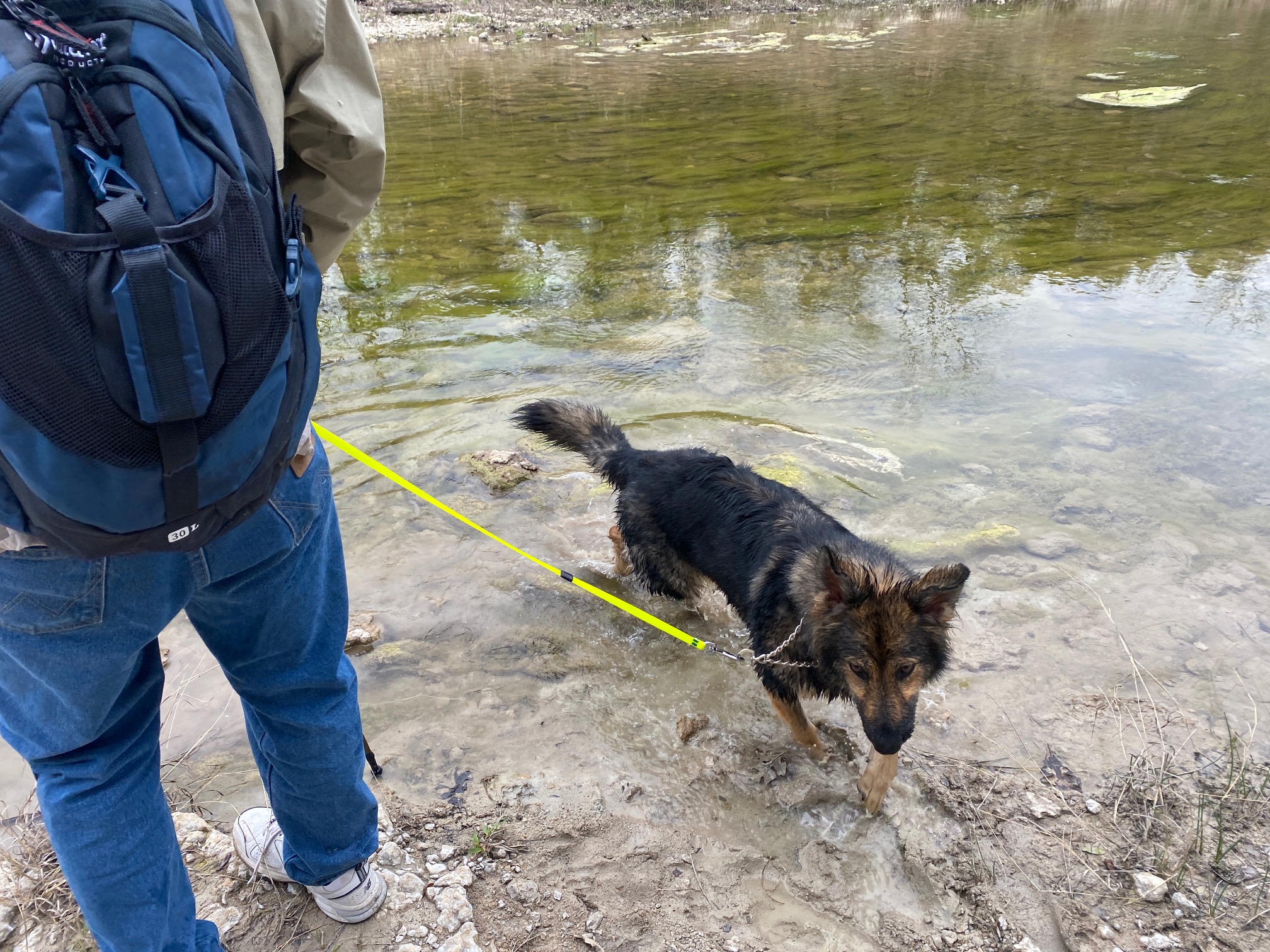
Even friendly dogs can become overwhelmed in busy campground environments if owners are not paying attention to what is happening around them. Rya enjoys camping and hiking with us, but we still pay attention to situations that could become stressful for her. Especially on trails, we try to stay aware of approaching hikers, bikes, and other dogs so encounters stay calm and manageable instead of chaotic.
That awareness becomes part of leash and trail etiquette for dogs.
Trail Encounters Go Better With a Little Space
One thing we almost always do when approaching another dog on a trail is shorten the leash and move slightly off to the side so the other group can comfortably pass. Honestly, that simple habit makes trail encounters smoother for everybody involved. We also avoid nose-to-nose greetings on trails. Sometimes, dogs get along perfectly. Other times, one dog suddenly becomes nervous, protective, startled, or reactive. Narrow trails are usually not the best place to test whether two unfamiliar dogs are going to become best friends. Creating a little extra space helps keep everybody calmer. That same mindset also helps when encountering joggers, children, bikes, or horses on trails.
Some Texas State Parks allow horseback riding on certain trails, and that is something dog owners really need to think about before bringing dogs hiking. Horses can become startled if a dog suddenly lunges, barks aggressively, or darts unexpectedly near them. Part of leash and trail etiquette for dogs is making sure your dog can safely exist around other trail users without creating dangerous situations.
That does not mean your dog has to ignore everything around them completely. It simply means they need enough control and awareness to safely share the trail with others.
Retractable Leashes Usually Do Not Work Well While Camping
I know retractable leashes are popular for everyday walks, but honestly, they are often not ideal for campground environments. Campgrounds and trails simply have too many unpredictable situations happening at once. Bikes, kids, golf carts, neighboring campsites, dogs, and narrow walking paths all make it harder to safely manage a dog that suddenly has fifteen or twenty feet of thin leash extending in every direction. There is probably a reason many RV parks and Texas State Parks specify leash lengths around six feet while walking through campground areas. Shorter leashes usually give owners better control and help prevent dogs from unexpectedly wandering into neighboring campsites, crossing roads, or approaching unfamiliar dogs too quickly. Longer lead lines can absolutely work well at the campsite itself, but campground walks and trails are usually easier with a standard leash that keeps your dog closer to you.
Honestly, it just creates a calmer experience overall.
Cleaning Up After Dogs Is Part of Camping Etiquette
This probably sounds obvious, but cleaning up after your dog is one of the biggest parts of leash and trail etiquette for dogs. And honestly, most campers really do notice when people ignore this responsibility. We always carry poop bags anytime Rya leaves the campsite. Trails, campground roads, grassy areas, and walking paths should stay enjoyable for everybody using them. The same thing applies at the campsite itself. Nobody wants to arrive at a campsite and discover leftover dog waste from the previous camper. And neighboring campers definitely do not want to smell it during dinner while sitting outside trying to enjoy their evening.
Part of being a good camping neighbor simply means leaving shared spaces clean for the next people using them. That applies to dogs, too.
Campsite Etiquette Matters Too
Leash and trail etiquette for dogs does not stop once you return to the campsite. Campground sites are shared spaces with neighbors fairly close by in many parks. Dogs do not need to become silent little statues at the campsite, but owners should still pay attention to how their dog is affecting the people nearby. Most campers understand occasional barking. Campgrounds are unfamiliar places with unfamiliar noises. But constant barking or allowing dogs to roam too freely around neighboring campsites can quickly create tension. We actually have a separate upcoming post focused more specifically on barking and campground behavior, but in general, leash and trail etiquette for dogs extends into basic campsite awareness, too.
The goal is to create a campsite atmosphere where everybody can relax comfortably, including the dog.
Dogs Usually Enjoy Camping More When They Understand the Routine
One thing I have noticed over time is that dogs often settle into campground life much better when there is a consistent routine. Walks happen calmly. Trails stay structured. The leash expectations stay predictable. The campsite feels relaxed instead of chaotic.
Dogs pick up on that energy.
At Inks Lake one October, our daughter brought her dog Hank to spend the day camping and hiking with us. The weather was still warm, but comfortable enough for trail walks and plenty of outdoor time. Rya and Hank had a great time exploring together and burning off energy while hiking around the park. Honestly, watching dogs enjoy the outdoors alongside their families is part of what makes camping feel special sometimes.
But those experiences usually happen because owners are paying attention, staying aware, and helping their dogs succeed in shared campground spaces. It is our job to help our 4-legged friends enjoy camping just as much as we do.
Good Dog Camping Etiquette Makes Everyone More Relaxed
At the end of the day, leash and trail etiquette for dogs is really about creating a better camping experience for everybody involved. The dog feels calmer. The owners feel less stressed. Neighbors feel more comfortable. Trails stay enjoyable. Campgrounds stay welcoming to pets.
And honestly, most campers are not expecting perfection from dogs anyway.
They simply appreciate owners who are paying attention and making an effort to be respectful campground neighbors. That small effort goes a long way while camping.
We have gathered a few items that we like for Rya in our RV Noni Shop, check out our favorites.