
Campsite Courtesy Makes Campgrounds Feel More Relaxing
Some campground etiquette rules are posted clearly on signs. Others are simply things campers learn after enough weekends away. Campsite courtesy usually falls into that second category.
Most campers are not intentionally trying to bother anybody around them. In fact, one of the things we enjoy most about RV camping is that most campgrounds are filled with friendly people simply trying to relax and enjoy their trip. But campground life is different from everyday life at home, especially once campsites become occupied.
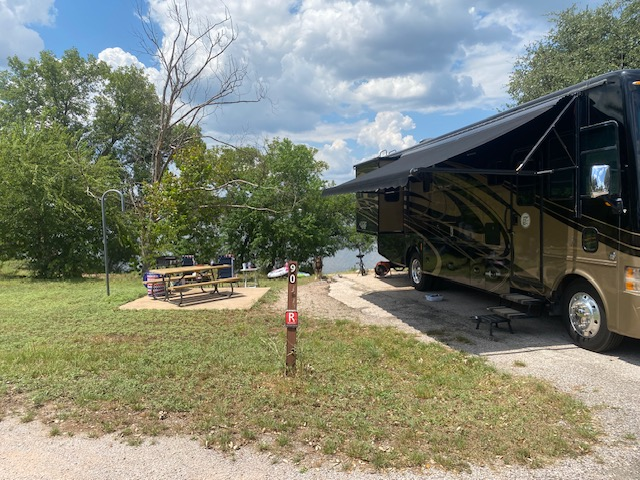
After setup, campsites naturally start feeling like temporary outdoor living spaces. Rugs get rolled out, grills get fired up, dogs settle into their favorite shady spots, and camp chairs slowly circle around the picnic table. Some campers cook outside almost the entire trip. Others spend the evening sitting under the awning, talking while kids ride bikes nearby. That temporary outdoor space starts feeling a little like home for a few days. That is why campsite courtesy matters more than many newer campers initially realize.
Understanding Campsite Courtesy Takes Time
A lot of campground manners are not written on campground signs. Campers usually learn them simply by camping around others.
It usually does not take many camping trips before people begin noticing the natural flow of a campground. Experienced campers start walking around occupied campsites instead of between them. They notice which campground roads work best for walking dogs or riding bikes. They naturally begin to recognize that occupied campsites are not just empty patches of grass between RVs.
Honestly, many campground layouts accidentally make shortcuts feel tempting. Some campsites appear wide open from a distance, especially in larger RV parks or state parks with fewer trees and barriers between sites. From a practical standpoint, cutting between campsites may seem like the fastest way to reach a bathhouse, playground, fishing pier, or another family member’s campsite. But campground culture tends to view occupied campsites differently once people are settled in. That space may temporarily contain sewer hookups, dog tie-outs, outdoor kitchens, fishing gear, power cords, coolers, or children playing near the campsite. Even more than that, it is usually somebody’s space to relax for the weekend.
Campsite Courtesy Helps Respect Personal Space
One thing camping teaches pretty quickly is that personal space works differently in campgrounds. Campers spend far more time outside than they normally would at home. Meals happen outside. Conversations happen outside. Dogs nap outside. Morning coffee happens outside. Some campers spend almost their entire day outdoors except when sleeping. That outdoor lifestyle is part of what makes camping enjoyable, but it also means campsite boundaries feel more noticeable once campers settle in.
Most experienced campers naturally begin treating occupied campsites similarly to how they would treat someone’s temporary yard or patio space. Even if there are no fences or physical barriers, there is usually an understanding that campers appreciate a little separation between campsites whenever possible. That is why campsite courtesy is often less about strict rules and more about awareness. People generally are not upset over occasional accidents. Kids playing ball may accidentally chase a ball into a neighboring site. Somebody walking at night may accidentally step slightly into another campsite while avoiding a puddle or parked vehicle. Those things happen in campgrounds. Most campers understand the difference between accidental moments and regular shortcuts through occupied campsites.
Campsite Courtesy Also Helps Prevent Safety Problems
One part of campsite courtesy that newer campers may not immediately think about is safety. Occupied campsites often contain more hazards than people realize, especially after dark. Campers may have dog cables stretched across the site, lantern stakes near walkways, hot grills cooling down beside picnic tables, fishing gear near chairs, or water and electrical hookups running near the RV.
Rya is especially good at strategically placing her leash exactly where somebody is about to walk. Somehow, she always manages to create the perfect tripping hazard right when people least expect it. Also, dogs don’t always react the same way when another dog unexpectedly enters their campsite space. Even friendly dogs sometimes become protective or startled when unfamiliar dogs wander directly into their campsite area on long retractable leashes. Usually, those situations happen because people simply are not thinking about campsite boundaries from the dog’s perspective.
That is another reason campsite courtesy naturally develops over time. Campers slowly become more aware of how many things are happening inside occupied campsites that may not be obvious from campground roads or walking paths.
Experienced Campers Naturally Learn Campground Flow
After enough camping trips, most campers naturally begin recognizing the easiest ways to move around campgrounds without disturbing nearby campsites.
Campground roads, walking paths, and open shared spaces exist for a reason. Even when taking a shortcut through a campsite would only save a few seconds, experienced campers usually find themselves naturally walking around occupied sites instead. That campground flow helps preserve a calmer atmosphere throughout the campground. It also helps children learn campground awareness over time. Kids are going to run, ride bikes, laugh loudly, and play games at campgrounds. Honestly, seeing kids having fun outside is part of campground life. Most campers expect that. But many experienced camping families also gradually teach kids to recognize occupied campsites as someone else’s temporary space. Over time, children usually begin understanding where campground roads, bike paths, and shared play areas naturally make more sense than riding directly through campsites. That learning process is really part of campground culture more than formal campground rules.
Campsite Courtesy Helps Everyone Enjoy Camping More
One reason campsite courtesy matters so much is because campgrounds work best when campers share space thoughtfully. Most people camp because they want a slower, more relaxing environment than in everyday life. Some campers are sitting outside watching birds early in the morning. Others are cooking dinner under the awning or relaxing beside a campfire after dark. Some may simply enjoy a quiet evening outside after a long work week. Those small campground moments feel more comfortable when campsites maintain a little breathing room between one another.
Campsite courtesy helps preserve that feeling.
And honestly, most campers eventually develop these habits naturally after enough weekends camping around others. The camping community has a way of quietly teaching campground manners over time, especially when campers pay attention to how shared campground spaces function best. That balance between enjoying your own campsite while also respecting nearby campers is part of what makes campground culture feel welcoming in so many parks and campgrounds.
Next week in our campground etiquette series, we will talk about shared campground spaces and the small ways campers help keep places like bathhouses, playgrounds, laundry rooms, and campground stores more enjoyable for everybody using them.